


10 Lawn Care Myths in Minnesota & Wisconsin
Lawn advice gets handed over the fence and repeated for decades, which is how bad ideas stay in circulation. Here are ten common beliefs about lawns in Minnesota and Wisconsin, and what the agronomy actually supports.
1. Mowing short means mowing less often
It means a worse lawn. Every cut removes leaf surface the plant uses for photosynthesis, and taking too much starves it. Never remove more than one third of the blade in a single pass.
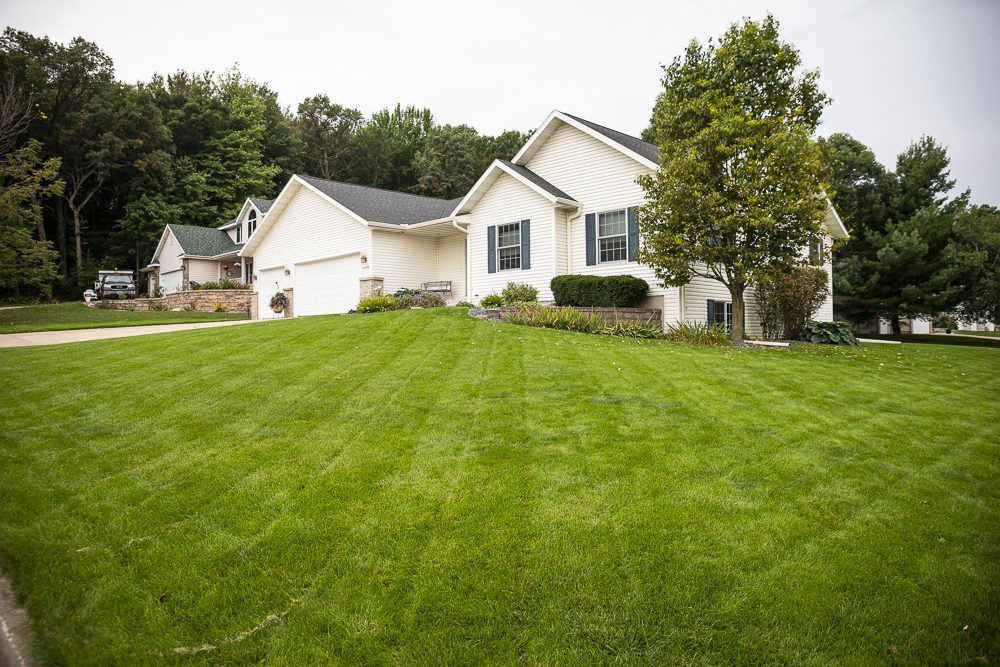
Short grass also heats the soil beneath it, and warm bare soil is where weed seeds germinate. Taller grass shades the soil, grows thicker, stays greener in heat, and crowds out weeds on its own. Hold three to four inches through the season.
2. One weed control application takes care of weeds
Weeds are not a single event. Different species germinate and grow at different times, and the worst spring weeds often germinated the previous fall. Control requires multiple timings.
There are also two different jobs. Pre-emergent control targets seeds as they germinate and is the only thing that works on crabgrass. Post-emergent control kills what is already growing. The comprehensive lawn care programs include five visits across the season for exactly this reason.
3. All lawn fertilizer is basically the same
Analysis, release rate, and carrier quality all differ. Granular fertilizer costs more than liquid but breaks down slowly, which gives consistent feeding instead of a spike followed by a crash. Blends that include organic matter also help soil structure over time, which pays off in root depth and color.
RainMaster uses premium professional-grade granular formulations. Not every lawn fertilization service in Eau Claire or the Twin Cities does, and it is a fair question to ask before you sign.
4. Weeds die right away
Most begin to curl and brown seven to fourteen days after treatment. Every product works at a different rate, and the perennials are slower because the material has to move down into the root system before it does anything permanent. Clover and Creeping Charlie commonly take multiple applications and a couple of months. Some weeds have no selective control at all and need spot treatment and reseeding.
5. You should collect grass clippings
You should not, in normal conditions. Clippings are roughly 80 to 85 percent water and they break down quickly at the soil surface, returning nitrogen to the lawn. Returning clippings reduces the fertilizer the lawn needs over a season.
Clippings do not cause thatch. That myth is persistent and wrong. Thatch is a layer of dead stems, crowns, and roots that accumulates when growth outpaces decomposition, usually driven by heavy nitrogen, compaction, or low microbial activity, not by clippings. The one time to bag is during an active disease outbreak in the affected area, to avoid moving infected tissue around.
6. You can easily aerate your own lawn
Spiked shoes do nothing useful; they compact rather than relieve. A rented core aerator does real work, but it is a heavy, awkward machine, and a full yard is a physically punishing day for anyone not used to it.
The practical problem is results. On genuinely compacted soil the tines may not penetrate deep enough, or you need two passes, which doubles the time. By the time you add the rental, the transport, and the day, the cost gap against hiring it done is often small, especially on a smaller lot.
7. Spring is the best time to seed
Fall is, and it is not close. Two reasons:
- The spring pre-emergent that prevents crabgrass also prevents grass seed from establishing. You cannot do both at once, and skipping crabgrass control to seed is a bad trade.
- Spring air carries enormous quantities of weed seed looking for open soil, which is exactly what freshly aerated and seeded ground is.
For fall seeding here, target mid August through mid September. Earlier and heat makes establishment hard; later and frost catches the seedlings before they are ready.
8. You have to rake every leaf
A thick mat of leaves left all winter will smother grass and create the conditions snow mold likes. A light layer is a different thing: run the mower over it and the chopped leaves break down into the soil as organic matter.
The rule of thumb is whether you can still see grass through the leaves. If yes, mulch-mow it. If the lawn has disappeared, remove the excess, then mulch what is left.
9. All grass seed is the same
Seed in a bag looks alike and is not. Cheap bags can contain weed seed, filler, and coarse species that will be in your lawn for years, and percentages of crop and inert matter vary widely. Read the label on the bag: it lists the species, the germination rates, and the weed seed content.
Premium seed costs more per bag and is one of the few places in lawn care where paying up has an immediate and permanent effect. You live with a seeding decision for a decade.
10. All lawn care companies and programs are the same
The service looks identical from the curb: a truck shows up, something gets applied, the truck leaves. The differences are in the parts you cannot see.
- Whether the program is built around the lawn's total health, including soil pH and compaction, or only sprays what is visible.
- Whether the people doing the work are trained and stay. Most of this industry staffs seasonally; RainMaster hires year-round and invests in training, and the team includes horticulture degrees and decades of combined experience.
- Which products are used, and whether they are current. On tough weeds this is the whole ballgame.
- Whether anyone diagnoses problems before you notice them, which is most of the value of a program.
Bottom line
- Mow at three to four inches and never remove more than a third of the blade. Short mowing heats the soil and germinates weeds.
- Grass clippings do not cause thatch. Return them and you reduce the fertilizer the lawn needs.
- Weed control takes multiple timings, with pre-emergent for crabgrass and post-emergent for what is already up.
- Fall is the better seeding window, mid August through mid September, because spring pre-emergent also stops grass seed.
- Mulch-mow light leaf cover. Remove only what is thick enough to hide the grass.
Frequently asked questions
Do grass clippings cause thatch?
No. Clippings are mostly water and decompose quickly. Thatch builds when turf growth outpaces decomposition, which is driven by excess nitrogen, compaction, and low soil biological activity.
How short should I mow?
Three to four inches, taller in July and August, and not below about two and a half inches at any point, including the final cut of the year.
Can I seed in spring if I have bare spots?
Yes for patching, as long as you understand that crabgrass pre-emergent and grass seed are incompatible in the same area. For a full renovation or overseeding, wait for the fall window.
Is renting an aerator worth it?
Sometimes on a small lot. On compacted soil or a larger yard, the machine is hard to operate well, the tines may not reach depth, and the all-in cost often lands close to having it done.
University of Wisconsin Division of Extension, Lawn Aeration and Topdressing.
University of Minnesota Extension, Seeding and Sodding Home Lawns.


