


9 Lawn Care Mistakes That Waste Money & Harm Your Yard
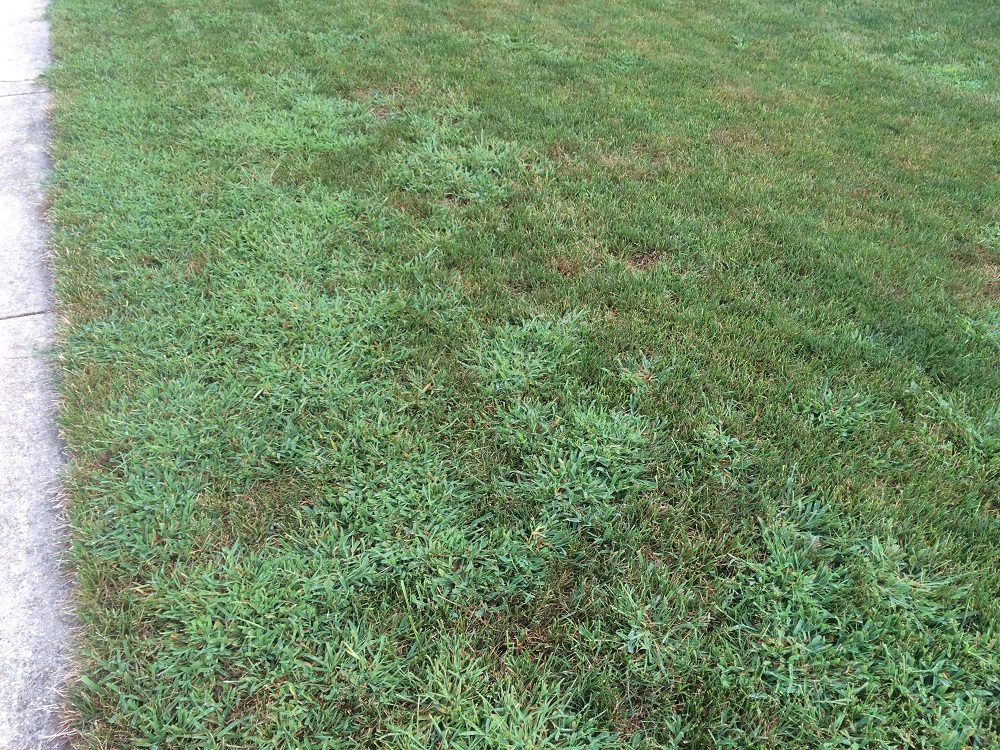
Some lawn care mistakes show up the next day. The expensive ones take weeks or a whole season to surface, and by then you are paying to repair the lawn instead of maintain it. These are the nine that cost homeowners the most around here.
1. Overfertilizing
The logic seems sound: fertilizer makes grass green, so more fertilizer makes it greener. It does not work that way. Nitrogen, phosphorus, and potassium all damage turf above a certain rate.
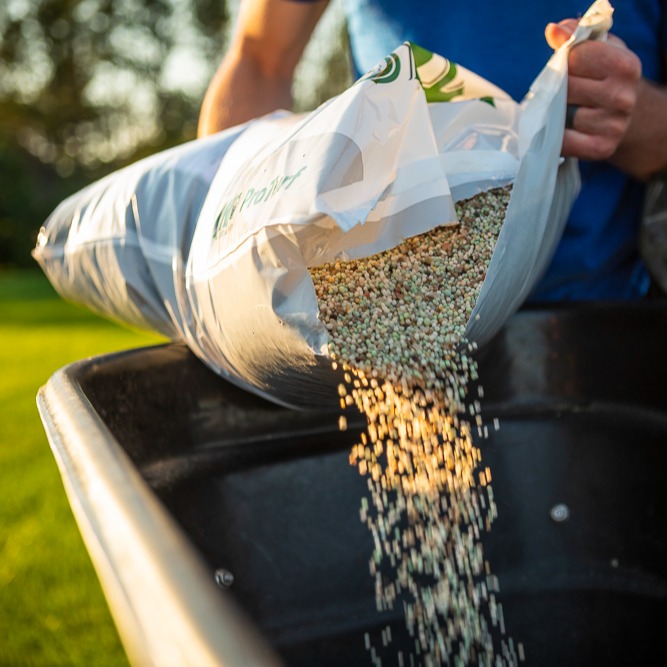
Too much fertilizer puts too much nitrogen and salt into the soil, which pulls moisture out of the plant. That is fertilizer burn, and it kills grass. Liquid fertilizer carries more burn risk than granular, because it is designed to be immediately available while granular releases slowly.
The damage is delayed, which is why it keeps happening. You apply, the lawn looks fine, and days or weeks later yellow stripes or dead patches appear exactly where the spreader overlapped.
Professional applications go down with calibrated equipment. The spreader in your garage has probably never been calibrated, and label rates assume you know your actual square footage, which most people estimate high. If you have overapplied, water heavily to dilute and move excess nitrogen and salts down through the soil. Caught early, the lawn usually recovers. If it does not, plan on reseeding.
2. Skipping grub control
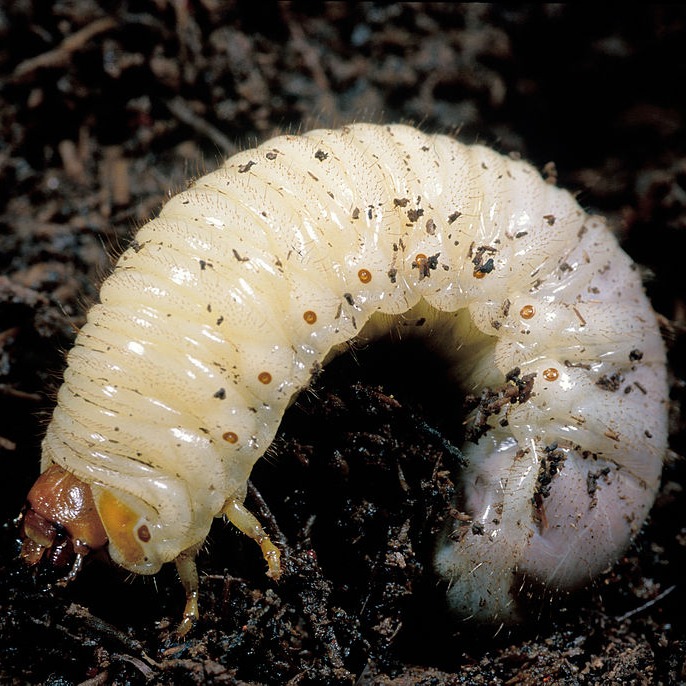
White grubs are the larvae of Japanese beetles, June beetles, European chafers, and other beetles. They feed on grass roots and organic matter, and because they sever roots, affected turf lifts away like loose carpet.
The important correction: preventive grub control does not kill eggs. The product is applied so the active ingredient is present in the root zone when eggs hatch in midsummer, so newly hatched larvae ingest it while they are small. That is why timing matters, and why treating large, late-instar grubs in fall is much less effective. Damage often seems to appear suddenly, but feeding goes on for a week or two unnoticed until the turf loses enough root mass to collapse under the next dry spell.
We apply Grub Guard in spring so protection is in place ahead of hatch, and it holds through the growing season rather than fading before the fall feeding period. It also uses a formulation with lower hazard to pollinators than the cheaper products common in this industry, which costs more and is worth it.
3. Mowing too short
The leaf blade is where the plant photosynthesizes. Remove too much of it and you are cutting the plant's ability to feed itself.
Short mowing also heats the soil surface, which is exactly what weed seed needs to germinate, and it stresses the plant so it tolerates insects and disease poorly. Finish at three to three and a half inches early in the season and raise toward four inches in July and August, removing no more than one third of the blade per pass.
Sharpen the blade. A dull blade tears the leaf tip and leaves a ragged wound that dries out and admits disease. A clean cut heals faster.
4. Watering too often
Daily watering feels responsible and produces a weak lawn. Saturated soil has no air in it, so roots cannot take up oxygen, and the turf yellows and becomes vulnerable to disease and insects.
More importantly, frequent shallow watering means roots never have a reason to go deeper. They stay near the surface where the water is, and a shallow-rooted lawn cannot handle a dry August.
Water deeply and infrequently, about an inch per week including rainfall, in one or two long cycles, finishing early in the morning. You are also paying for every gallon, so overwatering is a monthly bill as well as an agronomic problem.
5. Hiring an irrigation company without design expertise
Most companies will install a system. Not all of them will design one, and you usually find out which you hired when heads barely spray or throw water across the driveway.
By then it is expensive. Watch for bids that reduce the head count or zone count to cut materials and labor. Two heads where three belong, or four zones where five belong, leaves areas short of water permanently. Fixing it later can mean repositioning 50 to 100 heads and adding zones, which is close to starting over.
Poor design also wastes a substantial volume of water every season, and in late fall overspray onto pavement freezes, which is a liability. Our team includes trained and certified irrigation designers, and design is included in the installation cost rather than billed as an extra.
6. Skipping pre-emergent weed control
No visible weeds in April does not mean no weeds. Crabgrass seed from previous seasons is in the soil waiting on soil temperature.
Pre-emergent targets the seed as it germinates, before there is a plant to see. The timing is tied to soil temperature holding around 55 degrees, not to a date. Most companies make one spring application. We make two, early and late spring, because pre-emergent stays active for roughly six to ten weeks and a single early application leaves the back of the germination window open.
Skip it and you spend more later on post-emergent work against established plants, and the crop you let grow sets seed for the next several years.
7. Buying cheap products
Bargain grass seed is the clearest example. Inexpensive bags commonly contain weed seed and undesirable grasses, so you are paying to plant your next problem. Premium seed costs more and produces better color and better disease resistance.
Fertilizer is the same story in a different form. We use professional-grade granular formulations, which cost more than the liquid products common in this industry and release slowly for steadier results with less burn risk.
8. Ignoring irrigation maintenance
A sprinkler system does not maintain itself. Before startup each spring, heads may be leaking, a plow may have taken one out, residue in the lines can clog nozzles, a fitting may have loosened. Most systems in Wisconsin and Minnesota need at least a minor repair after winter, since months of frozen ground push heads off arc and anything left holding water has had repeated hard freezes to work on it.
Problems continue through summer, and small ones compound. An undetected leak can wash out a retaining wall or drown a planting bed. Most homeowners do not inspect thoroughly, so by the time the system obviously needs attention it is an emergency with brown turf and dying plants attached. An irrigation maintenance program is cheaper than one emergency.
9. Hiring the wrong company
The failure modes are consistent: they do not show up, they use the cheapest products, they cut corners on design and installation, and you pay for expert service while the lawn stays mediocre.
Ask what the program delivers in product, not visits. Ask about training and tenure. Ask whether design is included. Ask whether you can reach the technician who works on your property.
Bottom line
- Overfertilizing causes burn that shows up days or weeks later, usually in spreader overlap stripes. Water heavily to dilute it.
- Preventive grub control does not kill eggs. It must be in the root zone before midsummer hatch.
- Mow at three to four inches with a sharp blade, removing no more than one third of the blade.
- Water about an inch per week in one or two deep cycles, finishing in the early morning.
- Pre-emergent timing follows soil temperature near 55 degrees, and a split application covers the full window.
Frequently asked questions
What is the most common lawn care mistake?
Mowing too short, followed closely by watering too often. Both weaken the root system, and a weak root system is behind most weed, insect, and disease problems that follow.
Can I fix an overfertilized lawn?
Often. Water the area heavily to dilute and leach the excess nitrogen and salts down past the root zone, and do it as soon as you realize what happened. Areas that are already dead need reseeding.
Is grub control necessary every year?
It depends on local beetle pressure and your lawn's history. Lawns with prior grub damage, irrigated lawns in sunny areas, and properties near heavy Japanese beetle activity are higher risk. The decision is worth making deliberately rather than by default.
How do I know if my irrigation system was designed properly?
Run each zone and watch. Even coverage with heads throwing head to head, no dry wedges between heads, and no water hitting pavement or siding indicates good design. Dry spots that persist no matter how long you run a zone indicate a layout problem that scheduling cannot fix.
University of Wisconsin Division of Extension, White grubs in lawns.
U.S. EPA WaterSense, Watering tips.


