


Lawn Aeration & Overseeding in the Upper Midwest: Your Essential Guide

Filling a lawn with thousands of small holes and dropping seed into them sounds counterproductive and is one of the most effective things you can do to a struggling lawn. Here is how core aeration and overseeding work, and when to do them in this climate.
Why aeration works
Core aeration uses a machine to pull small plugs of soil out of the lawn, opening channels that let water and oxygen reach the root zone.

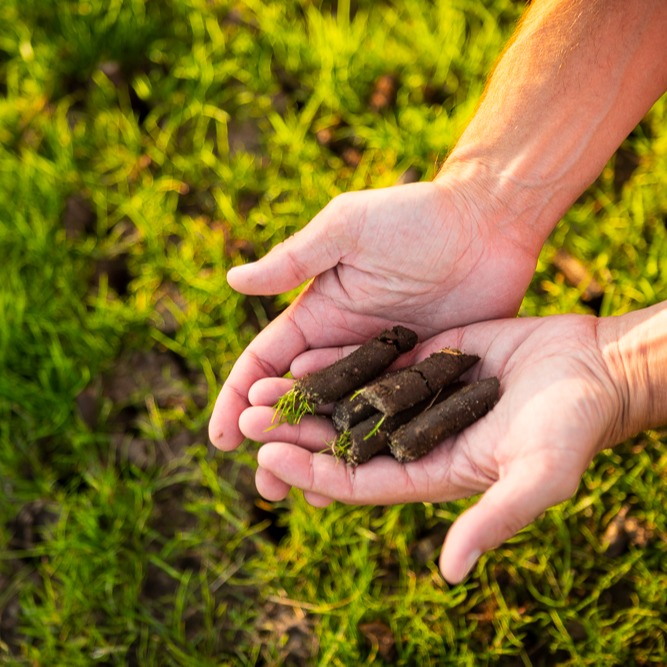
Soil starts loose and gets tighter. People walk on it, kids play on it, dogs run the same lines chasing squirrels, and delivery traffic treats the lawn as a shortcut. Soil high in clay compacts faster, because the fine particles pack together and leave little pore space for air and water.
When soil is compacted the lawn cannot take up what it needs. Roots cannot absorb water or nutrients efficiently, growth slows, the stand thins, and that opens the door to disease and weeds. Everything you apply to a compacted lawn underperforms, because the problem is physical and no product fixes it.
What aeration delivers
- Air and water reach the roots, which is the direct benefit.
- Fertilizer performs better, because product moves into the root zone instead of sitting on a sealed surface.
- Water infiltrates instead of running off, which matters on slopes and clay.
- Thatch breaks down faster, because the cores deposit soil and its microbes on top of the thatch layer where decomposition happens.
- Weed pressure drops over time, since a dense deeply rooted stand crowds weeds out, and preventing weeds is far easier than removing them.
Soil is the point
Healthy soil holds water and nutrients and supports the earthworms, fungi, and microbes that convert organic matter into plant-available nutrition. Compacted or clay soil has little pore space for any of that. Aeration loosens it, and topdressing with compost while the holes are open puts organic matter and soil organisms exactly where they are needed.
When to aerate in Wisconsin and Minnesota
Spring looks like the obvious season. Fall is better here, for concrete reasons:
- Cool air and warm soil is the ideal combination for cool-season seed germination.
- No frost risk in September, unlike an early spring seeding.
- No conflict with crabgrass pre-emergent. Pre-emergent prevents grass seed from establishing as effectively as it prevents crabgrass, so spring seeding and spring weed prevention cannot coexist.
- More reliable rainfall, which means less supplemental watering.
- Fewer weed seeds moving in the air to settle into fresh aeration holes.
- Time to establish before dormancy, so new grass builds roots and stores reserves before winter.
- Less mowing and foot traffic over tender seedlings.
Late August through mid September is the core window. It is a narrow one, which is the main practical argument for scheduling it rather than fitting it in.
Overseeding: filling thin areas
With the lawn full of open holes, you have the best seedbed available without tearing the lawn up. That is why aeration and overseeding are sold together. The holes give seed the close soil contact it needs to take up water and root.
If your lawn is genuinely thick and healthy you may not need overseeding. If there are thin or bare areas, or you have been fighting disease, fresh quality seed makes a real difference.
Choosing seed
High-quality seed is not optional. Inexpensive bags frequently contain weed seed and undesirable grasses, so cheap seed is a long-term cost.
Match the seed to the lawn you have. If your existing turf is a single variety of Kentucky bluegrass, seeding a different variety or species leaves visible patches of different color and texture that never blend. Dark green turf seeded with a bright green ryegrass looks patched rather than repaired.
That said, blends have real advantages. Fine fescues tolerate shade. Kentucky bluegrass performs in sun and spreads by rhizomes to fill in on its own. Perennial ryegrass handles traffic and germinates in about a week, versus two to four for bluegrass, which is useful where you need coverage fast. A mixed stand also resists disease better, because a pathogen that favors one species does not take out the whole lawn.
Overseeding technique
- Keep foot traffic off while seedlings establish.
- Hold off on weed control for at least a month. New seedings come in weedy and the weeds outgrow the grass, which is frustrating, but most herbicides will kill the new grass too. The exception is professional-grade material labeled safe on new seedings, which we can apply the day we seed.
- Water lightly and frequently at first, the opposite of mature turf. Small amounts several times a day keeps the seedbed moist. Most people overwater new seed.
- Use a starter fertilizer, which carries phosphorus and a portion of quick-release nitrogen in smaller doses that new roots need immediate access to.
- Keep the program going afterward, so the repaired area does not thin out again. That is what a proactive lawn care program is for.
What about sod or hydroseeding
Both have their uses, but for filling in an existing lawn, seed does the job, and it is the method we use.
DIY versus hiring it out
The cost difference is smaller than you think
Aerator rental in the Minneapolis and Eau Claire markets runs roughly $125 to $160 per day. Professional aeration for an average 12,000 square foot yard is $208 with us. Depending on lawn size, the gap is modest, and it closes entirely once you count the trip and the trailer.
It is genuinely hard work
These machines weigh around 300 pounds, do not maneuver easily, and rattle you for the hour or two you are on them. You need a truck or trailer to move one, and if you have to rent that too, add it to the comparison.
Results may disappoint
If you are aerating, your soil is probably compacted, which is the condition that defeats rental equipment. Drum-style rental aerators rely on weight alone, and on hard soil the tines may not penetrate deeply enough, leaving you to make two passes for a mediocre result. Professional stand-on machines use hydraulic down pressure to drive tines in and pull deeper cores.
Common questions
What about irrigation lines and the invisible dog fence? Flag them before anyone starts. We flag irrigation heads, and if we have access to the controller we adjust the watering schedule for new seed.
How fast will I see results? New grass sprouts within a few weeks. Noticeably thicker turf takes several months to a year as the new plants mature. That is normal rather than a failed seeding.
How often should I aerate? It depends on soil type, compaction, and grass species. Annually is right for many lawns on clay or with heavy traffic. Lawns on looser soil often do fine every other year, and some need aeration without seeding. A technician looking at the soil profile can tell you which.
Bottom line
- Core aeration fixes a physical problem that no product can solve, which is why applications underperform on compacted soil.
- Late August through mid September is the window here: warm soil, cool air, reliable moisture, no pre-emergent conflict.
- Leave the soil cores in place. They break down and speed thatch decomposition.
- Match seed to your existing turf so repairs blend, and avoid bargain seed carrying weed seed.
- Rental aerators cost $125 to $160 per day against $208 for professional aeration on an average 12,000 square foot lawn, and often cannot penetrate compacted soil.
Frequently asked questions
When is the best time to aerate and overseed in Wisconsin or Minnesota?
Late August through mid September. Soil is still warm enough for germination while air temperatures have cooled, fall rainfall is more reliable, and there is time for seedlings to establish before dormancy.
Can I aerate and apply crabgrass preventer the same spring?
You can aerate, but not if you are also seeding. Pre-emergent prevents grass seed from establishing just as it prevents crabgrass. Seeding and pre-emergent do not belong in the same spring in the same area.
Do I have to remove the soil plugs?
No. They decompose in a few weeks and return soil, organic matter, and microbes to the surface, which helps break down thatch. Removing them takes away part of the benefit.
Is renting an aerator worth it?
Usually not by much. Rental runs about $125 to $160 per day plus a trailer, against roughly $208 for professional aeration on an average yard. Rental drum aerators also struggle on the compacted soil that prompted the job.
University of Wisconsin Division of Extension, Lawn aeration and topdressing.
University of Minnesota Extension, Seeding and sodding home lawns.


