


Landscape Maintenance vs. Lawn Care: What’s The Difference?
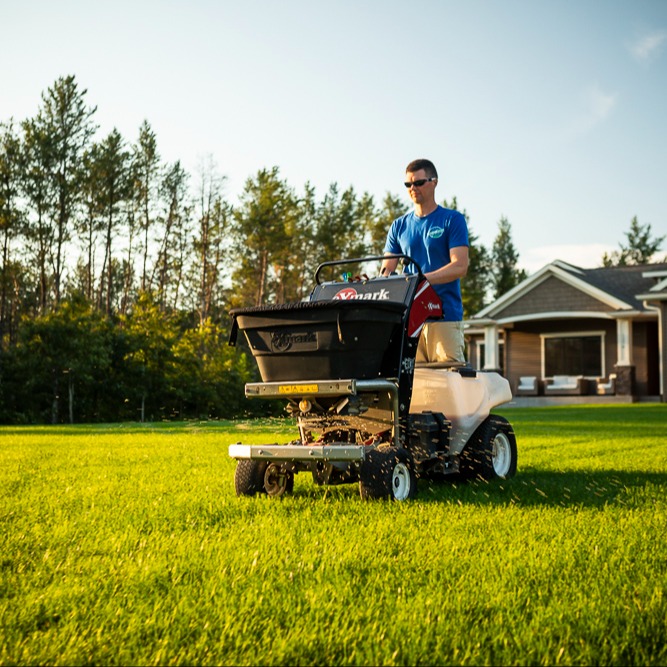
A common surprise for new lawn care customers: the program does not include mowing. Mowing, pruning, bed weeding, and leaf cleanup belong to landscape maintenance, while lawn care is a targeted set of treatments aimed at the health of the turf itself.
What landscape maintenance covers
Landscape maintenance is labor on your whole property. A crew arrives on a route, usually weekly during the growing season, with mowers, trimmers, edgers, blowers, and pruners. The work typically includes mowing and edging, trimming shrubs, pulling weeds out of planting beds, spreading mulch, cleaning up leaves and spring debris, and sometimes treating insect problems on ornamental trees and shrubs.
It is visible, physical, and scheduled by the calendar. You can see the difference the moment the crew leaves.
What lawn care covers
Lawn care is a treatment program for one plant: the grass. It is scheduled around soil temperature and the life cycles of weeds, insects, and disease rather than around a weekly route. The visits are shorter and the results show up over weeks, not the same afternoon.
Nobody has to choose one or the other. They cover different work, and a property that looks good usually has both. The mistake is assuming one includes the other.
What a lawn care program actually includes
Fertilizer on a real schedule
Grass needs nitrogen through the whole growing season, not once in spring. The first round of fertilizer and weed control should be down by Memorial Day, with additional applications through summer, and a fall application matters more than most homeowners expect. In September and October the top growth slows but the roots are still active, storing energy that determines how the lawn starts next spring.
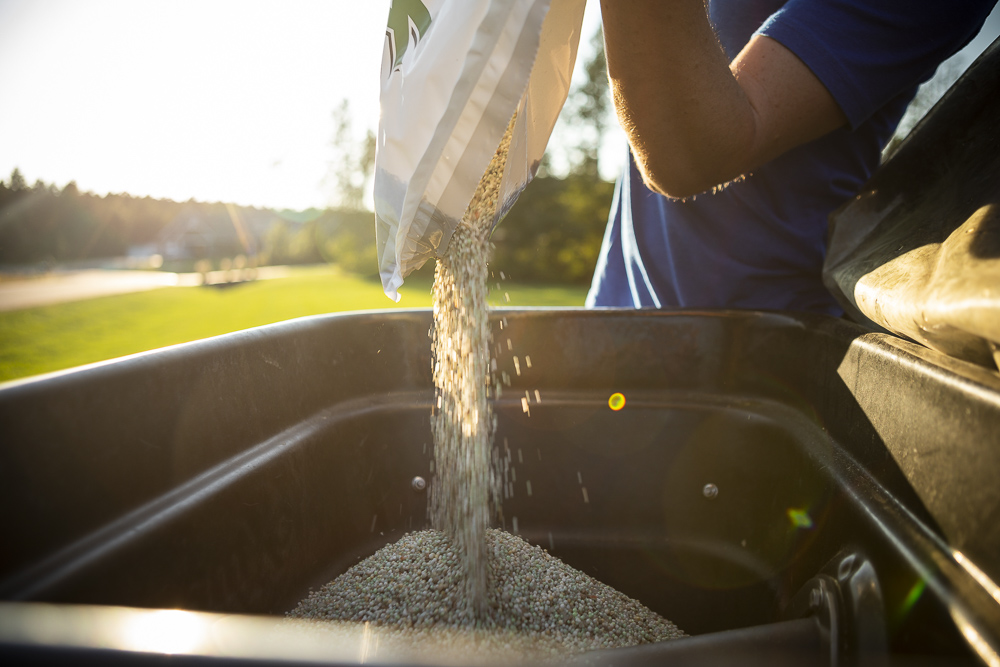
Granular fertilizer is the better product for program work. It costs more than liquid but it breaks down slowly and feeds consistently. Blends that include organic matter also help soil structure over time. RainMaster uses premium professional-grade granular formulations, which is not true of every lawn fertilization service in Eau Claire or Minneapolis.
Weed control, timed in two directions
There are two jobs here and they happen at different times of year. Pre-emergent control targets weed seeds as they germinate, before anything is visible. That is the only effective way to handle crabgrass, which has to be stopped in early spring as soil temperatures climb. Post-emergent control kills weeds that are already up and growing.
RainMaster applies two crabgrass treatments rather than one, in early spring and again in late spring, because a single pre-emergent application loses effectiveness after about six weeks and leaves the rest of the germination window uncovered. Beyond crabgrass, different weeds are active at different times, which is why the comprehensive programs include five visits across the season instead of one or two.
Aeration and overseeding
Compacted soil is a problem you cannot see. Roots in tight soil cannot take up water or nutrients well, the stand thins, and weeds and disease move into the gaps. Core aeration pulls plugs of soil out of the lawn, opening channels for air, water, and fertilizer to reach the root zone. It also speeds the breakdown of thatch, the layer of dead stems and roots sitting between the green blades and the soil.
Aeration is usually paired with overseeding, because the open holes are ideal seed-to-soil contact. Late August through mid September is the window here.
Grub control
White grubs are beetle larvae that feed on grass roots, and heavy populations cause irregular brown patches that pull up like loose carpet. The control strategy is preventive: the material goes down ahead of egg hatch so it is present in the root zone when the young larvae start feeding. Preventive products do not kill the eggs themselves, which is why timing is what makes them work. RainMaster applies Bee-Safe Grub Guard at the first visit in spring, and the material carries through the growing season.
Disease response
Most lawn disease in Wisconsin and Minnesota is driven by conditions rather than bad luck: a canopy that stays wet, poor airflow, and turf that is already stressed. Red thread, for example, is a cool wet-weather disease that shows up in spring and fall on lawns short on nitrogen, not a summer heat problem. A program handles the nutrition and the advice first, and treats with fungicide when a lawn has a documented history of a specific disease.
Diagnosis before you notice
The part that is hard to put on an invoice is a trained technician walking the property five times a year. Problems caught early, a thinning strip over a buried driveway, nutsedge starting in one wet corner, a sprinkler head soaking a shaded area every night, are much cheaper to fix than the same problems in August.
Which one do you need?
If your complaint is that the yard looks unkempt, you want landscape maintenance. If your complaint is that the grass is thin, weedy, patchy, or the wrong color, you want lawn care. If both are true, hire both, and keep in mind they interact: a mowing crew cutting too short every week will undo a lot of what a treatment program is paying for. Ask your mowing service to hold three to four inches and keep blades sharp.
One more overlap worth knowing about. If you have an in-ground system, the irrigation schedule affects both. Watering in the evening keeps the canopy wet overnight and feeds disease no matter how good the treatment program is.
Bottom line
- Lawn care programs do not include mowing. Mowing, pruning, bed weeding, and leaf cleanup are landscape maintenance.
- Lawn care is scheduled by soil temperature and pest life cycles, not by a weekly route.
- A comprehensive program covers fertilizer, pre-emergent and post-emergent weed control, grub prevention, aeration and overseeding, and disease response.
- Preventive grub material works because it is in place when eggs hatch and larvae begin feeding, not because it kills eggs.
- Tell whoever mows to hold three to four inches, or weekly scalping will undo the treatment program.
Frequently asked questions
Does a lawn care program include mowing?
No. Lawn care covers fertilizer, weed control, insect and disease management, aeration, and overseeding. Mowing is a landscape maintenance service, and the two are usually sold and scheduled separately.
Can one company do both?
Some can, but the work takes different equipment, different licensing for applications, and different scheduling. Plenty of properties use a mowing service and a separate lawn care program, which is fine as long as the mowing height is right.
Why does lawn care need five visits a year?
Because the targets arrive at different times. Crabgrass has to be stopped in early spring, broadleaf weeds are easiest to control in fall, grubs need material in place before egg hatch, and nitrogen has to be delivered through the season rather than all at once.
Will a lawn care program weed my flower beds?
No. Bed weeding and mulching are landscape maintenance. Lawn programs treat turf, and most broadleaf products used on turf will damage ornamental plants.
University of Wisconsin Division of Extension, Lawn Fertilization.
University of Wisconsin Division of Extension, Lawn Aeration and Topdressing.


