


Is Grub Control Necessary? Do I Need it Every Year?
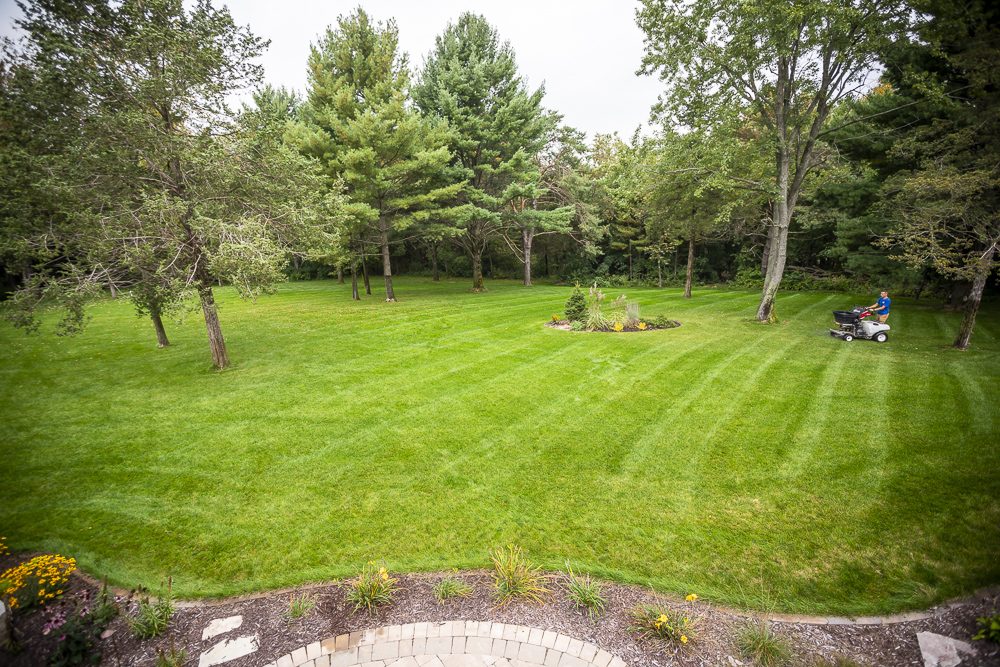
Grubs feed on grass roots underground, so by the time you see the damage the roots are already gone. That is the whole case for preventive grub control: it is cheap insurance against something you cannot see coming. Here is how the grub cycle actually works here, and how to decide whether you need treatment every year.
What grubs are and what they do
Grubs are the larval stage of beetles, mainly Japanese beetles, June beetles, and masked chafers in this region. They are white, C-shaped, and they live in the top few inches of soil where they feed on grass roots and organic matter.
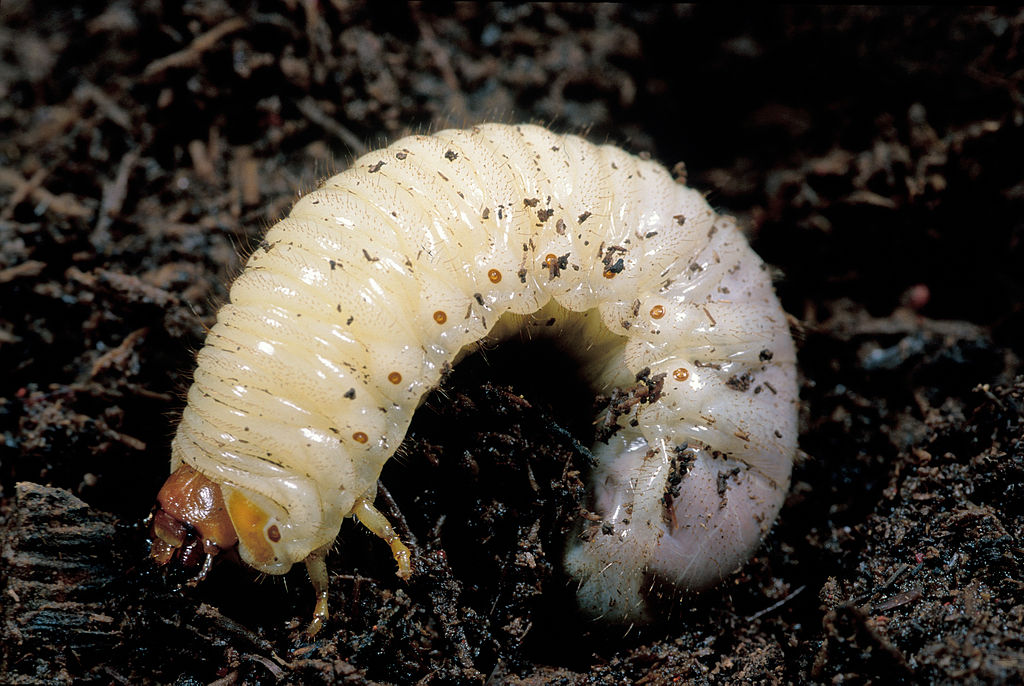

That feeding location is the problem. A lawn with a heavy grub population loses its root system while the blades still look fine, so the turf looks healthy right up until it does not. Then you get irregular dead patches that pull up like loose carpet, usually in late summer, and often the first sign is skunks, raccoons, or birds tearing up the lawn to get at the grubs.
Damage can appear fast once it starts, over a week or two rather than overnight. What is sudden is your awareness of it, not the feeding.
Is grub control necessary?
Honest answer: it depends on the lawn, and preventive treatment is best understood as insurance rather than a universal requirement.
University guidance is that treatment is justified when a lawn has a history of grub damage, when there is heavy local beetle pressure, or when a sample turns up roughly ten or more grubs per square foot. You can check this yourself. Cut a one-foot square of turf about three inches deep in August, fold it back, and count the grubs in the root zone.
Where a preventive application earns its keep every year is on properties that have already been hit, lawns backing up to wooded or unmanaged ground, newly seeded or sodded lawns with shallow roots, and high-value irrigated turf, because beetles prefer to lay eggs in moist soil. Irrigated lawns are more attractive to egg-laying females than dry ones.
Is grub control necessary every year?
For most of our customers, yes, and the reason is the life cycle. Grubs feed on roots, pupate, and emerge as adult beetles. Those beetles mate and lay eggs near where they fed, generally in July and August, and the next generation of grubs hatches into the same lawn. Left alone, the cycle repeats and builds.
Treating every year on a property with known pressure is simply cheaper than letting a population establish and then paying for curative treatment plus turf repair.
Preventive timing is the whole game
One clarification worth making, since it gets stated wrong constantly: preventive grub control does not kill eggs. What it does is put the active ingredient in the root zone ahead of the hatch, so the newly hatched larvae are controlled before they are big enough to do real root damage. That is why the application goes down in spring or early summer, well before the late summer hatch, and why the product has to last.
At RainMaster, serving Minneapolis and Eau Claire, we apply Grub Guard right away in the spring. Then you are set for the season, because our grub control lasts through the entire growing season. Not all grub products do. Some are weakened by the time a second wave of hungry grubs arrives in late summer and fall, which leaves the lawn exposed at the exact moment it matters.
One more thing we will not compromise on: Grub Guard does not kill bees the way the cheaper products many companies use can. Pollinators are worth protecting, and there is no good reason to trade them for a slightly lower material cost.
What if you missed the spring treatment?
If you are reading this in summer or fall with active grub damage, the approach changes. Late season control calls for a curative product, which works on larger, actively feeding grubs. Two things to expect:
- It costs more than a preventive application.
- You will likely need turf repair. Where roots are gone, the grass does not come back on its own. Plan on aeration and overseeding, ideally late August through mid September, which is the best seeding window in the Chippewa Valley and the Twin Cities.
Then plan a preventive treatment the following spring. A lawn that had grubs once has adult beetles that know the address.
Why program lawns hold up better
Grub control works best as one part of a complete lawn care program, not as a standalone spray. Deep roots, balanced fertility, correct mowing height, and annual aeration all raise the number of grubs a lawn can carry before it shows damage. A thin, compacted, shallow-rooted lawn fails at a grub count that a healthy lawn shrugs off.
Watering matters here too. Short daily sprinkler cycles keep the top inch of soil constantly moist, which is where beetles prefer to lay eggs and where small grubs survive best. Deep, infrequent watering is better for roots and less inviting to egg-laying beetles, and it takes a properly adjusted irrigation system to deliver it.
Bottom line
- Grubs are beetle larvae that eat grass roots, so damage shows up as turf that lifts like loose carpet.
- Preventive treatment is justified by history, local beetle pressure, or a count of roughly ten or more grubs per square foot.
- Preventive products do not kill eggs. They sit in the root zone so newly hatched larvae are controlled before they feed.
- Spring application and a product that lasts the full season is what protects against the late summer hatch.
- Curative control after damage appears costs more and usually requires aeration and overseeding on top.
Frequently asked questions
How do I know if I have grubs?
Cut a one-foot square of turf about three inches deep in August and fold it back. Count the white, C-shaped larvae in the root zone. Roughly ten or more per square foot is the threshold where treatment is generally justified. Turf that peels up with no roots, or digging by skunks and raccoons, is the other tell.
When should grub control be applied?
Preventive control goes down in spring or early summer so the material is in place before eggs hatch in late July and August. Curative products are used after damage appears and work on larger grubs, but they cost more and will not repair the dead turf.
Will grub control hurt bees?
It depends entirely on the product. Some low-cost materials are harmful to pollinators. Grub Guard, which we use, is selected specifically because it does not kill bees.
Do I still need grub control if my lawn looks fine?
If your lawn has a history of grub damage, backs up to wooded ground, or is irrigated turf in an area with heavy beetle pressure, preventive treatment is worth it, because the damage is invisible until the roots are already lost. On a lawn with no history and no evidence in a sample, you can reasonably skip it and sample again next year.
University of Wisconsin Extension, White grubs.
University of Wisconsin Extension, Japanese beetle.


