


11 Irrigation Myths (& Facts for Eau Claire, WI or Minneapolis)
Irrigation advice gets passed around neighborhoods, and a lot of it is wrong in ways that cost water, kill grass, or break expensive parts. Here are eleven beliefs worth correcting before next season.
Myth 1: Water every day
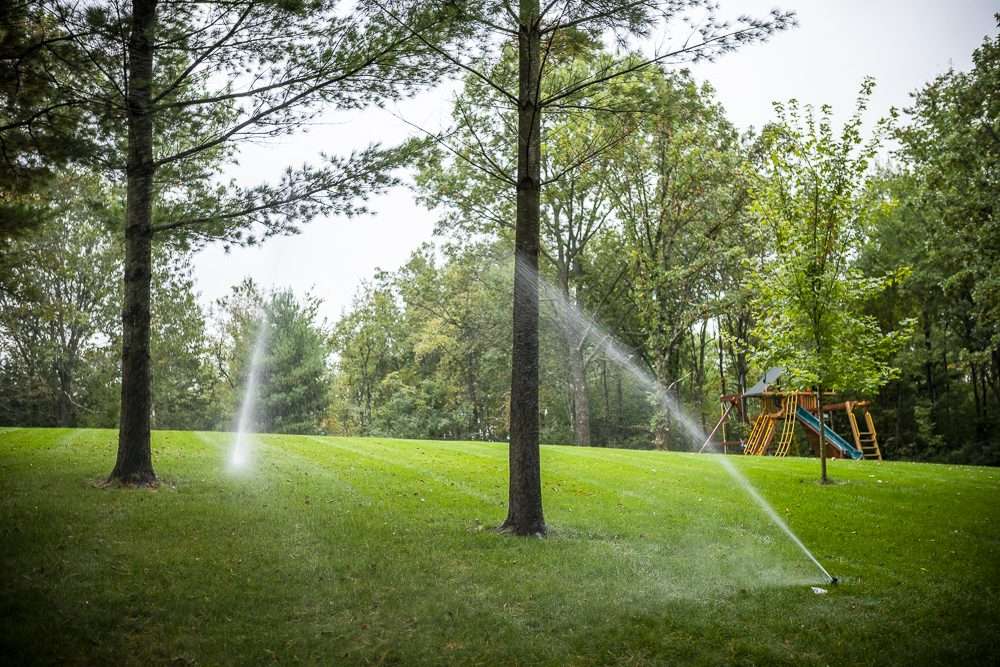
Not for an established lawn. Let the soil dry between cycles and water longer, fewer days per week. If water is always available in the top inch, roots stay there, and a shallow root system cannot carry the lawn through a hot dry stretch or shrug off a summer disease. Deep infrequent watering forces roots down, which is the whole goal.
New seed is the exception and it reverses completely. Seed and seedlings have to stay consistently moist, which means several short cycles a day until the stand establishes.
Myth 2: Time of day does not matter
It matters a lot. Finish watering as close to sunrise as you can; if sunrise is 6 a.m., be done at 6. Wind rises through the day and carries droplets off target. Sun evaporates water before it infiltrates. And evening or overnight cycles leave the canopy wet for hours, which is the condition most lawn pathogens need to infect.
Myth 3: You can set the controller and forget it
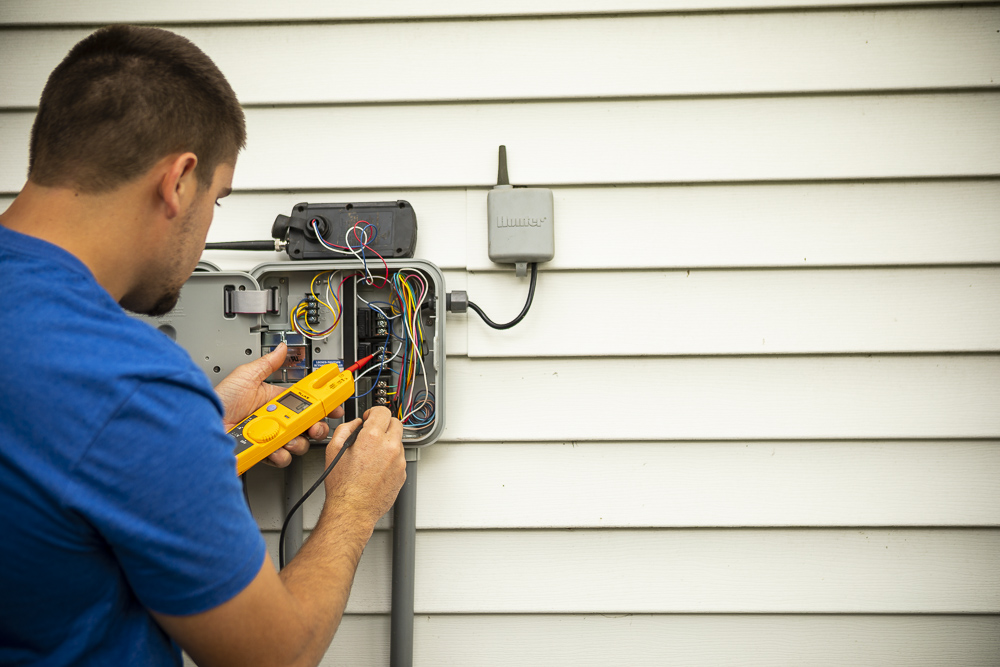
The settings that are correct for a cool, wet May are wrong by late July, when it is 90 degrees and has not rained in two weeks, and wrong again in September. A controller programmed once in spring is one of the most common reasons a lawn is simultaneously stressed and overwatered in different zones. Update the schedule as the season changes, or run a smart controller and verify it is actually receiving local weather data.
Myth 4: Spring startup and fall winterization are enough
Those two visits are the minimum, not the plan. The system does its hardest work in July and August, which is exactly when things fail. Heads get clipped by a mower. A contractor's trenching damages a line. Plants have grown and are now blocking spray patterns. Midsummer is also the only time a technician can evaluate coverage with the landscape at full growth, which is when overspray and dry pockets are visible.
Myth 5: Spring activation just means turning the water on
At some companies it does. A real activation is a multi-point inspection: every head checked physically and adjusted for arc and alignment, every valve checked, every zone run and watched, and the controller programmed for spring conditions. Frost heave moves heads over winter, lines settle, and residue in the pipe can clog a nozzle the moment water flows.
Myth 6: A brown spot means a dry spot
Sometimes. It can also be fungal disease, grub damage, dog urine, buried construction debris, or a line of compacted soil. Dumping more water on a disease-driven brown patch makes it spread. Identify the cause before you change the schedule.
Myth 7: You have to call to schedule service
Not with a program. RainMaster irrigation programs include automatic scheduling for spring startup, fall shutdown, and the midsummer maintenance visit where the program includes one. The point of a program is that the calendar is handled for you.
Myth 8: Your shop compressor can blow out the system
This is the one that causes expensive damage. Getting water out of the pipes, valves, and heads before the first hard freeze is non-negotiable, because water expands when it freezes and breaks whatever contains it. In Eau Claire and the Twin Cities that freeze can arrive any time from early October on, which is why blowout schedules fill from the back end rather than the front. But the job is about air volume, measured in CFM, not pressure, measured in PSI.
A garage compressor typically delivers 100 to 160 PSI at low volume. That is the wrong tool twice over. Most irrigation components are rated for about 100 PSI, so high pressure can blow fittings apart and send heads flying. And low volume means you never move the water out, so people run the compressor longer and longer, which dry-runs the gear drives in rotor heads and damages them through heat and friction. Professional blowout equipment runs high volume at roughly 60 to 80 PSI, which is what actually clears a line.
Myth 9: Anybody can install and repair irrigation
Anyone can buy pipe and a truck. Doing it well takes an understanding of hydraulics and electrical systems, and the consequences of getting it wrong are buried in your yard. Bad design is the expensive version: spacing is set once the job is done, and fixing it later can mean digging up and repositioning dozens of heads and adding zones.
Industry staffing matters here too. Most people in lawn care and irrigation work seasonally. RainMaster hires year-round and invests in training, which is why the same technicians come back to the same properties.
Myth 10: Wait until something breaks, then call
You can, as long as you are comfortable waiting. Good irrigation companies run four weeks out or longer in season, and a failure in late July means a month of dry lawn or dying plantings. Maintenance exists to find the small problems, a weeping valve, a worn nozzle, a head that has drifted off arc, before they become the emergency.
Myth 11: All irrigation programs are the same
They are not. Every company will leave you with water coming out of heads. The differences are whether the installation started with expert design, whether anyone evaluates coverage during peak demand, whether the controller gets reprogrammed as conditions change, and what product tier the heads, valves, and controller come from. Those choices decide how much water you waste for the next twenty years.
Bottom line
- Established lawns want deep, infrequent watering finished by sunrise. New seed is the opposite and needs short, frequent cycles.
- Reprogram the controller as the season changes; a spring schedule running in July is a common and expensive mistake.
- Spring activation should be a full multi-point inspection, not just opening the valve.
- Blowing out a system is about air volume, not pressure. A shop compressor can break fittings and damage rotor gear drives.
- Book repairs and service early. In-season lead times commonly run four weeks or longer.
Frequently asked questions
How often should I water an established lawn?
Aim for about an inch per week including rainfall, delivered in a few long cycles rather than daily short ones. Clay soils need shorter runs more spread out; sandy soils need longer runs.
Can I winterize my sprinkler system myself?
It is not advisable. Residential compressors deliver high pressure at low volume, which is the opposite of what the job needs, and both the high pressure and the extended run time can damage components. The repair usually costs more than the service.
Why is one zone always drier than the others?
Common causes are a head out of alignment or arc, a worn nozzle, pressure loss from a leak, a mismatch of head types on the same zone, or run times set for a different soil type. A zone-by-zone inspection identifies which.
Do smart controllers actually save water?
They can, when they are installed correctly and actually receiving weather data, and when the rain sensor is clean and functioning. A smart controller with a blocked sensor or a bad connection just runs its fallback schedule.
U.S. Environmental Protection Agency WaterSense, Sprinkler Spruce-Up.
Irrigation Association, Irrigation industry standards and resources.


