


6 Common Lawn Sprinkler Problems (and How to Spot Them Early)
Sprinkler problems rarely announce themselves. They show up second-hand as a dry patch, a soggy corner, or a water bill that climbed without explanation, which means the cost has already started before you notice.
1. A zone that is not running
This is the most commonly missed failure, because nothing looks broken. You see brown grass or dry patches in one part of the lawn and assume that area needs more water.

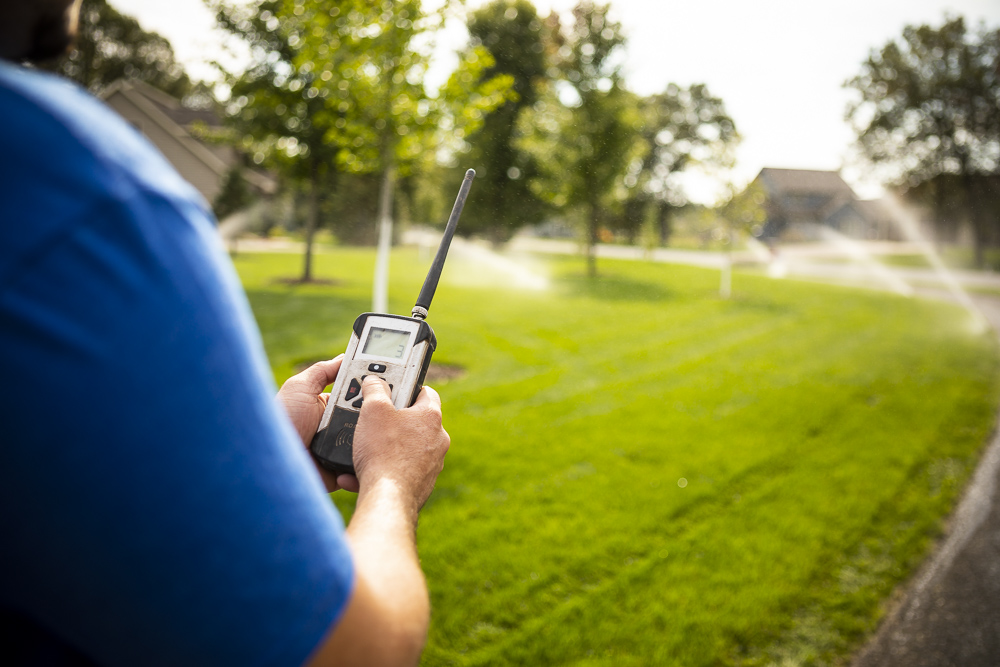
Every zone should start, run, and stop on command so each area gets its intended amount. Zones fail for ordinary reasons: a lightning strike takes out a solenoid or the controller output, a valve diaphragm fails, a wire corrodes at a splice, a rodent chews a line. The diagnostic is simple and worth doing: run each zone manually from the controller once a month and walk it while it runs.
2. Low or high water pressure
Pressure problems are among the most common reasons for irrigation repair, and they are easy to read off the spray pattern.
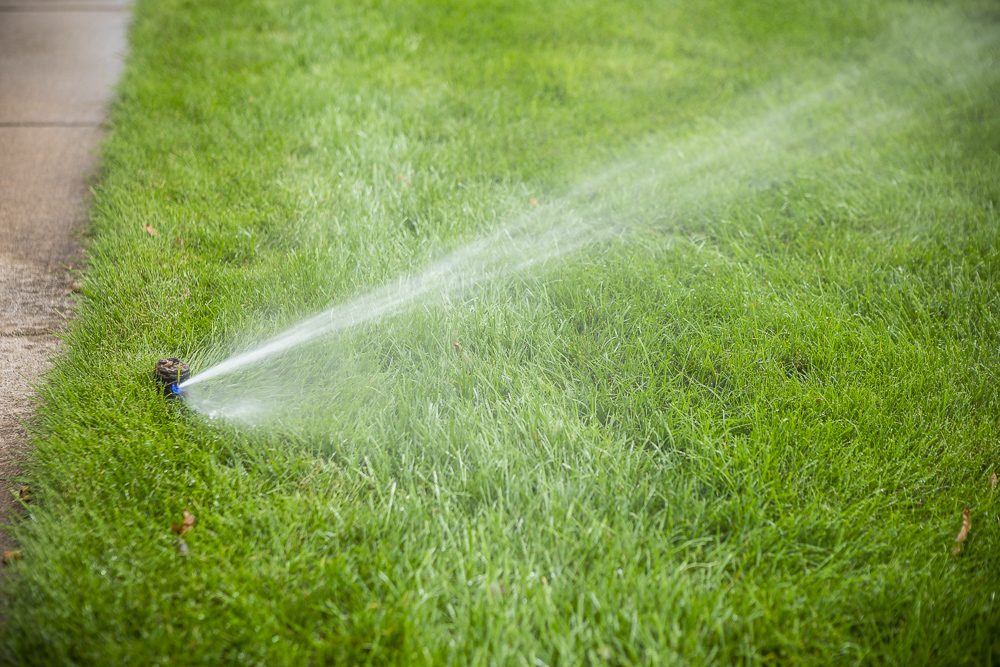
Too low and water streams or dribbles out of the head instead of forming a spray, so the arc falls short and you get browning at the outer edge of coverage. Too high and you see fine mist instead of a steady droplet pattern, which means water evaporating and drifting away rather than landing on the lawn.
Causes range from a partially closed valve, a leak in a main or lateral, tree roots pinching a line, a clogged filter, or a pressure regulator that has failed. High pressure also accelerates wear on everything downstream, so it costs twice.
3. The controller is set wrong
Troubleshooting usually starts at the controller, since it is the brain of the system and the easiest thing to get wrong. A program with multiple start times can water two or three times a night without anyone realizing, which looks exactly like a leak on the water bill.
Season is the other common error. Spring settings, built for cool, wet weather, running in August underwater the lawn. August settings running in May drown it. Check that the schedule matches the time of year, that the start time is early morning, and that there is only one start time per zone unless a slope requires cycle and soak.
4. Broken or misaligned heads
Heads are the workhorses of the system, and the most exposed.
- Knocked out of alignment by mowers, foot traffic, or a snowplow, so they water the sidewalk, the driveway, or the side of the house.
- Settled too low, which happens over seasons as soil shifts, so the spray goes into the grass instead of over it.
- Blocked by tall grass, perennials, or shrubs that have grown into the arc.
- Clogged nozzles, from residue in the line that flows to the head when water is turned on and distorts the pattern without stopping flow.
- Broken or missing after being mowed over or driven on, which turns a head into an open pipe.
Frost heave is the one specific to this region. Freeze and thaw cycles over winter lift and tilt heads, which is why a spring check in Wisconsin and Minnesota finds alignment problems almost every year.
5. Running in the rain
The most visible waste there is. Two causes: a controller that was programmed without a sensor in the loop, or a rain sensor whose battery died or whose housing is packed with debris. Both are inexpensive fixes that pay for themselves quickly.
6. A leak producing a soggy spot
A single area of lawn that stays wet while everything else dries out usually means a leak below it, releasing far more water than the spot needs. Look for a head that weeps continuously after the zone shuts off, a soft or sunken area, unusually lush green growth in one patch, or gravel and soil washed out around a head. A leak on a main line runs continuously, around the clock, whether the system is on or not.
Why small problems become emergencies
Most homeowners do not inspect their sprinkler systems, so the early warning signs pass unnoticed. By the time a system clearly needs repair, the lawn is browning and expensive plants are in trouble, and now it is an emergency call during the busiest stretch of the season.
Regular inspection is what breaks that pattern. A quick check by a technician catches a settled head or a failing valve while it is still a small item. There is also a real recovery cost in waiting: brown spots do not green up immediately once watering resumes, and you can look at them for a couple of weeks while the turf recovers.
Nobody can watch their yard closely enough to catch all of this. The practical answer is a sprinkler system maintenance plan, where a specialist is on the property on a schedule, finds the issues, and fixes them before they cost you water, turf, or plants. Ignoring maintenance generally costs more in repairs than the maintenance would have cost in the first place. Choose from our three irrigation maintenance programs, and if the lawn already has damage from a coverage failure, pair the repair with the lawn care work needed to bring those areas back.
Bottom line
- Run each zone manually once a month and walk it. A zone that silently stopped running is the most commonly missed failure.
- Read pressure off the spray: streaming means too low, fine mist means too high, and both waste water.
- Check the controller first, especially for multiple start times and for settings left on the wrong season.
- Frost heave tilts heads over the winter here, so spring alignment checks are a regional necessity.
- One persistently soggy spot usually means a leak; a main line leak runs whether the system is on or not.
Frequently asked questions
Why is one part of my lawn brown when the sprinklers run?
Most often a zone, valve, or head failure rather than a watering amount problem. Run that zone manually and watch it: look for a head not popping up, a short throw from low pressure, a blocked arc, or a zone that never energizes at all.
How do I know if my sprinkler system has a leak?
Watch for a spot that stays soggy while the rest of the lawn dries, a head that weeps after the zone shuts off, unusually lush growth in one patch, or a water bill that rose without a schedule change. A main line leak runs continuously even with the system off.
Why do my sprinklers run when it is raining?
Either there is no rain sensor in the circuit, or the sensor has a dead battery or is blocked with debris. Both are quick fixes, and a weather-based or soil moisture control takes the decision off a fixed schedule entirely.
How often should I have my sprinkler system checked?
Spring, summer, and fall. Spring catches winter frost heave and freeze damage, summer catches blocked patterns when plants are at full growth and the system is working hardest, and fall is when the lines get blown out for winter.
U.S. Environmental Protection Agency, Sprinkler Spruce-Up.


