


How to Treat & Prevent Snow Mold & Other Winter Lawn Diseases
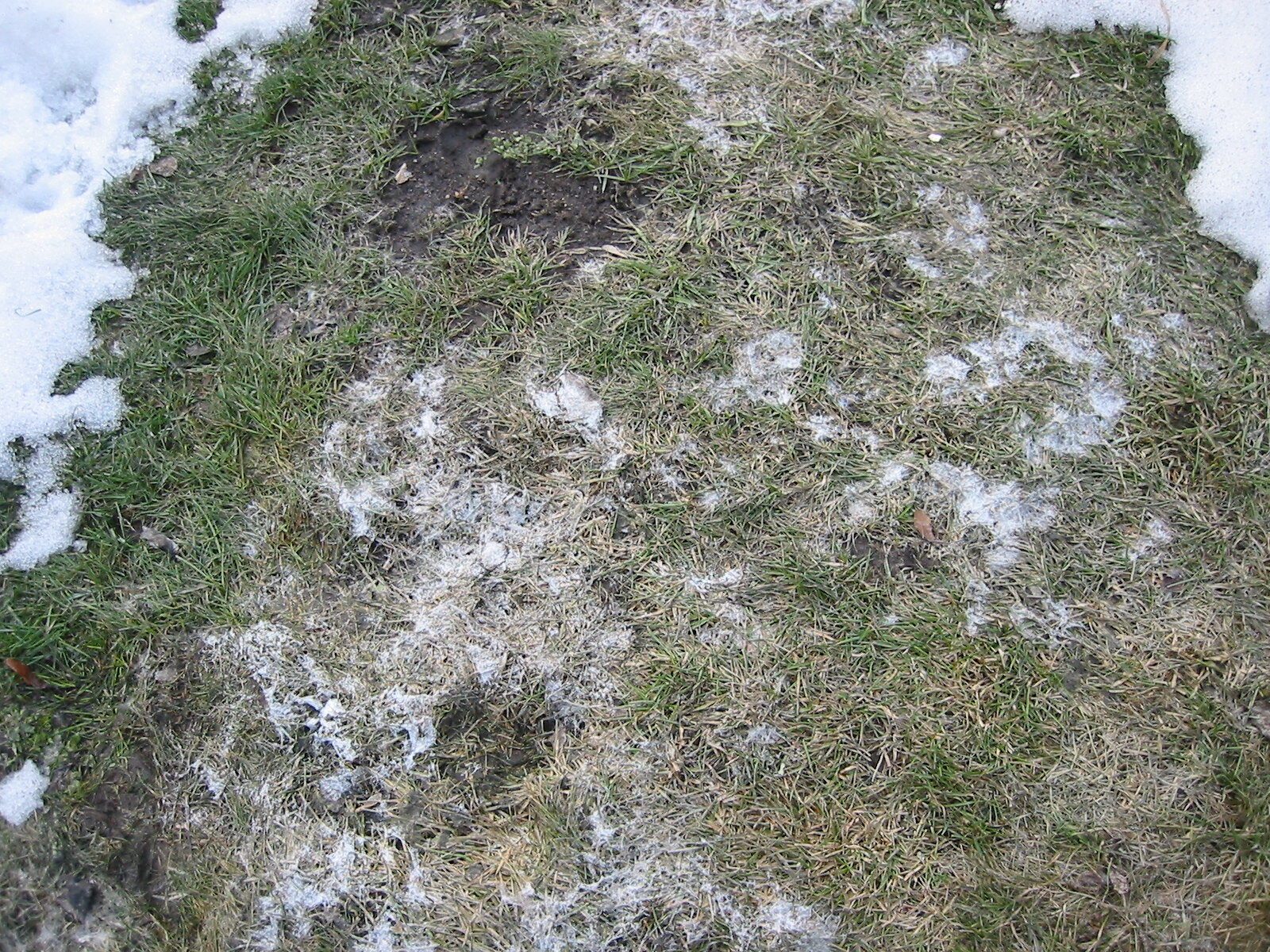
Snow mold is the first lawn disease of the year in Wisconsin and Minnesota, and it looks far worse than it usually is. Most patches recover on their own once air and sunlight reach the grass again. What actually matters is how you rake it out and what you do the following fall.
What snow mold is
Snow mold is a fungal disease that develops under snow cover during cold, wet conditions. Most lawn diseases here are warm-weather problems; this one is the exception. It is common in this region because we get the conditions it needs, and it affects the cool-season grasses we grow, particularly Kentucky bluegrass and perennial ryegrass.
Two types show up. Gray snow mold requires extended snow cover to develop and generally stays in the leaf tissue, so the plant recovers. Pink snow mold shows a pinkish cast at the edge of the patch in damp conditions, can develop during long cold wet stretches without deep snow, and is the one more likely to injure the crown of the plant rather than just the leaf.
That distinction matters for one common claim. Snow mold is usually not serious, and most lawns green back up on their own, but it is not harmless in every case: where pink snow mold has killed crowns, those spots will not recover and need seed.
What it looks like
You cannot see it forming, because it develops under the snowpack. At snowmelt you get circular or irregular patches of matted, flattened grass, straw colored to grayish white, with the blades stuck together as if glued. Patches may keep expanding while the grass stays cold and wet, and as they age the matted area can look crusty.
The worst patches are predictable: wherever snow lasted longest. That usually means the shaded north and east sides of the house, along fences and tree lines, and anywhere plowed or shoveled snow was piled.
How to treat it in spring
The matted layer blocks sunlight and holds moisture, which is what keeps those areas from greening up with the rest of the lawn. Once the lawn has dried out after melt, the job is to loosen it.
- Rake gently with a leaf rake. Fluff up the matted areas so air circulates near the crowns and sunlight reaches the soil. The goal is to break up the mat, not to strip it out. The grass is still fragile and uprooting it turns a patch that would have recovered into bare soil.
- Do not use a power rake. A dethatcher on weak, wet turf pulls live grass out with the matted material.
- Apply fertilizer to support the regrowth once the lawn is actively growing.
- Give it two to three weeks of growing weather before deciding anything is dead. Most patches fill in, and the areas that genuinely need seed end up smaller than they looked at melt.
What about fungicide?
Spraying a fungicide in spring on visible snow mold accomplishes nothing useful. The infection happened under the snow months earlier, and by the time you see the patches the pathogen is no longer actively damaging the plant. Raking and letting the lawn dry is the effective response.
Preventive fungicide applied in late fall, before snow cover, can reduce snow mold, but it is a golf course and high-value turf practice. On a home lawn it is rarely warranted, and the cultural steps below do most of the work for free.
How to prevent it
Everything that reduces snow mold happens before winter.
Remove fall leaves
Wet matted leaves left on the lawn hold moisture against the turf all winter, which is exactly what the fungus needs. Clear leaves and debris before snow season, not after.
Keep mowing until the lawn stops growing
Long grass going into winter mats down under snow and stays wet. Keep mowing on a normal schedule until growth stops in the fall rather than stopping in September.
Manage thatch, with aeration
Snow mold thrives in thatch, the layer of dead stems, crowns, and roots between the green canopy and the soil. Core aeration pulls plugs through that layer and mixes soil microorganisms into it, which speeds decomposition and lets air, water, and nutrients reach the roots.
One myth to retire while we are here: grass clippings do not cause thatch. Clippings are mostly water and break down quickly. Thatch comes from tougher stem and root tissue, so mulching clippings back into the lawn is fine.
Break up snow piles
Snow that lingers and melts slowly keeps the turf underneath cold, wet, and airless for weeks longer than the rest of the yard. Spreading large piles out so they melt faster is the simplest preventive step available, and it matters most in shaded areas where piles last longest. Where snow removal is involved, stacking location is worth deciding before the first storm.
Avoid heavy late-fall nitrogen
A late flush of soluble nitrogen produces soft growth heading into winter, and soft tissue is more susceptible. Fall fertilizer is valuable; the timing and the rate are what matter.
Reseeding winter damage
After raking, some bare areas may remain. Loosen the soil, add topsoil to level low spots, and seed. Do not count on the lawn closing those gaps by itself: Kentucky bluegrass spreads by rhizomes and will creep in slowly, but perennial ryegrass and tall fescue are bunch-type grasses and cannot cross a bare patch at all. The longer bare soil sits open, the more likely weed seed finds it first.
Preventing lawn disease year round
- Fertilize in spring and fall on a balanced schedule. Both over- and under-feeding increase disease pressure.
- Aerate annually to reduce compaction and thatch and improve drainage.
- Water deeply and infrequently, not a little every day. Deeper roots handle stress better and the canopy spends less time wet.
- Water early, finishing by sunrise, so the lawn dries during the day instead of staying wet overnight.
- Mow high with a sharp blade. Torn leaf tips are entry points for infection.
Bottom line
- Snow mold appears at snowmelt as matted straw-colored patches, worst wherever snow lasted longest.
- Gray snow mold stays in the leaf and recovers. Pink snow mold can kill crowns, so those spots need seed.
- Rake gently with a leaf rake to loosen the mat and let air and light in. Never power rake weak wet turf.
- Spring fungicide does not help. Preventive late-fall fungicide works but is a high-value turf practice, not a home lawn necessity.
- Prevent it in fall: clear leaves, keep mowing until growth stops, aerate to manage thatch, and spread out snow piles.
Frequently asked questions
Will grass come back after snow mold?
Usually yes. Rake the matted areas gently, let them dry and get sunlight, and most will green up within a few weeks. The exception is where pink snow mold killed the crowns, which will not recover and needs overseeding.
Should I use a fungicide on snow mold?
Not in spring. By the time you see the patches, the damage is done and the pathogen is no longer active. Preventive applications in late fall can reduce it, but that is generally a golf course practice rather than something a home lawn needs.
How do I prevent snow mold next winter?
Clear fall leaves and debris, keep mowing until growth stops, aerate to reduce thatch, avoid heavy late-fall nitrogen, and break up and spread snow piles so they melt faster instead of sitting on the turf for weeks.
Do grass clippings cause thatch?
No. Clippings are mostly water and decompose quickly. Thatch is built from slower-decomposing stem, crown, and root tissue, which is why mulching clippings back into the lawn is fine and even useful.
University of Wisconsin Extension, Lawn Aeration and Topdressing.
University of Wisconsin Extension, Red Thread and Cool Wet Weather Lawn Disease.


