


How to Prepare Your Yard For Mosquito and Tick Season

Mosquitoes and ticks want the same thing from your yard: damp, shady, undisturbed cover. Clearing that habitat before the season starts does most of the work, and a barrier treatment on the places they breed and rest handles the rest. In Wisconsin and Minnesota that means starting in April, not in July when you are already getting bitten.
Mosquito and tick control is a habitat problem first. Both pests need moisture and shade to survive, and both spend most of their lives in a narrow band of your property: the shaded perimeter, the leaf litter, the tall grass at the edge of the lawn, and anything holding standing water. Deal with those and you have changed the math before you treat anything.
Clear out what they are living in
Walk the property and look for the specific things these pests depend on.
Standing water, which is where mosquitoes come from
Mosquitoes can go from egg to adult in a container of water in about a week, and it does not take much water. The usual culprits:
- Old tires, buckets, wheelbarrows, and empty flower pots
- Clogged gutters, which hold water in the low spots all season
- Tarps, kiddie pools, and anything with a sag in it
- Birdbaths and pet bowls that are not emptied
- Low spots in the yard and plugged downspout extensions that stay wet after rain
Dump and refresh anything that holds water weekly. That one habit removes a surprising share of the mosquitoes that would otherwise be biting you in August.
Leaf litter and tall cover, which is where ticks live
Ticks do not fly and they do not travel far. They wait in leaf litter, tall grass, and brush at the edges of a lawn, which is why the back fence line and the woods edge are where people pick them up. Remove last fall's leaf litter, cut back brush and tall grass along the house and the lawn perimeter, keep the lawn mowed, and stack firewood neatly in a dry spot rather than against a shaded wall.
Layout changes that help
- Keep playground equipment, decks, and patios away from yard edges and out from under dense tree canopy.
- Use fencing to discourage deer, raccoons, rodents, and stray dogs, which carry ticks onto the property.
- Thin dense shrub beds against the house so air and sun reach the soil instead of leaving a permanently damp layer.
Why this matters more here than people assume
Wisconsin and Minnesota both have well established blacklegged tick populations, the species associated with Lyme disease, and that is not limited to deep woods in the north. Suburban yards in the Twin Cities metro and around Eau Claire with wooded edges have the same habitat. Ticks become active any time temperatures are above freezing for a stretch, which in a normal spring means March or April, well before most people start thinking about bug season. The small nymphs, which are the hardest to spot, are most active from late spring into midsummer.
Mosquito pressure runs on a different clock, building after the first warm, wet stretch and peaking through the humid weeks of July and August, with a second push after any heavy rain fills the low ground.
How barrier treatment works
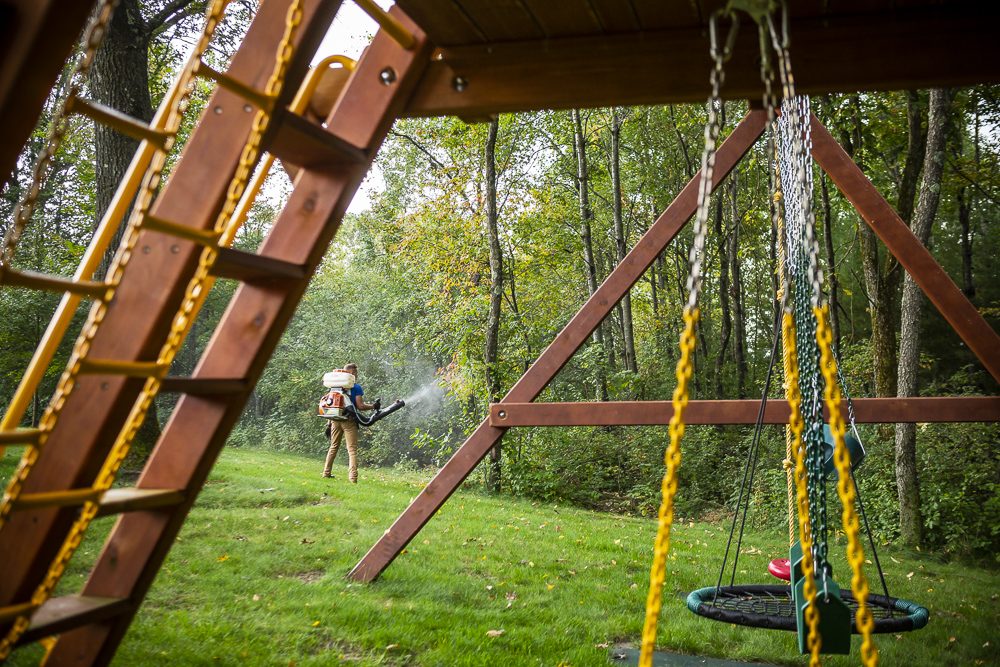
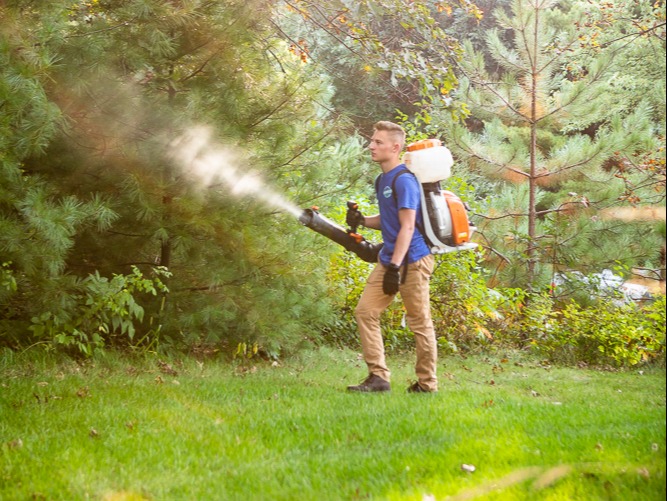
Because both pests rest and breed in the same places, the treatment targets habitat rather than open lawn. A specialist sprays the perimeter and the specific harborage spots:
- The underside of plant leaves, where mosquitoes rest during the day
- Shaded and wet areas
- Under decks and porches
- Under tree canopies and along the drip line
- Wood piles, fence lines, and the brushy lawn edge
RainMaster's barrier spray reduces mosquitoes and ticks across the property with visits roughly every three weeks, six treatments across the season from spring through fall. The seasonal fee is based on the size of your yard, and it covers both pests together. A number of companies bill mosquito control and tick control separately even though the same product handles both. We do not.
The three week interval is not arbitrary. It matches how long the treatment stays effective against new adults moving in, and it keeps the gaps short enough that the population never rebuilds to where it started.
What to do between treatments
- Keep dumping standing water. A single forgotten bucket can restart a mosquito population inside a treated yard.
- Keep the perimeter cut. Grass and brush that grow back into the lawn edge rebuild tick habitat.
- Check yourself, your kids, and your dog after yard work. Ticks need hours of attachment to transmit disease, so prompt removal matters.
- Keep the lawn healthy and dense. Thin, weedy turf with bare spots stays wetter and holds more cover. Our lawn care program and pest control work on the same property for a reason.
Done together, habitat cleanup in April and a treatment schedule that runs through fall is the difference between a yard you use and a yard you look at through a window.
Bottom line
- Mosquitoes and ticks share the same damp, shaded habitat, so clearing it reduces both at once.
- Dump every container of standing water weekly; mosquitoes complete their life cycle in about a week.
- Ticks wait in leaf litter, tall grass, and brush at the lawn edge, not in the open lawn.
- Barrier treatment targets harborage spots, with visits about every three weeks, six times from spring through fall.
- Start in April. Ticks are active well before the weather feels like bug season.
Frequently asked questions
When should I start treating my yard for mosquitoes and ticks?
Spring, as soon as temperatures are consistently above freezing. Ticks become active in March or April in a normal year, and starting early keeps the mosquito population from building rather than knocking it down after it peaks.
How often does a mosquito and tick barrier spray need to be reapplied?
About every three weeks through the season, which works out to six treatments from spring into fall. That interval matches how long the treatment holds against new adults moving in from neighboring property.
Do I have to pay separately for mosquito and tick control?
Not with us. The same product controls both pests, and our seasonal fee, based on the size of your yard, covers them together. Some companies bill them as two services.
Where in my yard do ticks actually live?
In leaf litter, tall grass, and brush, especially along wooded edges and fence lines. Open, mowed lawn is poor tick habitat, which is why clearing the perimeter and removing leaf litter makes such a difference.
University of Minnesota Extension, Ticks and biting insects in the yard.
University of Wisconsin Extension, Yard and garden pest management resources.


