


How to Maintain Your Sprinkler System Throughout The Year
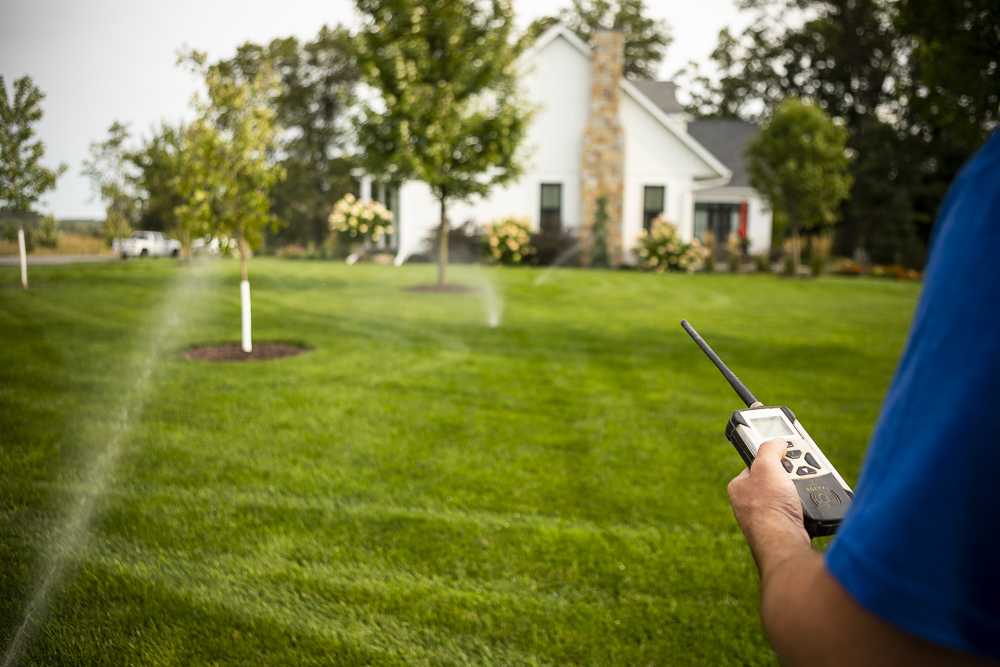
An in-ground sprinkler system is mechanical and electrical equipment buried in soil that freezes every winter. It does not take care of itself, and the maintenance is seasonal: a thorough spring inspection, a midsummer check during peak demand, and a complete fall blowout.
Spring: inspect before you pressurize
Winter is long in Wisconsin and Minnesota, and systems come out of it with problems. Four or five months of frozen ground push heads off arc, and anything that held water has had repeated hard freezes to work on. Do not just open the valve and walk away.
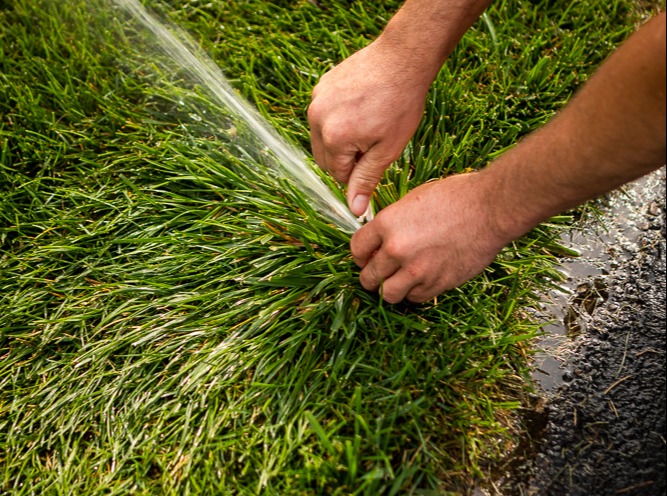
Check every sprinkler head
Physically inspect each one. What goes wrong over a winter:
- Frost heave pushes heads up or tilts them, so a head that watered lawn last year now sprays the driveway.
- Soil settling leaves heads sitting too low or too high, which changes the spray trajectory and the pattern.
- Leaks at the head or the riser, often not visible until the system is under pressure.
- Plow and shovel damage to heads near drives and walks.
- Debris in the lines that flows to the nozzles the moment water moves, clogging a head without any outward sign.
- Loose fittings that survived the season but not the freeze.
This matters more than it sounds because most systems run before dawn. You are asleep when the problem is visible, so a clogged or misaimed head can water pavement for weeks before anyone notices the brown stripe in the lawn.
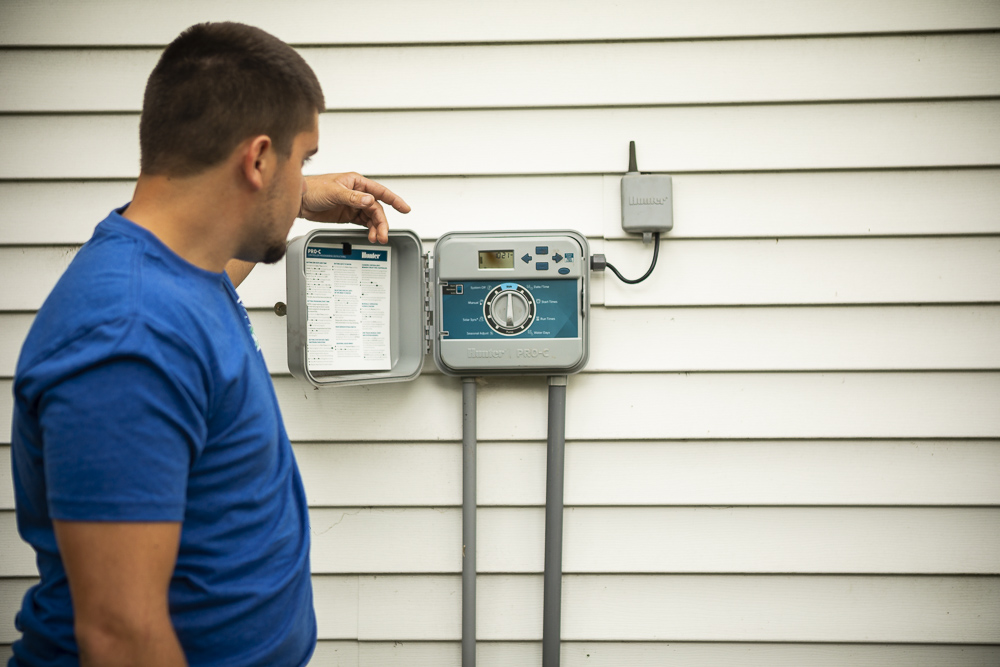
Reprogram the controller
Many homeowners unplug the controller for winter, which wipes the schedule. Even if it kept power, last year's settings are wrong: spring here is cool and wet, and a schedule built for August will drown a lawn in May. Set run times and days for current conditions, and plan to change them again as the season progresses.
Check the rain sensor
If you have one, replace or test the batteries, confirm it is not blocked by debris or plant growth, and verify it is set correctly. A dead sensor means the system runs during rain, which wastes water and keeps the canopy wet.
Run every zone and watch it
Zone by zone, with eyes on the lawn. Things fail quietly over winter: a lightning strike can take out a valve solenoid or the controller, an animal can chew through poly pipe, a valve can stick open, or a leak can drop pressure enough that heads at the end of a run barely throw. Any one of those wastes water all season.
Summer: check it again when it is working hardest
Spring startup and fall winterization are the minimum, not the plan. The system does its real work in July and August, under the highest demand and the most heat, and that is when components fail. Equipment breaks while it is running, not while it sits.
Midsummer is also the only time coverage can be evaluated honestly. Shrubs and perennials are at full size, so a plant that now blocks a spray pattern is visible, and the dry shadow behind it is measurable. Other things that show up midseason: heads mowed off, trenching damage from an unrelated construction project, nozzles worn enough to change the pattern, and pressure problems that only appear when several zones have run.
Run through the same spring checklist at least once during the summer. If you are on an irrigation program that includes a midseason visit, this is what it is for.
If you repair it yourself, use the right parts
Parts compatibility in irrigation is not intuitive. Heads, nozzles, risers, and fittings come in many thread types and sizes, and manufacturers differ. Improvised repairs fail, usually at the worst time. Taped copper, duct-taped poly, and zip-tied risers are all things that have been found in the field, and all of them turn a small repair into a bigger one.
Fall: get the water out
This is the most important maintenance task of the year, and the one with the most expensive failure mode. Water left in pipes, valves, or heads expands when it freezes and breaks whatever contains it.
Blowing out the system
The job needs a high volume of air, measured in CFM, not high pressure, measured in PSI. A garage or workshop compressor is the wrong tool: it typically delivers 100 to 160 PSI at low volume. Most irrigation components are rated around 100 PSI, so the pressure can blow fittings apart and send heads off their risers. And because the volume is too low to actually push the water out, people run the compressor far longer trying, which dry-runs rotor gear drives and damages them through heat and friction.
Professional blowout equipment moves high volume at roughly 60 to 80 PSI, which is what clears a line. This is a job to hire out.
Winterize a lake pump
If your system draws from a lake or pond, the pump has to be winterized separately or it will crack. Add RV antifreeze to protect the internals, and cap the pipe ends so animals do not move in over the winter.
Backflow preventer
Water left in a backflow device damages the internal components and can crack the body, which turns into a plumber visit in spring. Every backflow device has its own winterizing procedure, and the manuals are often unhelpful. If you are not sure which type you have, this alone is a good reason to have the shutdown done professionally.
Catch the small things early
Most homeowners operate on a fix-it-when-it-breaks basis, which with irrigation means you find out during a July heat wave. The reason maintenance pays is that most failures announce themselves first: a weeping valve, a nozzle throwing short, a head slightly off arc, a zone that takes a few seconds too long to pressurize.
Undetected leaks are the expensive version. A line leaking underground can wash out a retaining wall, undermine pavement, or kill expensive plantings before anyone sees standing water. By the time the symptom is obvious, the damage is not just to the sprinkler system.
Should you do this yourself?
Some of it, yes. Checking heads, clearing debris, testing the rain sensor, and reprogramming the controller are all reasonable homeowner tasks. Diagnosing hydraulics and low-voltage electrical faults, blowing out a system, and winterizing a backflow device are not, and the cost of getting them wrong exceeds the cost of the service.
RainMaster irrigation maintenance programs start at $239 a year for basic startup and winterization, with higher tiers that add midseason inspection. Scheduling is automatic, so the seasonal visits happen without you having to call.
Bottom line
- Inspect every head physically in spring. Frost heave, settling, plow damage, and line debris all show up after winter.
- Reprogram the controller in spring and again as the season changes; an August schedule running in May overwaters badly.
- Run the full inspection again in midsummer, when demand is highest and plant growth makes coverage problems visible.
- Blowing out a system is about air volume, not pressure. A shop compressor can break fittings and damage rotor gear drives.
- Lake pumps and backflow devices need their own winterizing procedures; a cracked backflow means a plumber in spring.
Frequently asked questions
Can I blow out my sprinkler system with my own air compressor?
It is not advisable. Residential compressors deliver high pressure at low volume, which is backwards for the job, and both the pressure and the extended run time needed can damage components. The repair typically costs more than the winterization.
How many times a year should a sprinkler system be serviced?
At minimum twice: a spring activation inspection and a fall blowout. A midsummer check is worth adding, because that is when the system is under peak demand and when most failures occur.
What happens if I skip winterization?
Water left in pipes, valves, and heads freezes, expands, and cracks what contains it. Repairs can mean replacing heads and valves, digging up lines, or replacing a backflow device.
Why is a head spraying the sidewalk this year when it did not last year?
Usually frost heave or soil settling moved the head over winter. It is a quick adjustment, and it is one of the main reasons to inspect heads before the first spring run rather than after.
U.S. Environmental Protection Agency WaterSense, Sprinkler Spruce-Up.
Irrigation Association, Irrigation industry standards and resources.


