


How to Know if Your Grass is Dead & How to Fix it
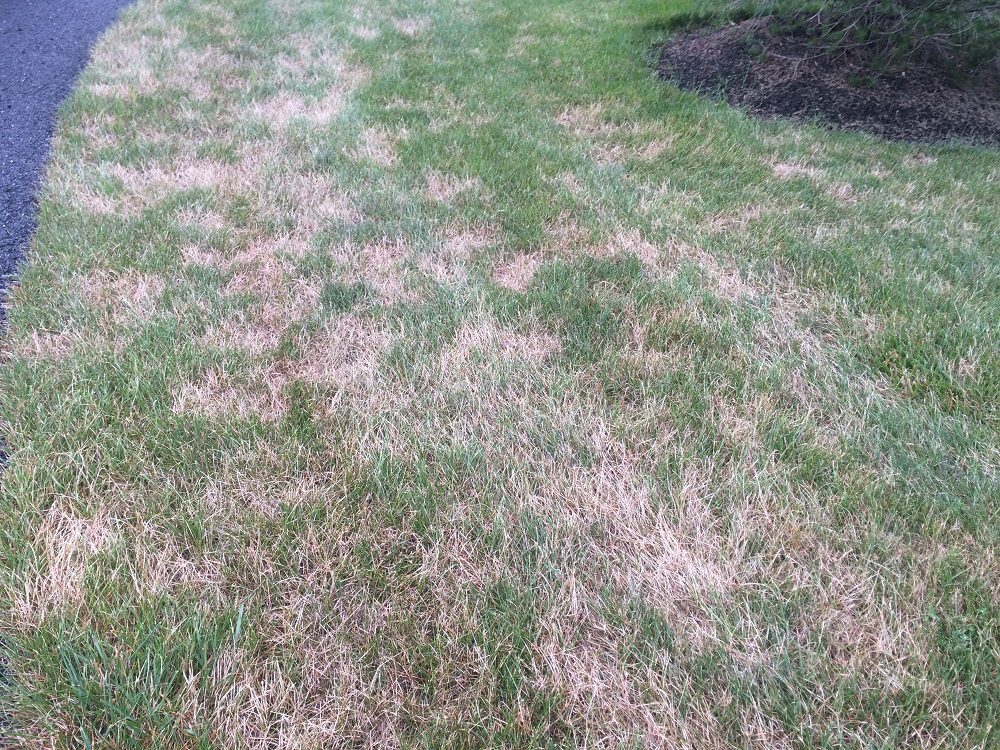
Dead grass and dormant grass look nearly identical from the porch, and the difference decides whether you reach for the hose or the seed bag. The tug test settles it in about ten seconds.
The tug test
Grab a couple of clumps of the brown grass and pull. If it lifts right out with no root system holding it, it is dead. Dormant grass still has a solid root system anchoring the crowns, and it will not come up in your hand.
It is rare for an entire lawn to be dead. Drought, disease, or a hard winter can kill areas and leave unsightly patches, but whole-lawn death usually involves something applied to it.
Common causes, and whether the grass comes back
- Dog urine spots. Small dark rings with a dead center. These generally do not bounce back and need reseeding.
- Brown edges along sidewalks and driveways. Salt and ice melt damage. Those strips are usually dead, and in this region they are the most common spring repair we see.
- Spilled gasoline or other fuel. Dead, and the soil in that spot may need to be removed before reseeding.
- Non-selective herbicide. Glyphosate-type products kill everything green they touch, so overspray or a misdirected application leaves a dead patch shaped exactly like the mistake.
- Heavy fertilizer in one spot. A spill or a spreader left standing burns the turf with excess nitrogen and salt. Likely dead.
- Snow mold and plow damage. Matted gray patches and scraped areas at the ends of the drive. Snow mold often recovers once raked and growing; plow scrape usually needs seed.
- Grub damage. Turf that peels up like loose carpet with no roots. Dead, and it needs the insect addressed as well as the turf.
Dead or dormant?
A couple of quick checks beyond the tug test:
If every lawn on the block is greening up and yours is not, yours probably has a real problem. Dormant turf in a neighborhood comes out of dormancy on roughly the same schedule.
If the lawn browned out during a dry summer stretch, it is probably dormant. Cool-season grasses here shut down and go tan to conserve resources in heat and drought, and they come back when moisture returns. Start watering about 45 minutes, three times a week, in the morning, and those areas often green up within a couple of weeks. Resist the urge to water lightly every day, which keeps the surface wet without ever reaching the root zone.
One caution: do not pour extra water on a brown patch without identifying it. If it is fungal rather than dry, more water makes it worse.
How to fix dead grass
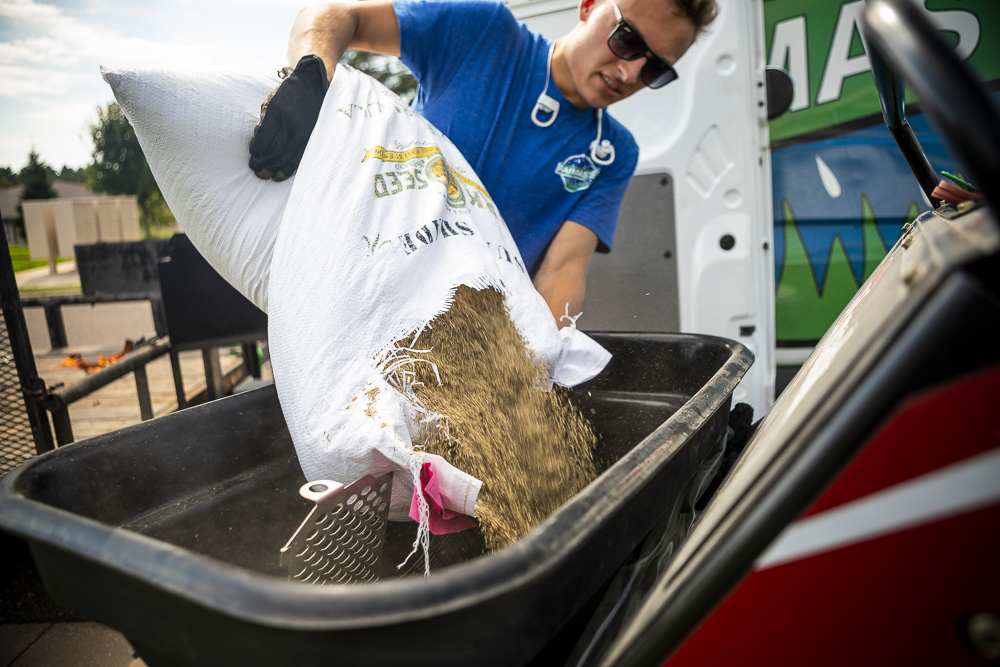
Seed is the answer, and it is the only method we use at RainMaster, because it works. Whether you need to spot-seed a patch or aerate and overseed a whole lawn, good seed plus attention to watering is what repairs turf.
Be genuinely picky about the seed. It all looks similar in the bag and it is not similar. Cheap seed piled up in the aisle at the home improvement store frequently contains weed seed and undesirable grass species, and you will be living with whatever is in there for years. Pay more for premium seed, and match the mix to the site: more fine fescue in shade, bluegrass and ryegrass in sun.
Six steps for repairing a dead patch
- Rake out the dead, matted turf. Seed germinates and roots best against bare soil, not on top of dead thatch.
- Loosen the soil. Scratch or dig the top inch so the seedbed is not compacted.
- Scatter the seed over the loosened soil at the rate on the bag. More is not better; crowded seedlings compete with each other.
- Work it in and tamp it down so you have real seed to soil contact. This is the step most often skipped and the most common reason a repair fails.
- Apply a starter fertilizer formulated for new grass.
- Keep it moist and wait. Light, frequent watering until germination, then taper toward deeper and less frequent cycles. Expect about a month for new seed to get going and up to a year before it matures into established turf.
When the whole lawn is struggling
A thin, weak lawn across the board is usually not a seed problem; it is a soil problem. Compacted soil restricts roots so they cannot take up water or nutrients, which weakens the turf and opens the door to disease and weeds.
Core aeration pulls plugs of soil out of the lawn, creating channels for air and water to reach the root zone, which produces healthier roots. It also helps break down thatch, the layer of dead stems and grass that accumulates between the blades and the soil. Aeration is normally followed by overseeding, because the holes it leaves are ideal pockets for seed, with the natural soil contact a surface broadcast never gets.
Timing: mid August through mid September is the best window across Wisconsin and Minnesota for aerating and seeding together. Soil is still warm enough for fast germination, air temperatures have come down, and weed seed pressure is far lower than in spring. Seeding much later leaves seedlings too small to handle the first hard freeze.
Repair is the start, not the finish. Whatever killed the grass the first time, a sprinkler head missing the corner, a compacted traffic lane, salt from the walk, will do it again unless it is addressed. Our three lawn care programs run from a basic plan with the essentials, through our popular mid-level option, to a high-end proactive program for lawns that need significant help. If the dead areas line up with your sprinkler pattern, have the irrigation system checked before you seed.
Bottom line
- Tug a handful of brown grass. If it lifts with no roots, it is dead; dormant grass stays anchored.
- Salt along walks and drives, dog urine, fuel spills, non-selective herbicide, and fertilizer spills kill turf outright.
- Drought browning is usually dormancy. Water about 45 minutes three times a week in the morning and it often recovers.
- Seed repair depends on seed to soil contact, so rake out dead thatch and tamp the seed in.
- Late August through mid September is the best window to aerate and overseed a whole struggling lawn.
Frequently asked questions
Is my grass dead or just dormant?
Pull on it. Dormant grass holds firm because the roots are intact; dead grass lifts away. Another check is the neighborhood: if surrounding lawns are greening and yours is not, the problem is real rather than seasonal.
Will dead grass grow back on its own?
No. Once the crown and roots are gone, that spot stays bare until something fills it, and what usually fills it is weeds. Small patches can be filled in by surrounding grass spreading, but anything larger than a few inches needs seed.
How do I fix the dead strip along my driveway?
That is almost always salt damage. Rake out the dead material, loosen the soil, water the area well to help flush salts, then seed with good contact and keep it moist. Next winter, use less de-icer or switch to a product applied at a lower rate.
When should I aerate and overseed a thin lawn?
Late August through mid September. Soil is still warm enough for quick germination, the air has cooled, rainfall is more reliable, and far less weed seed is competing for the open soil that aeration creates.
University of Minnesota Extension, Seeding and sodding home lawns.


