


How to Keep Your Neighbor’s Weeds Out of Your Yard
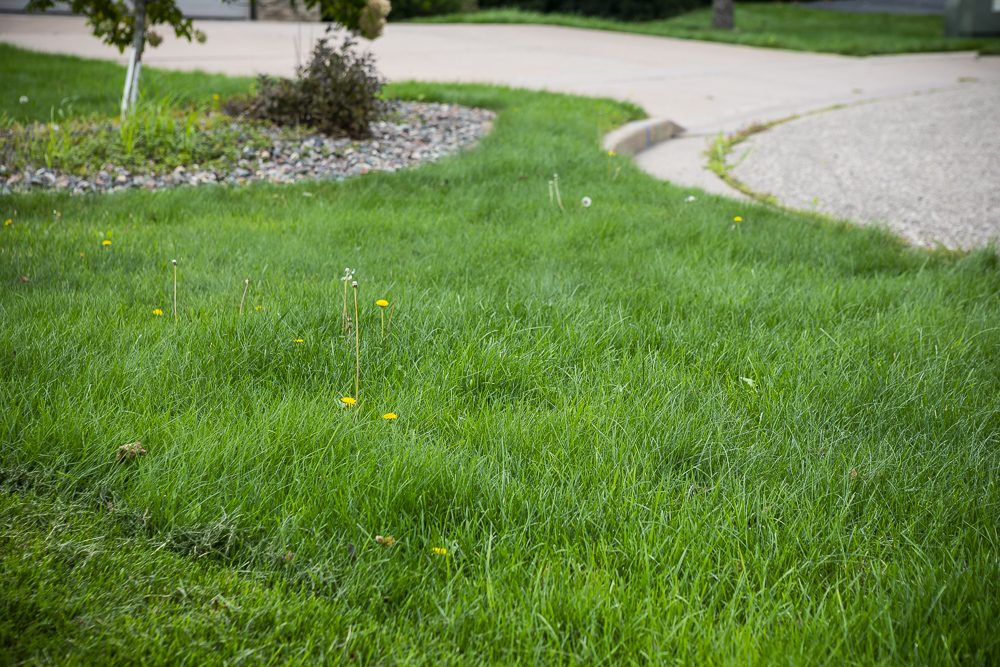
Weeds move across a property line in two different ways, and they call for two different responses. Airborne seed from dandelions and thistle blows in and needs to land on bare ground to matter, while creeping charlie and quackgrass spread underground and walk right under a fence. Blocking both comes down to a physical barrier at the line, correctly timed treatments, and turf dense enough that there is nowhere for a seedling to establish.
Two ways weeds cross a property line
Knowing which one you are dealing with determines what works.

By seed. Dandelion and Canada thistle seed is built to travel on wind, and no fence stops all of it. The important thing about airborne seed is that it needs bare or thin soil to germinate in. Seed that lands on dense, well-fed turf mostly fails.
By root and stolon. This is the one that actually ruins a property line. Creeping charlie, also called ground ivy, spreads by stolons that creep along the soil surface and root at the nodes. Quackgrass spreads by underground rhizomes. Canada thistle moves through a deep, spreading root system. None of these care about a fence, and all of them advance a little farther into your lawn every season until something stops them.
Block the root path at the line
A physical break along the shared boundary is the most effective thing you can do about vegetative spread. Options, from least to most work:
- A clean, deep edge. Cut a trench edge four to six inches deep along the fence line or property line and keep it clean. Stolons and shallow rhizomes will not cross an air gap.
- Buried edging. Commercial edging set deep enough to interrupt the root zone gives you the same break without re-cutting it every year.
- A mulched or stone strip. A maintained bed along the fence makes the invaders visible and easy to pull or spot treat before they reach lawn.
A thick hedge or a solid fence does block some blowing seed, and it helps, but do not count on it as a weed control strategy. The barrier that matters is the one in the ground.
Get pre-emergent down on time
Pre-emergent herbicide is applied before weed seeds germinate, and it is only as good as its timing. Crabgrass germinates when soil temperatures in the top inch stay around 55 degrees for several consecutive days, which in this region typically lands somewhere from late April into May depending on the spring. The application has to be down and watered in before that happens. Once crabgrass is up, pre-emergent will not touch it.
One important limitation: pre-emergent does nothing to weeds that are already established. Dandelion, clover, creeping charlie, and thistle are perennials that come back from their own roots, so they need a post-emergent treatment while they are actively growing. A plan that is only pre-emergent leaves every existing weed in place.
The other thing to know is that most pre-emergent products also prevent desirable grass seed from germinating. If you intend to overseed, coordinate with your lawn care company so the seeded areas are skipped or treated with a seed-safe product.
Fall is the most important application of the year
Different weeds here are active at different times, and a lot of next spring is decided in October. Winter annuals germinate in the fall, overwinter small, and take off in April before anyone is thinking about weeds. Perennial broadleaf weeds spend the fall moving carbohydrates from the leaves down into the roots, which carries a post-emergent herbicide along with it and makes a fall treatment more effective on dandelion and creeping charlie than the same treatment in June.
Fall treatments need actively growing weeds and air temperatures above roughly 50 degrees to work, which is why October is realistically the last productive window in Wisconsin and Minnesota.
Cover bare ground
Weed seed from next door has to land somewhere. Bare soil is the easiest place for it to sprout, so cover it: landscape fabric with two to three inches of stone or wood chips over the top. Seed will still occasionally germinate in the mulch layer, but the fabric makes it difficult for roots to anchor, so those seedlings pull out easily.
Be realistic about fabric under wood mulch. Organic mulch breaks down into a seedbed on top of the fabric within a few years, and at that point weeds root in the decomposed layer rather than the soil. Stone over fabric holds up much longer, and either way the strip needs to be looked at a couple of times a season.
Keep the lawn too thick to invade
Dense turf is the barrier that covers your whole property rather than just the line.
- Mow high. Three to three and a half inches shades the soil surface, which keeps it cooler and slows weed seed germination, and taller grass supports deeper roots.
- Water deeply and infrequently. About an inch per week including rainfall, in a couple of longer cycles early in the morning. Light daily watering keeps roots shallow and favors weeds.
- Feed on a schedule. Density is a fertility outcome. A thin, hungry lawn leaves openings that no herbicide program can keep up with.
- Aerate and overseed thin areas. Compacted ground along a fence line or under a swing set is where invasion starts. Core aeration and seed close those gaps.
What you cannot do about the yard next door
Do not apply anything on a neighbor property, and be careful about spray drift near a property line on a windy day. If the neighboring lawn is the source, a friendly conversation is the only real option, and in some cases a city or township weed ordinance applies to severely neglected properties, so checking locally is worth doing before anything escalates.
What you control is your side. A proactive lawn care program that runs pre-emergent in spring, treats broadleaf weeds through the season, hits them again in fall, and keeps the stand dense with fertilization and aeration is what turns a shared property line into a dead end. Call 888-839-8484 or request a quote and we will look at where the pressure is coming from.
Bottom line
- Seed blows in, but roots and stolons are what really carry weeds across a property line.
- A four to six inch trench edge or buried edging along the shared line blocks creeping charlie and quackgrass.
- Crabgrass pre-emergent has to be down before soil temperatures hold near 55 degrees, typically late April into May here.
- Established perennial weeds need a post-emergent treatment, and a fall application is the most effective of the year.
- Dense turf mowed at three to three and a half inches and watered deeply is the barrier that covers the whole yard.
Frequently asked questions
Will a fence keep my neighbor's weeds out?
Partly. A solid fence or thick hedge intercepts some blowing seed, but it does nothing about creeping charlie, quackgrass, or thistle, which spread underground and pass right beneath it. A deep edge or buried barrier at the line is what stops those.
Can I spray weeds on my neighbor's side of the line?
No. Treat only your own property, and avoid spraying near the line on windy days so there is no drift. If the neighboring lawn is the source, talk to them; some municipalities also have weed ordinances for neglected properties.
When should crabgrass pre-emergent go down in Wisconsin and Minnesota?
Before soil temperatures in the top inch stay near 55 degrees for several days, which is usually late April into May. After crabgrass has germinated, pre-emergent no longer helps and a post-emergent product is required.
Does pre-emergent stop weeds that are already growing?
No. It only prevents seeds from germinating. Dandelion, clover, creeping charlie, and thistle regrow from their own roots and need a post-emergent treatment while they are actively growing.
University of Wisconsin Division of Extension, Lawn weed identification and management.
University of Minnesota Extension, Managing weeds in lawns.


