


How to Keep Mosquitoes Away From your Backyard Party

Nobody wants to spend a cookout swatting, and the advice you will find online is a mix of things that genuinely help and things that do nothing. Here is what measurably reduces mosquitoes around a patio or deck in Wisconsin and Minnesota, sorted by how much difference it actually makes.
Start with standing water, because it is the only thing that stops the next generation
Standing water is where mosquitoes breed, and source reduction is the single highest-return thing a homeowner can do. It also costs nothing.

Walk the property and empty, store, or drain anything holding water. The commonly missed spots:
- Clogged gutters, the most overlooked breeding site on most houses
- Old tires, buckets, wheelbarrows, and empty flower pots
- Tarps, boat covers, and pool covers with a sag in them
- Kids' toys, wagons, and sandbox lids
- Corrugated downspout extensions and drainage tile ends
- Birdbaths and pet bowls, which should be dumped and refilled weekly
Some mosquito species need remarkably little water, as little as a tablespoon, to lay eggs successfully. Larvae develop in roughly a week in warm weather, so clearing water ten days before a party makes a real difference to what emerges on the day of it.
Use fans on the patio
Fans are the most underrated same-day fix there is. Mosquitoes are weak fliers and struggle in moving air, so an oscillating or box fan aimed across a seating area physically keeps them off the people sitting in it. There is a second effect too: mosquitoes find you by the carbon dioxide in your breath, and moving air disperses that plume so you are harder to locate.
Place fans low and aimed outward across the ankles and legs, which is where most biting happens.
Mow and clear clippings
Adult mosquitoes rest in cool, humid cover during the day, and tall grass and piles of clippings provide exactly that. Mow a day or two ahead and clear the clippings off the lawn rather than leaving them in windrows. Trim back dense shrub bases and remove leaf litter along the perimeter while you are at it, since that is prime resting habitat.
Things that help less than you have been told
Two popular suggestions deserve a correction.
Mosquito-repelling plants. Lavender, marigolds, catnip, basil, and lemon balm contain compounds that do repel mosquitoes, but the plants have to have their leaves crushed to release enough oil to matter. Simply having them in a planter does not create a protective zone. They are lovely plants and worth growing. Do not count on them to hold a party.
Birds and bats. Bats and many birds do eat insects, and bat boxes and birdhouses are great for wildlife. But mosquitoes make up a small fraction of what they eat, and research has repeatedly failed to show that encouraging bats or purple martins measurably reduces mosquito populations in a yard. Put up the boxes because you like bats, not as pest control.
Bug zappers deserve a mention here too. They attract insects with ultraviolet light, which mosquitoes are not especially drawn to, and the overwhelming majority of what they kill is harmless or beneficial insects.
Barrier treatment, scheduled ahead
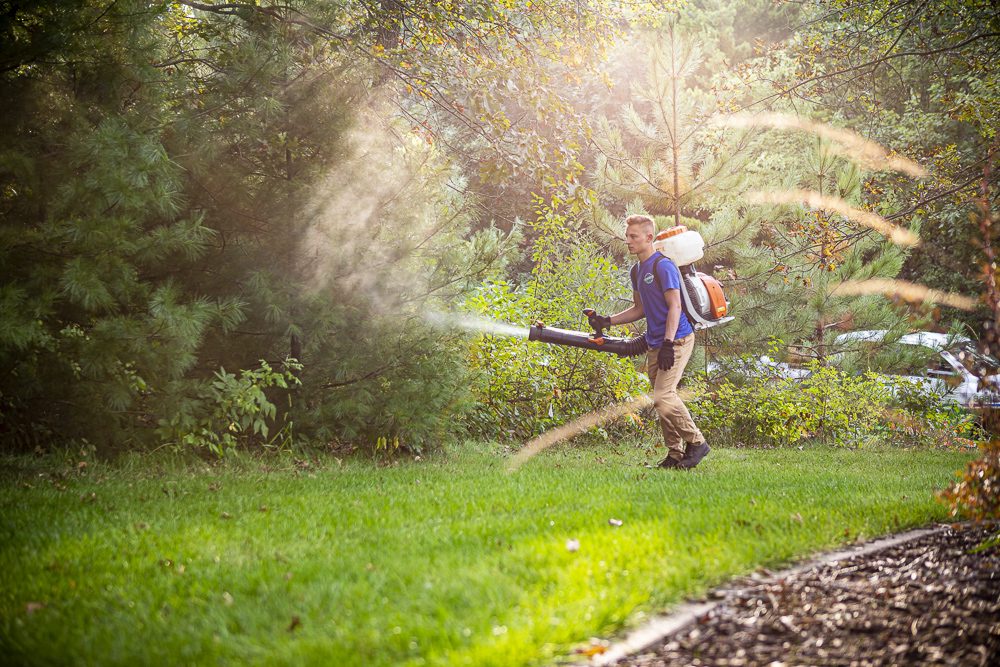
If you are hosting, the most reliable step is a professional barrier treatment timed before the event. The approach targets mosquitoes and ticks where they rest and breed rather than where they are biting you.
Around Eau Claire, Wisconsin and Minneapolis, Minnesota, RainMaster's barrier spray reduces mosquitoes on your property all season long with regular visits every three weeks, six visits total from spring through fall. That interval is deliberate. It is built around the mosquito breeding cycle in the Upper Midwest so that each treatment lands before the next generation of adults takes over, which is why an ongoing program outperforms a single one-time spray, especially in a summer when humidity drives populations up fast.
Technicians treat the perimeter of the yard and the resting sites:
- Undersides of plant leaves
- Shady areas
- Damp and low-lying areas
- Under decks
- Low tree limbs
- Wood piles
The reduction in biting mosquitoes is immediate once the application has dried. As a bonus, the same treatment reduces ticks, which share that habitat. No mosquito control program gives one hundred percent control, and we will not claim otherwise, but you will see a large reduction in both pests. See our mosquito and tick control for what a season includes.
A simple plan for party week
- Ten days out: walk the property and eliminate standing water. Clear the gutters.
- A week out: schedule the barrier treatment so it lands a few days before the event, not the morning of.
- Two days out: mow, bag or clear the clippings, trim dense perimeter growth.
- Day of: set fans low across seating areas, keep food and drinks covered, and have repellent available for guests who want it.
Bottom line
- Eliminating standing water is the highest-return step and the only one that reduces the next generation.
- Fans work the same day. Mosquitoes are weak fliers and moving air also disperses the carbon dioxide they track.
- Potted repellent plants, bat boxes, and bug zappers do not meaningfully reduce mosquito pressure in a yard.
- Mow and clear clippings a day or two ahead, since tall grass and clipping piles are daytime resting habitat.
- Schedule a barrier treatment a few days before the event. RainMaster runs six visits, about every three weeks, spring through fall.
Frequently asked questions
How far ahead of a party should I have my yard sprayed?
A few days ahead is ideal. The treatment works as soon as it dries, but scheduling with a buffer protects you against a rain delay and lets the reduction settle in across the whole property.
Do mosquito-repelling plants actually work?
Not as planted landscaping. The oils in lavender, basil, catnip, and marigold do repel mosquitoes, but the leaves have to be crushed to release them. Growing them in a planter will not clear a patio.
Will a bat house or birdhouse reduce mosquitoes in my yard?
It is good for wildlife but not effective pest control. Mosquitoes are a small share of what bats and insect-eating birds consume, and studies have not shown a measurable reduction in yard mosquito populations.
How long does a mosquito treatment last?
About three weeks, which is why season programs are spaced on that interval. Adults emerge continuously through the summer, so one treatment buys a few good weeks before the population rebuilds.
University of Minnesota Extension, Yard and garden insect resources.
University of Minnesota Extension, Ticks and tickborne disease.


