


How to Identify and Treat Leaf Blight in your Minnesota Lawn
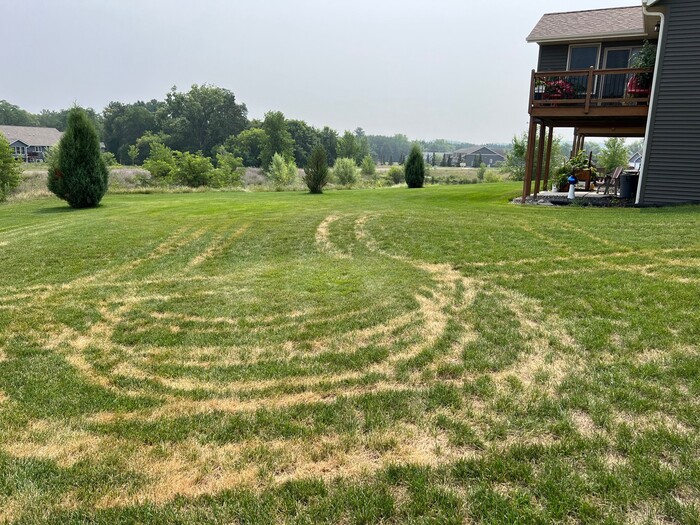
A lawn that was green on Friday can look dead on Monday, and in a Minnesota summer the usual culprit is Ascochyta leaf blight. It looks alarming and it is almost always less serious than it appears. Here is how to recognize it, why patience usually beats a fungicide, and what to correct so it stops coming back.
What is Ascochyta leaf blight?
Ascochyta leaf blight is a summer fungal disease of cool-season turf, most commonly Kentucky bluegrass, which is what most Minnesota and Wisconsin lawns are built on. It is a leaf disease. The fungus infects the leaf blade and nothing else, which is the single most useful fact about it.
What does it look like?
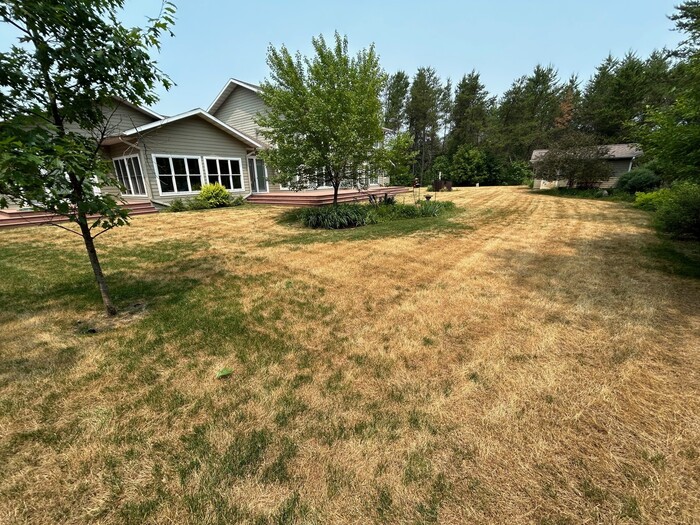
Large, irregular patches of turf go from green to straw brown and look dead. The hallmark is how fast it happens. Ascochyta can show up overnight, and homeowners often assume a sprinkler zone failed or something was spilled on the lawn.
Up close you can usually confirm it. Pull a few blades and look at them. With Ascochyta, the blade is bleached or straw colored from the tip down, and the dieback often has a pinched, constricted point along the blade. Pull on the plant itself and the crown is firm and anchored, and the roots are intact. Compare that with drought stress, which shows up in the exposed, sunny, high spots first and greens back up within a day or two of watering, and with grub damage, where the turf lifts up like a loose carpet because the roots are gone.
What causes it?
Like most turf disease, Ascochyta needs a stressed plant and the right weather. The triggers we see here are hot, humid summer weather paired with swings between wet and dry. A lawn that gets hit with heavy rain or a long irrigation cycle and then bakes is the classic setup. Mowing during wet weather spreads it, and mowing with a dull blade gives it more wounded tissue to enter.
How to treat leaf blight
Here the honest answer differs from what you will read on a lot of lawn care sites. Fungicides are generally not warranted for Ascochyta leaf blight, and that is not a cost argument, it is an effectiveness argument. By the time the symptoms appear, the infection on those blades has already run its course. Spraying several hundred dollars of fungicide does not bring the brown blades back, and more than one application is typically pitched.
What actually happens is recovery. Because the crowns and roots are untouched, the plant pushes new leaf growth and the lawn greens back up on its own, usually in two to three weeks depending on weather. Keeping the lawn watered correctly and mowed high through that stretch speeds it along. Letting it go dry and scalping it slows it down.
If you are a RainMaster customer and the same lawn blights every single summer, we can put a disease control product in the plan preventively. But for a first appearance, the right call is nearly always to correct the conditions and wait.
How to prevent leaf blight
A healthy lawn handles trauma, whether that is drought, insects, or summer disease. The practices that prevent Ascochyta are the same ones that prevent most summer turf problems.
- Water deeply and less often. Target about an inch a week including rainfall, delivered in one or two long cycles rather than a short run every day. Deep, infrequent watering drives roots down. Daily shallow cycles keep roots at the surface and keep the canopy damp.
- Water early in the day. Finish before sunrise or shortly after so the canopy dries quickly. Evening and overnight cycles leave the leaf wet for hours, which is exactly what leaf pathogens need.
- Mow at three to four inches. Taller turf shades the soil, roots deeper, and tolerates heat better. Never take more than a third of the blade in one cut.
- Keep the blade sharp and stay off wet grass. A dull blade shreds leaf tips, and mowing a wet lawn moves spores from patch to patch on the mower deck.
- Aerate. Core aeration reduces compaction and improves drainage, which is how you get rid of the soggy-then-baked cycle this disease likes.
- Fertilize on a balanced schedule. Feed well in fall and spring so the lawn goes into summer with reserves. Avoid pushing heavy nitrogen into July heat.
When it keeps coming back
A lawn that blights in the same place every August is telling you something about the site, not about the fungus. Usually it is the irrigation. A zone running every night, a head throwing into the same corner twice, or a controller still on a spring schedule in August will reproduce the conditions year after year. A regular irrigation maintenance program that checks coverage, head adjustment, and scheduling is often the real fix for a recurring summer disease.
The other common cause is soil. Compacted, poorly draining ground holds water at the surface and stresses roots. Annual core aeration plus a season-long nutrition plan addresses that, and it pays off across weeds, drought tolerance, and disease at the same time.
Bottom line
- Ascochyta leaf blight is a leaf disease. It does not kill crowns or roots, so the lawn recovers on its own in two to three weeks.
- It appears suddenly, often overnight, in hot humid weather after a swing from very wet to dry.
- Fungicides are generally not warranted, because the symptoms show up after the infection has already happened.
- Water deeply and infrequently, finish watering before sunrise, and mow at three to four inches with a sharp blade.
- A lawn that blights in the same spot every year usually has an irrigation or drainage problem to correct.
Frequently asked questions
Is my lawn dead or is it leaf blight?
Tug a handful of the brown turf. With leaf blight the plant stays anchored and the crown is firm, because only the blades are affected. If the turf lifts away with no roots, you are looking at grub damage or dead turf, not blight.
Should I water more when I see leaf blight?
Water correctly, not more. Keep up about an inch a week in one or two long early morning cycles. Adding frequent short cycles keeps the canopy wet and makes leaf disease worse, and letting the lawn go dry slows recovery.
Do I need a fungicide for Ascochyta leaf blight?
Usually not. The affected blades will not recover regardless, and the plant regrows from untouched crowns within a few weeks. Preventive disease control makes sense only for a lawn with a repeating history of the problem.
Can I mow a lawn with leaf blight?
Yes, but mow high, mow when the grass is dry, and use a sharp blade. Mowing wet turf spreads spores across the lawn on the deck and the tires.
University of Minnesota Extension, Lawn care and turf disease resources.
University of Wisconsin Extension, Horticulture articles and turf guidance.


