


How to Get Rid of Japanese Beetles in Your Minnesota Yard

Japanese beetles cause two separate problems on the same property: adults skeletonize leaves and flowers above ground while their larvae eat grass roots below it. Control works on the grub stage, which means getting a preventive material into the soil before the eggs hatch.
Why this insect does so much damage
Japanese beetles have one generation per year, and that single generation stays active for months. Adults emerge, feed, mate, and lay eggs repeatedly through the summer. Females push eggs one to three inches down into moist soil, usually in irrigated turf, because that is the most reliable place for eggs to survive. The eggs hatch into white grubs that feed on grass roots through late summer and into fall. As soil cools they move deeper to overwinter, then return to the root zone for a short feeding period in spring before pupating.
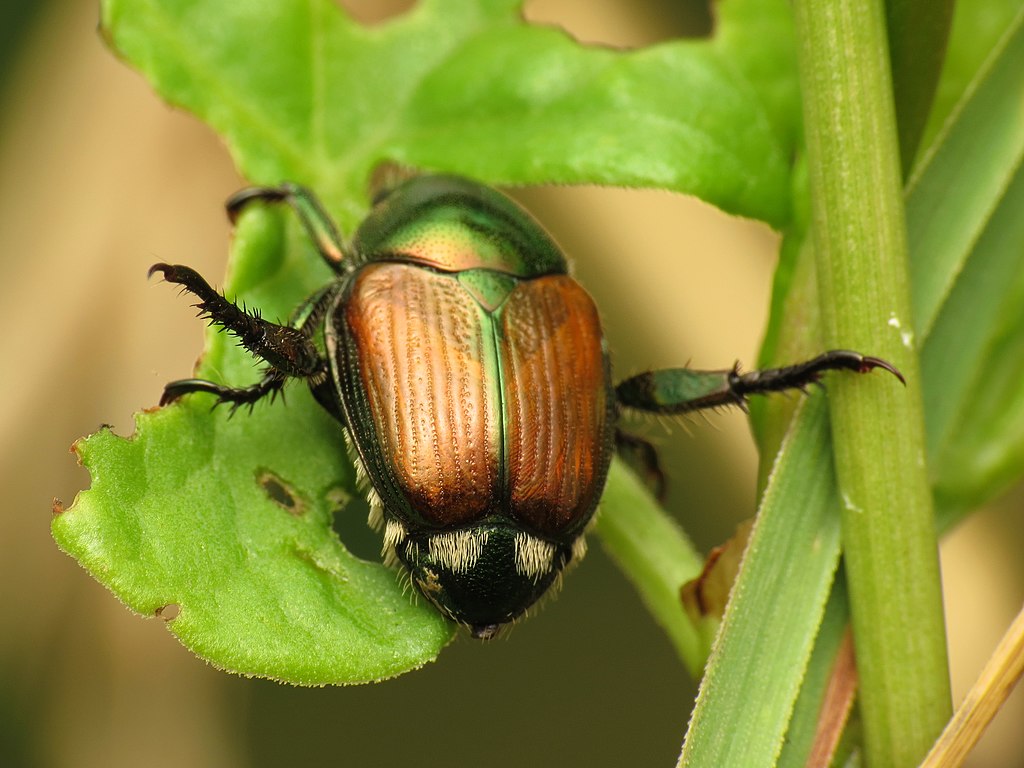
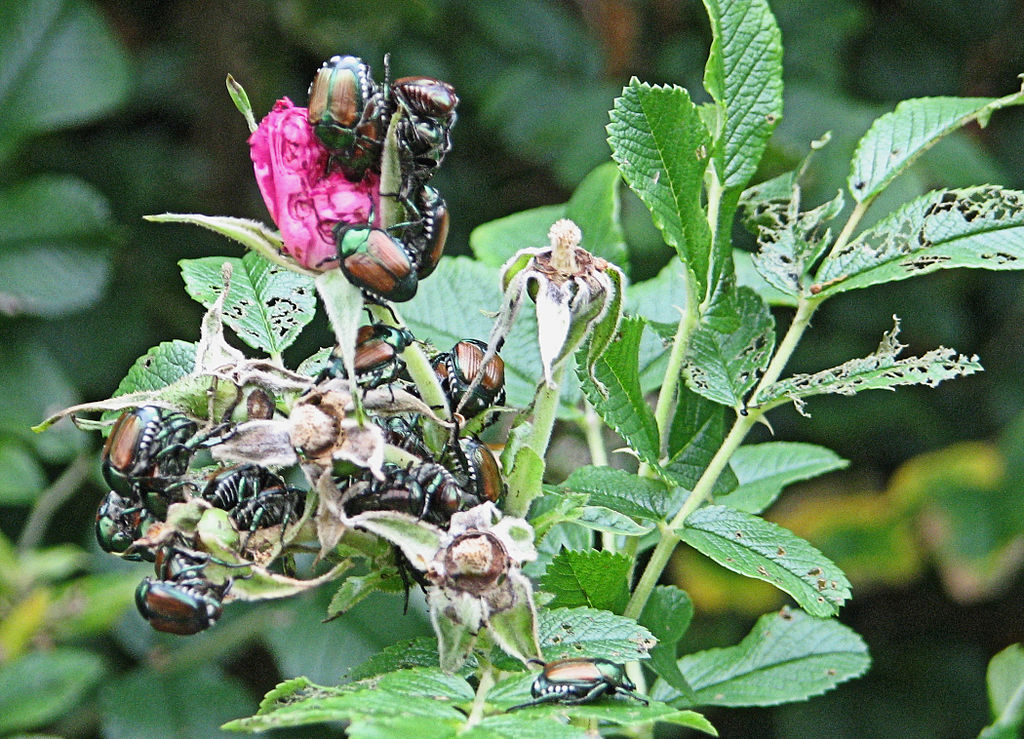
The practical result is two damage windows from one generation: heavy root feeding in late summer and early fall, and a shorter spring episode. People often describe the fall feeding as a second wave of grubs. It is the same cohort, in its main feeding period, which is why protection has to still be active in August and September and not just in June.
Japanese beetle facts for Minnesota and Wisconsin
- Appearance. About half an inch long, metallic green body with copper-colored front wings and a row of small white tufts along each side.
- Season. Adults are out from late June into September, feeding, mating, and laying eggs.
- Host range. They feed on more than 300 kinds of plants, with roses, lindens, grapes, birch, and raspberries among the favorites in this region.
- Feeding pattern. Adults chew the tissue between the major leaf veins, leaving a lacy skeleton.
- They recruit. Feeding beetles release aggregation odors that pull more beetles to the same plant, which is why damage snowballs on one shrub.
Skip the traps
Lure traps are the most common mistake. The pheromone and floral lures work, which is the problem: they pull beetles toward your property from well beyond it, and plenty of them stop at your roses before reaching the bag. On a typical residential lot a trap increases the number of beetles in the yard.
The one situation where a trap has a role is a property already saturated with beetles, where a single trap placed far from the plants you care about can draw some pressure away. Do not ring the yard with them.
Control the grubs, not the adults
Adult beetles fly, so spraying your lawn does not keep them from arriving. The stage that is captive and worth treating is the grub stage, in your soil, under your turf.
At RainMaster we apply Grub Guard protection on the first visit of the season. A preventive material does not kill eggs. It establishes in the root zone and is present when the eggs hatch, so the newly hatched larvae die before they can do meaningful root damage. That is the whole logic of preventive grub control: it has to be in place and still active during the hatch, which here runs from midsummer into early fall.
Duration is where cheaper programs fall short. Some grub materials break down well before the main hatch. Ask how long the protection lasts, because a product that has faded by August leaves the lawn exposed during the heaviest root feeding of the year. Grub Guard is chosen to carry through the growing season.
It is also selected with pollinators in mind rather than the broad-spectrum products common on hardware store shelves. Follow label directions, keep applications off flowering plants, and the lawn application stays where it belongs.
How to tell you have grubs
- Animals digging. Raccoons, skunks, and crows tearing up patches of lawn are after the grubs.
- Turf that rolls up. Grab a handful of affected grass and tug. If it peels back like loose carpet with no roots holding it, grubs have eaten the root system.
- Spongy footing. Walking the lawn feels soft or spongy where roots have been chewed away.
- Irregular browning in late summer. Patches that do not green up after watering are a grub signal rather than a drought signal.
A dense lawn resists grub damage
Grub numbers matter less than the root mass they are eating into. Healthy, deeply rooted turf absorbs a moderate grub population without showing symptoms. Mow at three to three and a half inches, stay on a regular fertility schedule, and water deeply and infrequently so roots chase moisture downward. Core aeration once a year helps the same cause. A lawn care program that covers fertility, soil, and grub protection together is doing more for grub resistance than any single application.
Above ground, hand-picking adults into soapy water early in the morning works on a small number of shrubs, and keeping damaged plants watered helps them recover. Badly infested plants rarely die from one season of feeding.
Bottom line
- Japanese beetles have one generation a year; adults fly from late June into September and lay eggs in moist, irrigated turf.
- Grubs do their heaviest root feeding in late summer and fall, so grub protection has to still be active then.
- Preventive grub material does not kill eggs. It sits in the root zone and kills larvae as they hatch.
- Lure traps draw more beetles onto your property; skip them except on already saturated yards.
- Dense, deeply rooted turf tolerates a grub population that would wreck a thin lawn.
Frequently asked questions
When should grub control be applied in Minnesota and Wisconsin?
A preventive material needs to be in the soil and still active when eggs hatch from midsummer into early fall. Applying it in spring works as long as the product carries through the season; a short-lived material applied early leaves the lawn unprotected during the main hatch.
Do Japanese beetle traps work?
They catch beetles, but they also attract them from a wide area, so most homeowners end up with more beetles and more damage than if they had used none. The exception is a yard already overrun, where one trap placed away from valued plants can pull some pressure off.
Will grub control stop adult beetles from eating my roses?
No. Adults fly in from the neighborhood, so a lawn treatment does not protect your shrubs. Grub control protects the lawn's root system. For plants, hand-pick beetles in the early morning and keep damaged plants well watered.
How do I know whether my brown patches are grubs or drought?
Water the area and watch. Drought-stressed turf greens back up; grub damage does not, because the roots are gone. Tug a handful of the affected grass as well, since grub-damaged turf lifts away with almost no root attached.
University of Wisconsin Division of Extension, Japanese Beetle.


