


How to Fix and Prevent Dog Urine Spots in Your Lawn
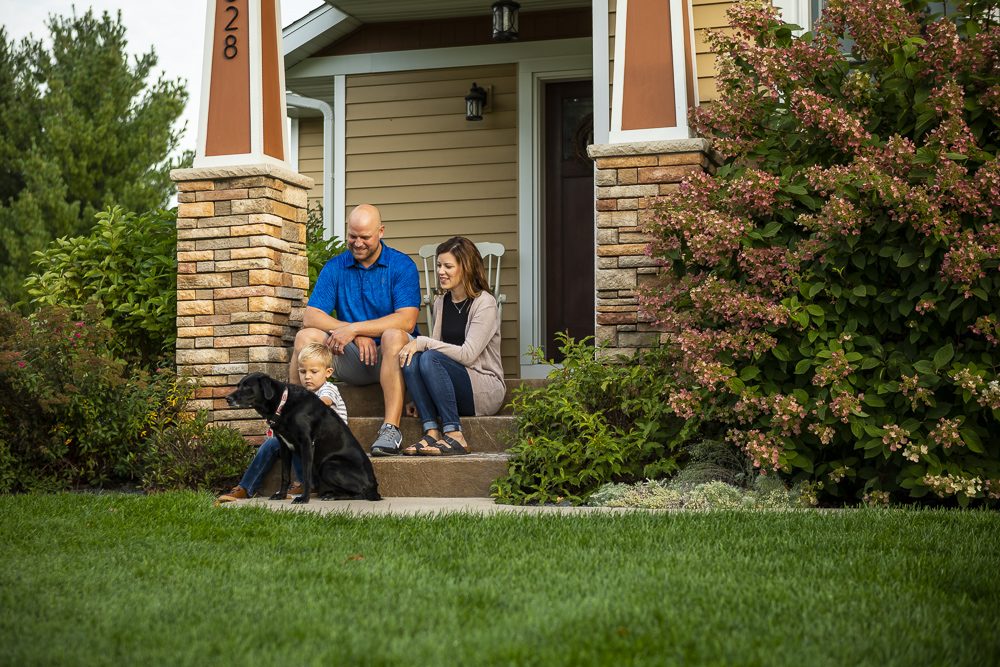
Dog urine spots are a fertilizer burn. Urine is concentrated nitrogen and salts dropped in one small area, which is far more than turf can use at once, so the grass in the center dies and a dark green ring often shows up around the edge. The fix is a combination of diluting fresh spots, repairing dead ones with seed, and keeping the lawn dense enough to recover on its own.
Why dog urine kills grass
Nitrogen is the nutrient that drives turf growth, which is why it is the first number on a bag of fertilizer. A dog delivers it in a concentration no lawn program would ever apply to a single square foot. Along with the nitrogen come dissolved salts, which pull moisture out of the grass plant and the soil around it. The result is the same as spilling fertilizer in one spot: a burned patch that will not grow back on its own.
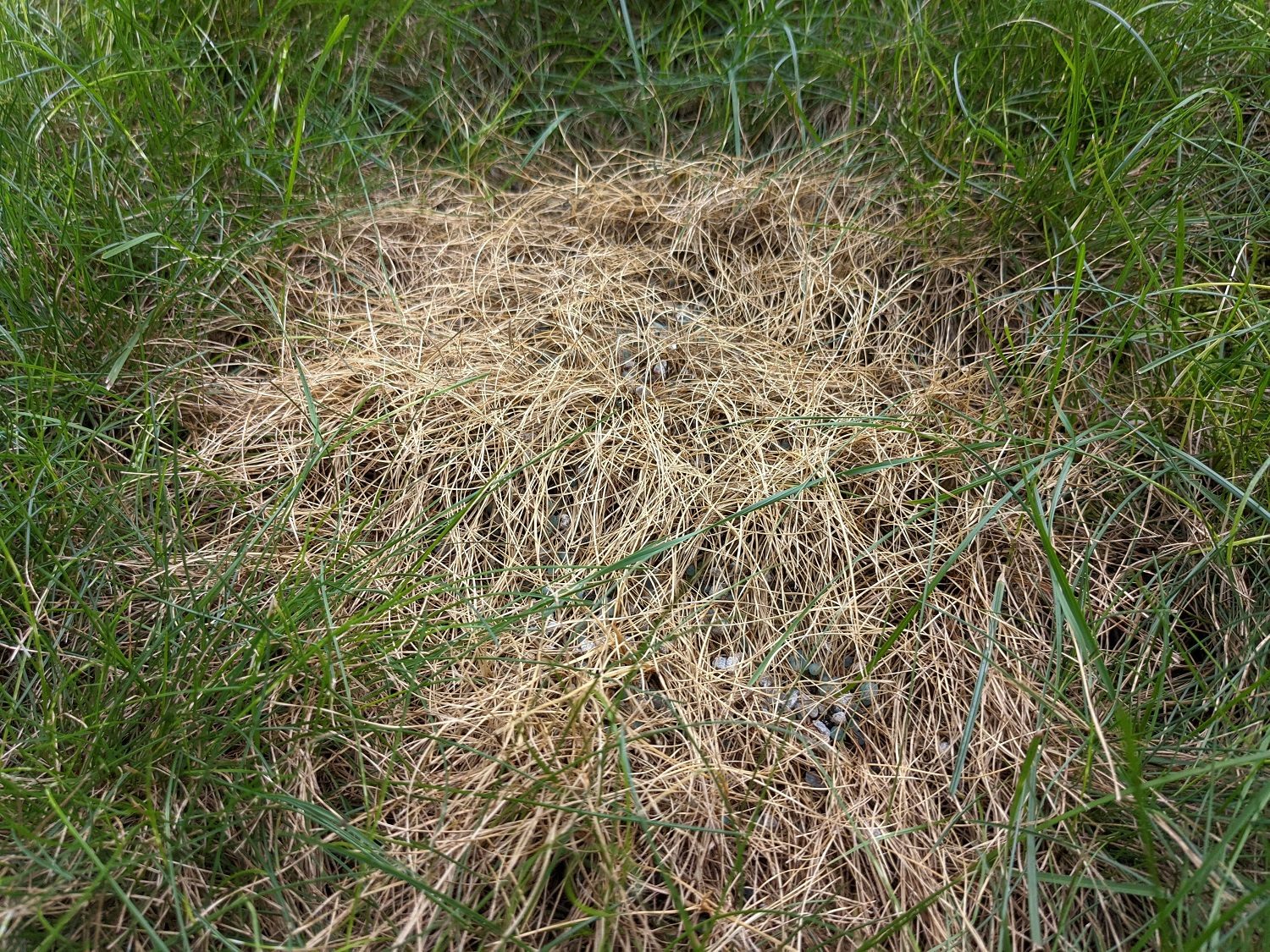
The pattern tells you what you are looking at. A dead center with a ring of extra dark, fast growing grass around it is a urine spot, because the edge got a diluted dose that acted like fertilizer. Patches that are uniformly brown with no green halo, or that show up in areas the dog never uses, are usually disease, grubs, or dry spots from uneven irrigation coverage instead.
Two common beliefs are worth clearing up. The damage is not caused by the pH of the urine, and it is not specific to female dogs. Female dogs tend to empty the bladder in one place, so the damage is concentrated and obvious, while male dogs mark smaller amounts in more places and spread the load out.
Preventing new spots
Dilute fresh spots with water
Rinsing the spot shortly after the dog goes is the single most effective thing a homeowner can do. It moves the nitrogen and salts down past the crown of the plant instead of letting them sit at the soil surface. A watering can kept by the door works. If you have an irrigation system with a smartphone controller, running the zone manually for a minute or two does the same job without dragging a hose around.
Give the dog one place to go
Build a designated area out of pea gravel, wood chips, or mulch in a spot that is out of the main view of the yard, take the dog there on leash, and reward it there. Dogs can be trained to this with consistency. Avoid cocoa bean mulch in any area a dog uses, since it is toxic to dogs if eaten.
Keep fresh water available
A dog that drinks more produces more dilute urine. Keep bowls full and refreshed. Anything beyond that, including supplements and additives sold to neutralize urine, is a conversation for your veterinarian rather than your lawn care company.
How to repair dog urine spots
Dead spots have to be reseeded. Follow these steps:
- Rake out the dead turf. Seed germinates and roots best against bare soil, not on top of a mat of dead grass.
- Flush the area with water. Soak it thoroughly to move the remaining salts below the top inch of soil before you put seed down.
- Loosen the top inch of soil. Scratch it up with a rake or hand cultivator so seed can settle into it.
- Match the seed to the lawn. Kentucky bluegrass spreads by rhizomes and knits a repair in over time, but it is slow to germinate. Perennial ryegrass comes up fastest and is useful in a blend when you want cover quickly. A mix is usually the right answer for a bluegrass lawn.
- Scratch the seed in and firm it down. Seed to soil contact is what determines whether it germinates.
- Use a starter fertilizer. A product formulated for new seedings supports root development on a small repair.
- Water light and often. New seed needs the top half inch kept consistently moist, which usually means short cycles two or three times a day rather than one long soak. Once the seedlings are up and have been mowed a couple of times, taper back to normal deep, infrequent watering.
- Keep the dog off the repair. Three to four weeks, or until the new grass has been mowed two or three times, is what it takes for roots to anchor.
Timing a repair in Wisconsin and Minnesota
The best seeding window in the Chippewa Valley and the Twin Cities is roughly mid August through mid September. Soil is still warm enough for fast germination, nights are cooling off, rainfall is more reliable, and weed competition is dropping. Spring seeding works too, from the middle of May on, but spring seedlings have to compete with crabgrass and a shorter runway before summer heat.
There is one scheduling conflict worth knowing about: most crabgrass pre-emergent products also prevent grass seed from germinating. If you plan to seed in spring, tell your lawn care company where, so they can skip those areas or use a product that is compatible with new seed. Reseeding into ground that was treated with pre-emergent weeks earlier is the most common reason a spring repair fails to come up.
Avoid seeding into late fall when frost can kill young seedlings before they root. The alternative that late in the year is dormant seeding, putting seed down after growth has stopped so it germinates on its own in early spring.
A dense lawn hides the damage
Thin, dry, or underfed turf shows urine damage worse and recovers from it slower. Dense turf with deep roots dilutes the hit, fills the edges of a spot in from the sides, and does not leave bare soil for weeds to claim while the repair grows in. Mowing at three to three and a half inches, watering deeply and infrequently rather than a little every day, feeding on a schedule, and aerating compacted areas all contribute more to living with a dog than any single product does.
A lawn care program that includes soil pH testing, balanced fertilization, and core aeration gives the lawn the root mass to take the abuse. Correct irrigation coverage means the repairs you make actually get water. If you want the lawn looked at before you start patching, call 888-839-8484 or request a quote.
Bottom line
- Dog urine spots are a nitrogen and salt burn, not a disease; the dark green ring around a dead center is the giveaway.
- Rinsing a fresh spot with water is the most effective prevention, and a smartphone irrigation controller makes it easy.
- Dead spots will not regrow on their own: rake out the dead turf, flush the soil, loosen it, seed, and keep it lightly watered.
- Mid August through mid September is the best seeding window here; spring seeding conflicts with crabgrass pre-emergent unless it is coordinated.
- Keep the dog off a repair for three to four weeks, or until it has been mowed two or three times.
Frequently asked questions
Does dog urine really kill grass because of pH?
No. The damage comes from the concentration of nitrogen and dissolved salts, not from acidity. Products sold to neutralize urine pH do not address the actual cause.
How soon do I need to water a spot after my dog goes?
The sooner the better. Rinsing within a few hours moves the salts below the crown of the plant. Once the blades have browned, the damage is already done and the area needs reseeding.
What grass seed holds up best to a dog?
No cool-season grass is immune. Kentucky bluegrass is the best choice for repairs because it spreads by rhizomes and fills in damage, and perennial ryegrass in the blend gives faster cover. Traffic tolerance matters as much as urine tolerance in a yard where a dog runs.
Can I reseed in spring if my lawn gets crabgrass pre-emergent?
Only if it is coordinated. Most pre-emergent products stop grass seed from germinating along with the weed seed. Tell your lawn care company which areas you intend to seed so those areas are skipped or treated with a seed-safe product.
University of Minnesota Extension, Lawn care: seeding and repairing home lawns.
University of Wisconsin Division of Extension, Horticulture lawn and turf resources.


