


How to Drought-Proof Your Minneapolis Lawn

A brown lawn in August is usually not a dead lawn, and watering it every day is the fastest way to make next summer worse. Drought tolerance gets built over the whole season through mowing height, feeding, and watering habits, not during the two weeks the rain stops.
What drought actually does to a lawn here
Lawns in Minneapolis and the Chippewa Valley are cool-season grasses, mostly Kentucky bluegrass with perennial ryegrass and fine fescue mixed in. When soil moisture runs out and temperatures climb, these grasses do something deliberate: they shut down top growth, let the blades go tan, and keep the crowns and roots alive underground. That is dormancy, not death.
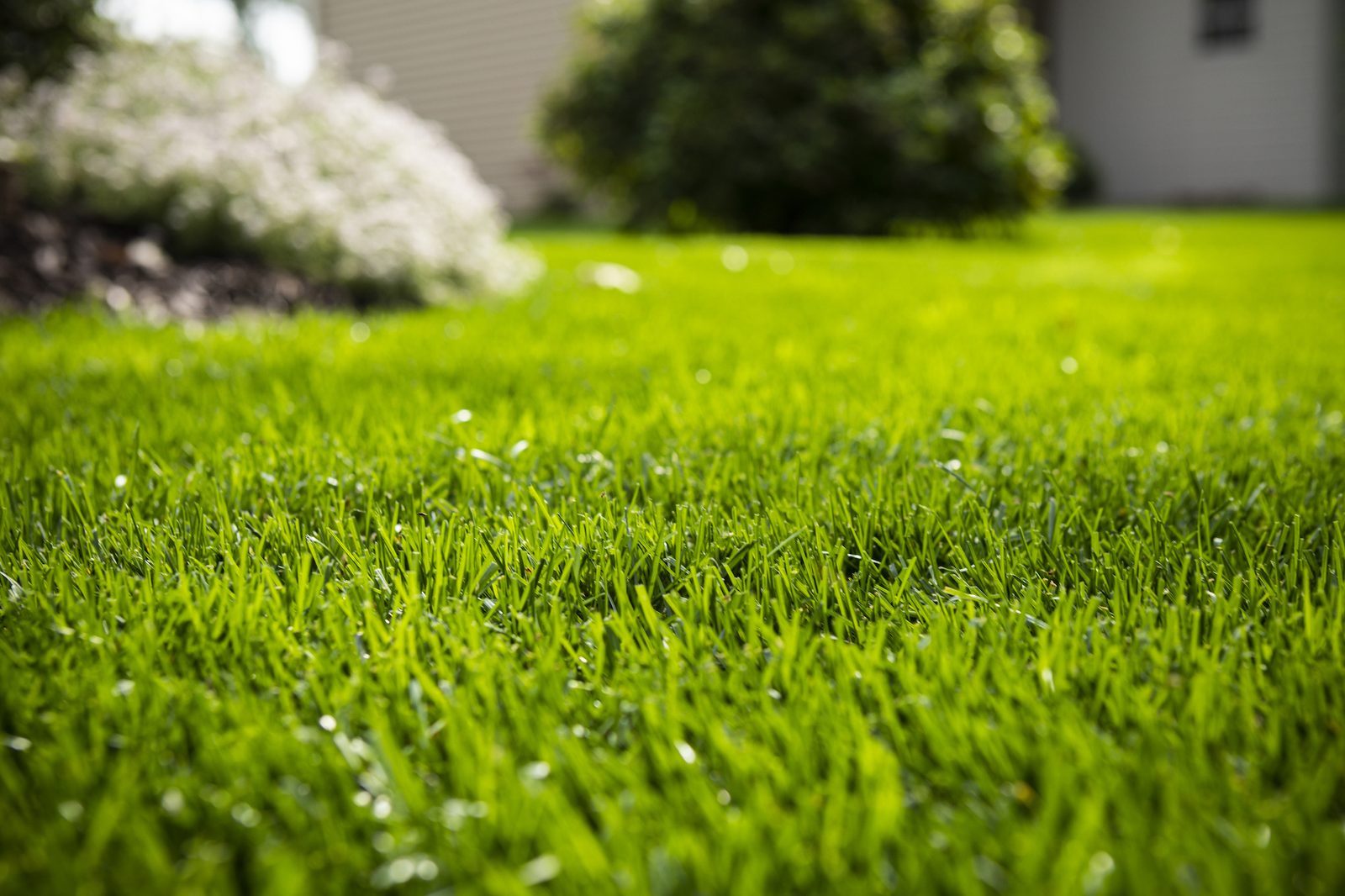
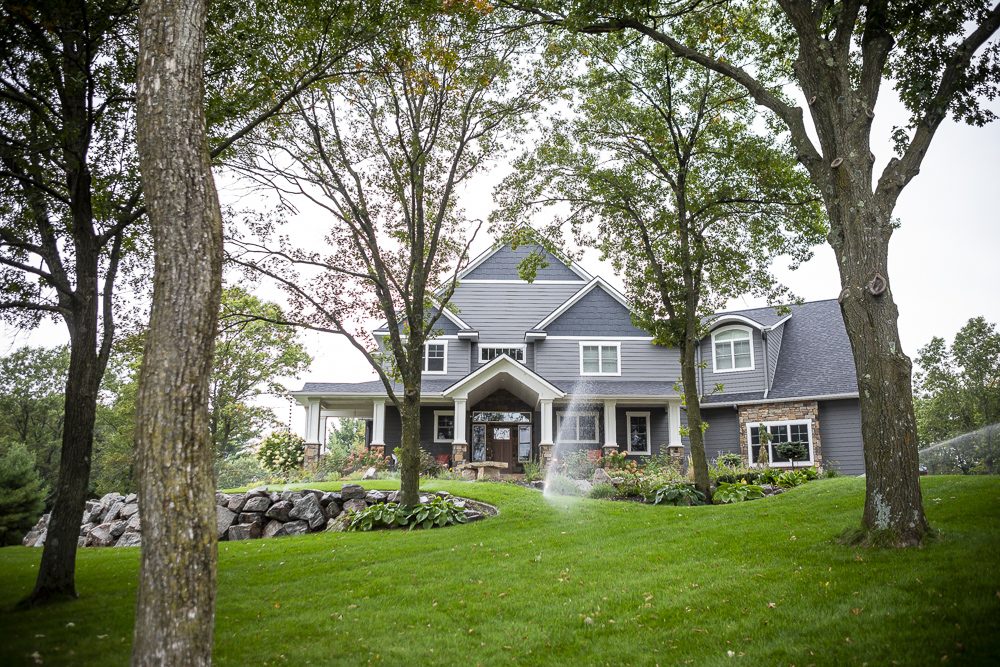
Kentucky bluegrass survives dormancy well because it spreads by underground rhizomes and can push new growth once moisture returns. It is not a grass that stays green through a dry spell, though, so do not expect it to. Fine fescues hold color longer on less water. Perennial ryegrass is usually the first part of the stand to look rough.
Whether the lawn comes back depends on how deep the root system is and how much stored energy the plant has when the dry weather arrives. Both of those are decided in the months before, which is why drought-proofing is a habit rather than a reaction.
Mow tall, and skip the mow when it is hot
Taller grass shades the soil surface, which slows evaporation and keeps root-zone temperatures down. Three to four inches is the right range here, and the taller end of that is better in July and August. Never remove more than one third of the blade in a single pass. Take off more and you are cutting away the leaf surface the plant uses for photosynthesis, and a lawn short on leaf area cannot rebuild roots.
Two habits worth changing during a dry stretch:
- Do not mow in the heat of the day. Wait for evening, or wait a day or two for cooler weather. The grass is already stressed and the cut adds to it.
- Do not mow dormant grass at all. If the lawn has gone tan and stopped growing, there is nothing to cut, and the mower traffic bruises crowns that are trying to stay alive.
Keep the blade sharp. A dull blade tears the leaf tip and leaves a ragged edge that loses more water and heals slower. Sharpen at least once a season, more often if you have sandy soil or you clip sprinkler heads.
Feed through the season, not in a panic
Fertilizer builds the root system that carries a lawn through dry weather, and it works on a schedule. The first round of fertilizer and weed control should be down by Memorial Day, with applications continuing through summer and an important one in fall, when roots are still active and storing energy for spring.
Granular fertilizer is the better choice for this. It goes down as solid prills and releases over weeks as it breaks down, which gives steady feeding instead of a spike. Liquid products deliver nutrients fast, which is useful in some situations and wrong in a drought: pushing a water-stressed lawn into a growth flush asks it to spend water it does not have. During active drought stress, hold off on nitrogen entirely and resume once moisture returns.
Potassium is the nutrient worth attention going into summer. It is involved in how grass regulates water inside the plant and in cell wall strength, which is why stress-tolerance formulas carry more of it. A lawn care program timed across the season handles that sequencing without you tracking it.
Water deeply, and less often
An established lawn does not want water every day. Daily watering keeps the top inch of soil wet, and roots have no reason to grow past it. Then the first genuinely hot, dry week arrives and a shallow root system has nothing to draw on.
Water in longer cycles on fewer days, aiming for roughly an inch per week including rainfall. How long that takes depends on your soil and your heads. Clay holds water and needs shorter runs, sand needs longer, and rotors apply water more slowly than fixed spray heads. Set a few straight-sided containers on the lawn and run a zone to see what you are actually applying in a given number of minutes.
Finish watering by sunrise. Wind picks up through the day and carries droplets off target, and sun evaporates water before it soaks in. Evening and overnight watering leaves the canopy wet for hours, which is how most fungal disease gets started.
Change the controller when the weather changes
A controller programmed for a cool, wet May is wrong in late July. During a drought, increase the run time per cycle rather than adding more days. You want the same deep and infrequent pattern, just more water each time. If you have a smart controller, confirm it is actually receiving local weather data and that the rain sensor is clear of debris.
Have the system checked before you need it
Drought is when an irrigation system's flaws show up as brown stripes. A real inspection runs every zone, checks head alignment and arc, looks for leaks at valves and fittings, and confirms the controller program matches the season. Heads knocked out of alignment by a mower or heaved by frost waste water on pavement while a strip of lawn gets nothing. Scheduled irrigation service finds that in May instead of July.
Should you switch to a drought-tolerant grass?
For most yards in the Twin Cities and around Eau Claire, no. Homeowners here pick seed for color, softness, and shade tolerance, and the blends already in the ground will come back from dormancy if they are cared for. Where a change does make sense is a renovation on a hot, sandy, full-sun area with no irrigation. Fine fescues in that spot will hold up on less water than bluegrass will.
Bottom line
- Dormant brown grass is usually alive. Watering it harder every day does not speed recovery and it invites disease.
- Mow at three to four inches, never remove more than a third of the blade, and do not mow dormant turf at all.
- Water in longer cycles a few days a week, finishing by sunrise, at about an inch per week including rain.
- Feed on a season-long schedule with granular fertilizer, and hold nitrogen while the lawn is under drought stress.
- Get the irrigation system inspected in spring so dry-weather problems are already fixed when you need it.
Frequently asked questions
How long can a lawn stay brown and still recover?
An established cool-season lawn can hold in dormancy for several weeks. If a dry stretch runs longer than that, give it about a quarter to a half inch of water every two to three weeks. That is enough to keep the crowns alive without pulling the lawn out of dormancy and asking it to grow.
Should I water every day during a heat wave?
No. Daily watering trains roots to stay in the top inch of soil, which is the opposite of what you want. Longer cycles on fewer days push roots deeper, and deeper roots are the whole point of drought-proofing.
Can I fertilize to green up a brown lawn?
Not while it is dry. Nitrogen tells the grass to grow, and growth costs water the plant does not have. Wait for moisture to return, then resume the normal schedule.
Why does part of my lawn brown out first?
Almost always soil or coverage. South and west exposures, slopes, sandy areas, and strips over buried construction debris dry out first, and so does anything a sprinkler head is not actually reaching. If the same patches go first every year, have the coverage checked rather than adding run time everywhere.
U.S. Environmental Protection Agency WaterSense, Watering Tips.
University of Minnesota Extension, Fertilizing Lawns.


