


How To Decide if You Should Repair or Replace Your Sprinkler System
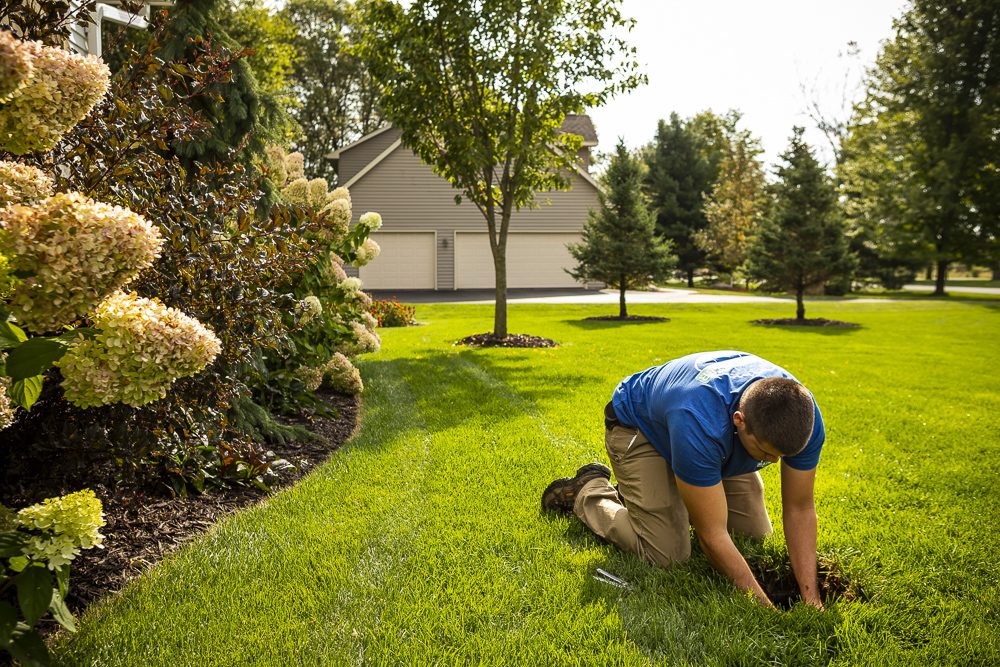
Good news up front: about 80 percent of the time an irrigation system can be repaired rather than replaced. Most of what fails are individual parts, and parts are cheap compared to a new installation. Here are the specific situations where replacement is the right call, and the middle option most people do not know exists.
Most of the time, repair is the answer
The failures that bring people to this question are usually component failures, not system failures. Typical repairs include broken or sunken sprinkler heads, leaky valves, defective solenoids, cut or corroded wire, a failed controller, and a cracked backflow device. These are the individual pieces that keep water moving to your lawn and beds, and every one of them is replaceable without touching the rest of the system.
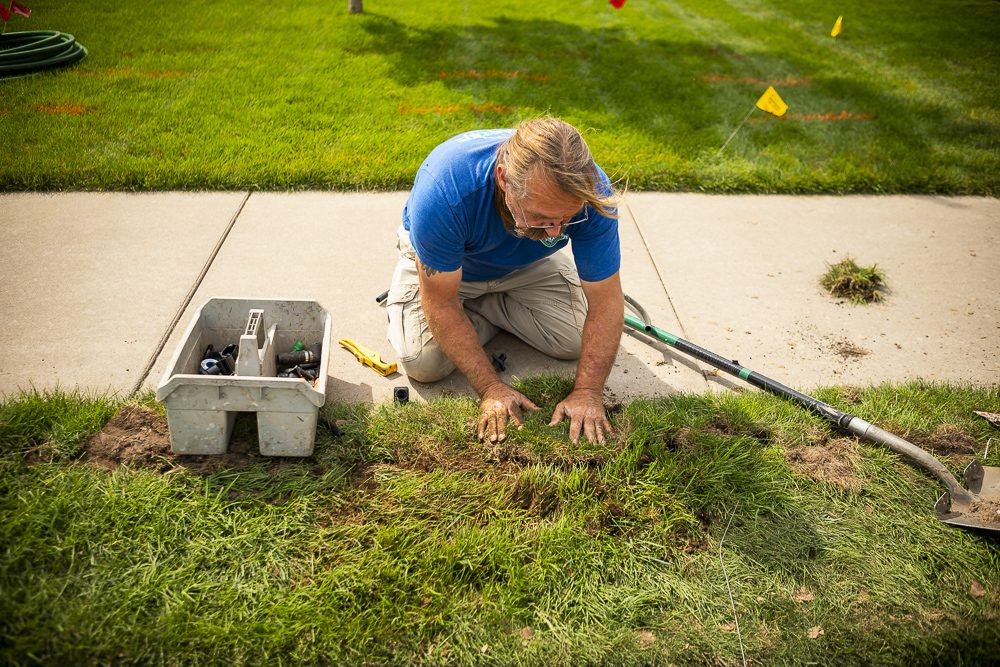
Repair costs are nowhere near the cost of a new installation. Before anyone talks about replacement, the system should be diagnosed zone by zone so you know whether you are looking at a $150 problem or a $1,500 one.
One caution worth stating: a quote for full replacement, offered without a zone-by-zone diagnosis first, deserves a second opinion.
When replacement actually makes sense
Old, brittle PVC pipe
If your system is more than twenty years old and was built with PVC pipe, replacement becomes a real conversation. PVC gets brittle as it ages, and it does not flex. That matters here specifically because Wisconsin and Minnesota soils move with every freeze and thaw cycle, and rigid old pipe cracks under that movement. Once you are repairing a new break every few weeks in different places, you are paying for a replacement in installments.
Newer systems in this region use polyethylene pipe, which flexes, moves with the ground, and holds up far better through our winters.
Major landscape renovation
If you are reconfiguring the property, moving beds, adding hardscape, regrading, putting in a patio or a pool, and the work requires digging up and reworking many zones, starting fresh often costs less than repairing a system cut apart in a dozen places. It also means the new layout gets designed for the new landscape instead of being patched around it.
Poor original design
This one is the most frustrating because it was entirely preventable. If a system was designed so badly that parts of the lawn and landscaping never get coverage, or the source cannot supply the zones as laid out, you may not be able to fix it with parts. A design that was wrong on day one is wrong permanently.
The usual signs: dry rings or wedges that persist no matter how long a zone runs, heads that never fully pop up, zones that lose pressure at the far end, and beds watered on the same schedule as turf.
A word about design, since it is where the money is made or lost
Hire an irrigation company in Eau Claire or the Twin Cities that emphasizes design, and ask about it directly. Not every company does it properly, and it is the one part of an installation that cannot be corrected later without digging.
Be careful with bids that come in noticeably low. The way to get there is usually by cutting the number of heads or the number of zones, which reduces materials and labor. You feel it afterward as poor coverage, pressure problems, and dry areas. A shoddy design can also waste hundreds to thousands of gallons of water a year while still not watering the lawn properly, which is the worst of both outcomes.
Ask any installer what flow rate and pressure they measured at your source, how many heads are on each zone, and how they calculated coverage overlap. There are real answers to all three.
The middle option: upgrade instead of replace
You do not have to choose between patching and starting over. An older system can usually be modernized in place, and this is where most of the water and performance gains are available.
- New heads. Current nozzles and rotors distribute water far more evenly than twenty-year-old heads, and matched-precipitation nozzles fix uneven zones without re-piping.
- A smart controller. Weather-based and soil-moisture controllers adjust run times to actual conditions instead of running a fixed schedule in a rainy week. EPA WaterSense labels controllers that meet efficiency criteria.
- A rain sensor. Inexpensive, and it stops the system from running during and right after rainfall.
- Pressure regulation. Pressure-regulating heads or valves stop misting, which is water lost to the air before it ever lands.
- Zone splitting. Where one zone is badly overloaded, splitting it is often cheaper than replacing everything.
An upgrade package frequently makes an old system perform like a new one for a fraction of a replacement, and the water savings offset part of the cost.
How to actually decide
The only reliable way to know is an in-person inspection by an irrigation specialist who runs every zone and looks at the pipe, the valves, the backflow device, the controller, and the coverage. A decision made over the phone from a description of symptoms is a guess.
Here is the rough rule we use. If repairs are isolated and the design is sound, repair. If the pipe is brittle and failing in new places repeatedly, or the original design cannot deliver coverage, replace. If the system works but wastes water and waters unevenly, upgrade.
What you should get either way
Whether you need a repair, an upgrade, or a new installation, the thing that determines whether your system lasts is what happens after. That means spring startup and pressure checks, in-season adjustment as plantings grow in, and proper winterization before the first hard freeze, which in this climate is not optional. A cracked backflow device or a split valve from a skipped blowout is an expensive spring surprise.
Choose from our three irrigation maintenance programs so inspection and adjustment happen on a schedule instead of after a failure.
Bottom line
- About 80 percent of systems can be repaired. Heads, valves, solenoids, wire, and controllers are all replaceable parts.
- Replacement makes sense with brittle PVC over twenty years old, a major landscape renovation, or a design that never worked.
- Rigid old PVC fails here because our freeze and thaw cycles move the soil. Polyethylene pipe flexes with it.
- Upgrading in place with new nozzles, a smart controller, a rain sensor, and pressure regulation is the overlooked middle option.
- Insist on a zone-by-zone inspection before accepting a replacement quote, and ask what flow and pressure were measured at the source.
Frequently asked questions
How long does an irrigation system last?
Pipe and valves can run thirty years or more if the system was designed well and winterized properly. Heads, solenoids, and controllers wear out sooner. The variable that shortens a system's life most in this climate is skipped winterization.
Is it worth repairing a twenty-year-old sprinkler system?
Often yes, if repairs are isolated and the coverage is good. The signal to stop repairing is a pattern of new breaks in new places, which usually means the pipe itself has gone brittle.
Can I improve an old system without replacing it?
Yes, and this is usually the best value. New nozzles, a weather-based controller, a rain sensor, and pressure-regulating components can make an old system water evenly and efficiently for far less than replacement.
How do I avoid a bad irrigation installation?
Ask about design specifically. A competent installer can tell you the flow rate and pressure measured at your source, how many heads are on each zone, and how coverage overlap was calculated. Be wary of a low bid that quietly cuts heads or zones.
Irrigation Association, Irrigation design and professional certification.
EPA WaterSense, WaterSense labeled irrigation products.


