


How Snow Removal Companies Handle Dustings, Blizzards & Winter Weather
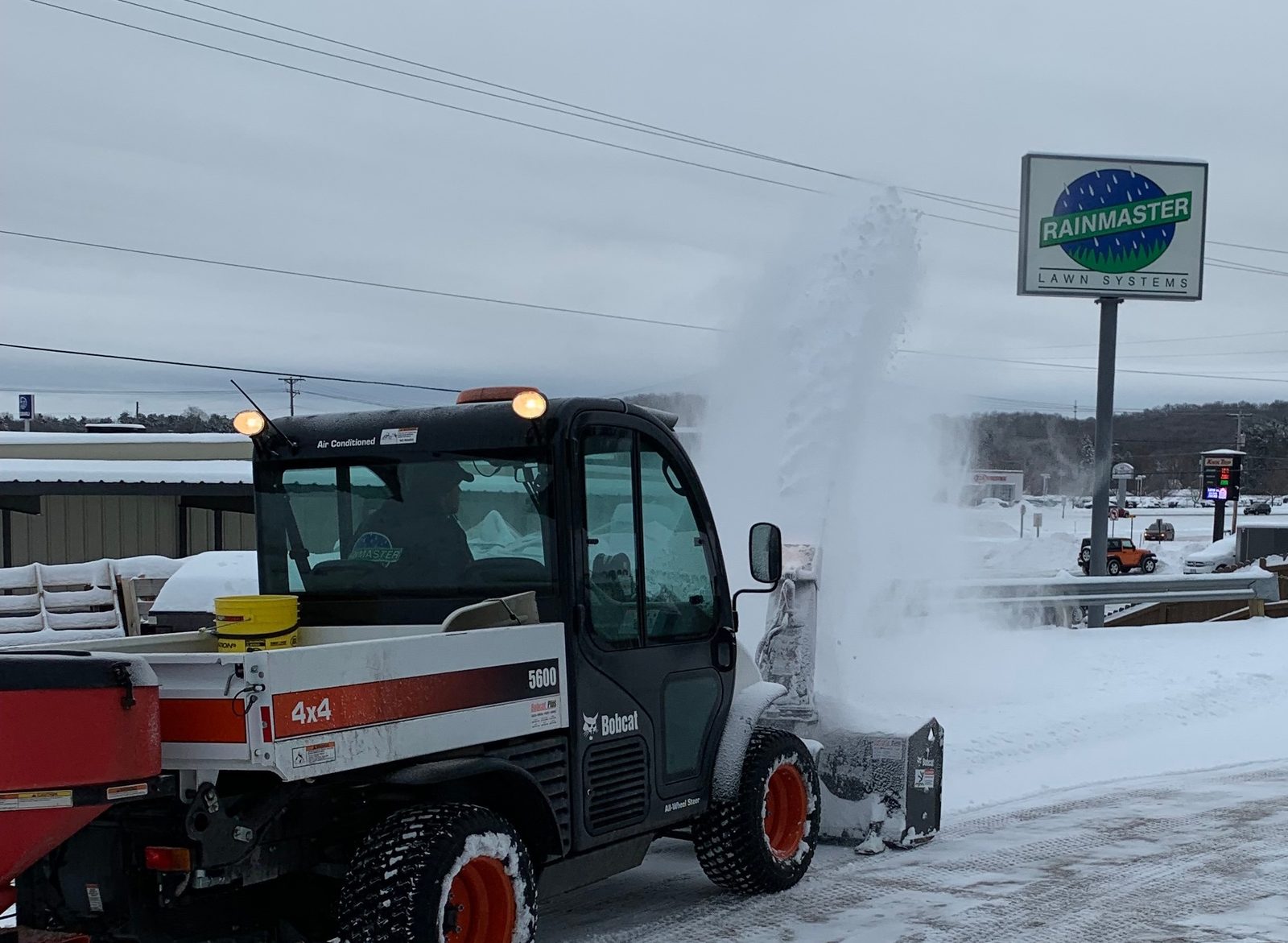
Winter in the Upper Midwest is not one kind of event. A half-inch dusting that glazes over, a three-day storm, and an ice event each require a different response, and the response you get depends almost entirely on what was arranged before the season started.
Pre-season planning decides everything
How a crew clears your property in any given storm is set by the plan, not by the weather. The questions worth settling in advance:
- Should the property be pre-treated even for a dusting?
- Is snow hauled off-site automatically above a certain depth, or decided case by case?
- Are sidewalks, entrances, and steps shoveled, or is it parking lot only?
- Where exactly does the snow get piled?
- What is the trigger depth that brings crews out?
RainMaster walks the property with you before the first snow to work through this, then builds a custom snow response plan with a map and photos of the site after the proposal is accepted. The map specifies where snow goes. That document is what the crew works from at 2 a.m., which is the entire point of having it.
A dusting
A thin layer looks like nothing and is one of the more dangerous conditions of the winter, because a half inch of snow compacts under tires and feet and turns to a glaze fast. There is not enough to plow meaningfully.
The answer is chemistry rather than steel. The property can be pre-treated with brine before the snow arrives, which keeps it from bonding to the pavement. If pre-treatment was not possible, the surface gets treated with deicer after the storm instead.
An inch or two
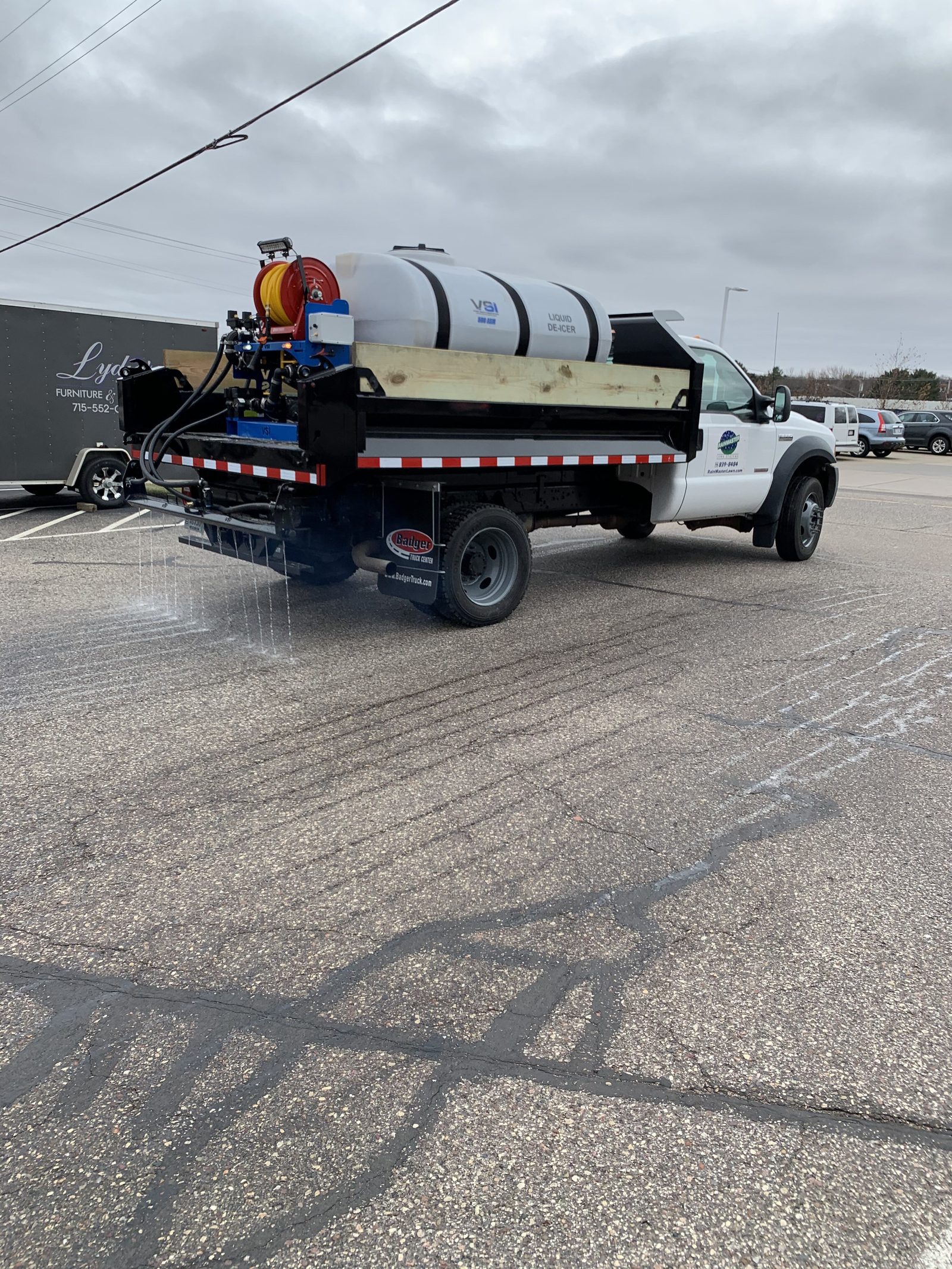
Brine again, applied ahead of the event. RainMaster pre-treats whether the forecast is a dusting, a few inches, or a full storm, because the pre-treatment is what prevents the bond between snow and pavement in the first place.
If you want the lowest hazard and liability exposure on a property, pre-treatment is the highest-leverage item in the plan.
The trigger question
A trigger is the snowfall depth that dispatches crews. The recommendation is one inch, and any trigger above that carries more liability than most commercial properties should accept. It does not take much snow to create a dangerous surface, particularly when a thin layer melts during the day and refreezes after dark.
At a one-inch trigger, once an inch has fallen crews come and push snow to the pre-determined location. During a longer storm that means multiple visits rather than one cleanup at the end.
A bit about brine
Brine is a liquid solution of salt and water, sprayed on pavement and walkways to keep snow and ice from bonding. Its advantages over dry rock salt:
- It works faster at the start of an event, because it is already in solution and does not have to dissolve before it does anything.
- It uses significantly less salt for the same result, which reduces chloride loading on soil, plantings, and nearby water.
- It stays where it is applied on paved surfaces rather than bouncing or being plowed into turf and beds, which is how rock salt kills lawn edges and shrubs.
- It is easier on surfaces and it does not stick to shoes and boots and get tracked into the building.
Where lawn and landscape damage along drives and walks has been a recurring spring problem, the deicing choice is usually the cause, and brine plus accurate application is the fix. Spring repair of salt-damaged turf edges is worth coordinating with your lawn care schedule.
A few inches, and storms that keep going
Once accumulation is real, the plan drives the response, and every property is different. Some sites are closed weekends and do not need Saturday service. Some have lots full of cars at shift change, which dictates when crews can work. Those constraints belong in the plan.
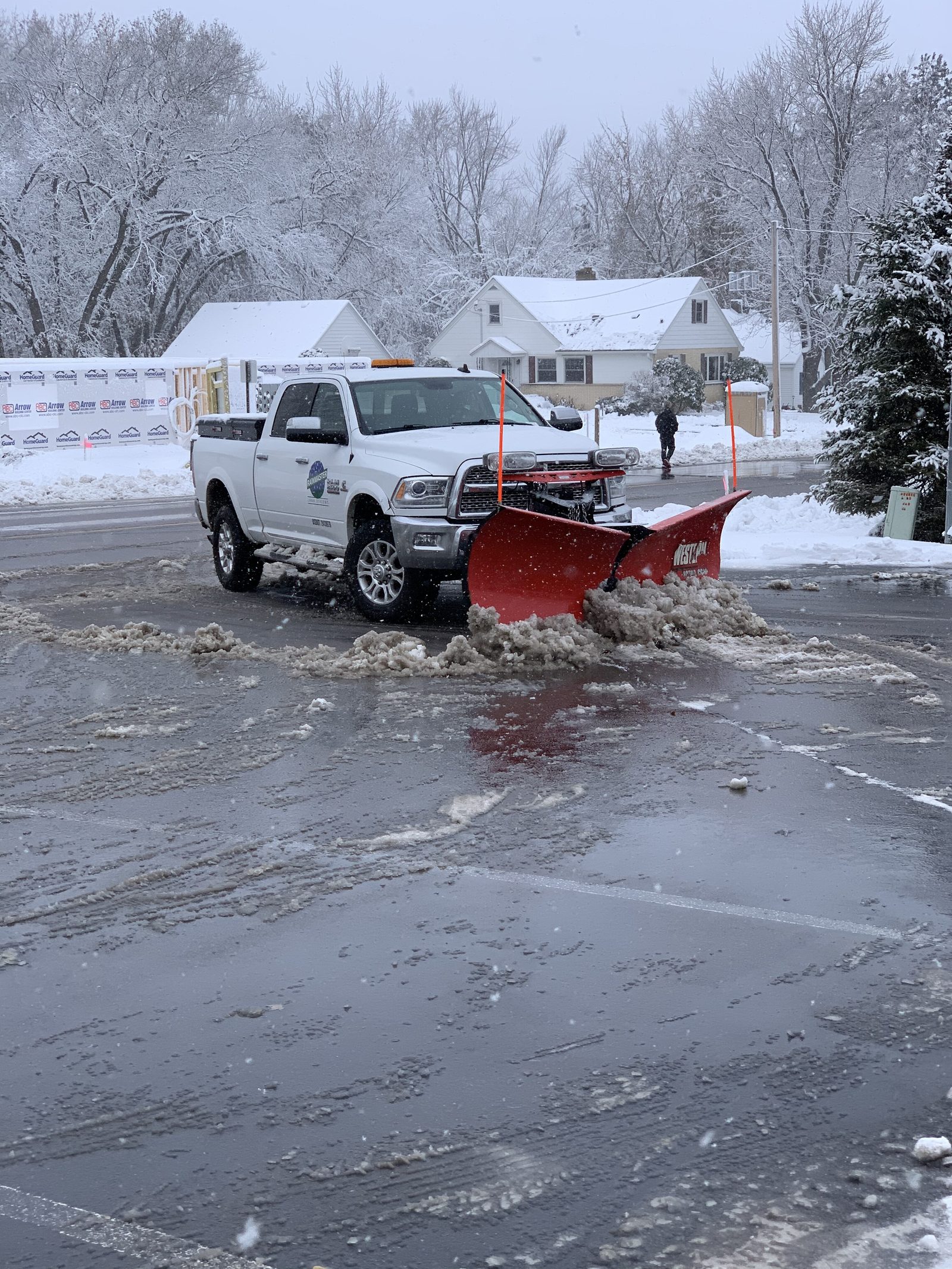
In general, crews come multiple times during an extended snowfall rather than once at the end, so snow does not pile to a depth that is harder to move and takes longer to clear. Whether it is two inches or seven, the work is some combination of plowing, hand shoveling, and deicing according to what was arranged.
On hand shoveling: not every snow removal company in Minneapolis or Eau Claire offers it. Plenty of properties cannot be safely cleared by plow alone, and entrances, pathways, steps, and stairs are exactly where slip claims come from. If your contract does not mention it, assume it is not happening.
Snow hauling
Repeated storms fill the places you can put snow. Some properties simply do not have room, and once piles block parking, sightlines, or drainage, they become their own hazard.
Hauling means relocating piles off-site. Some customers set it to trigger automatically once snow reaches a given depth; others want a conversation each time.
One RainMaster customer has room to pile snow, but the available area sits on a slope. As the pile melts, water runs down and pools at the bottom, then freezes overnight into a sheet of ice in a place people walk. They opted for hauling in their contract specifically to avoid that cycle. It is a good illustration of why snow placement deserves thought beyond whether there is space.
Freezing rain and ice
Ice is the worst condition of the winter. When snowflakes melt falling through a warm layer and then hit a freezing surface, the result is a glaze bonded to the pavement, and there is no accumulation for a plow to push.
Ice events are handled chemically: pre-treatment where the forecast allows, and deicing application during and after. The forecast lead time is what determines how well it goes, which is why crews track weather closely and pre-treat on the forecast rather than waiting to see what happens.
Freezing rain is also the condition most likely to generate a claim, so documentation of service timing matters more here than anywhere else.
Blizzards
A blizzard is a logistics problem on top of a snow problem: high wind, drifting that refills cleared areas, low visibility, and potential travel restrictions that slow crews between sites. Properties get multiple passes, the sequence follows the priorities set in the plan, and drifted areas often need to be redone after the wind drops.
During major events, check 511 for travel conditions before expecting anyone to arrive on a normal schedule.
Why documentation matters in every one of these
Whatever the event type, you should be able to establish what was done and when. RainMaster provides before-and-after photos, clock-in and clock-out times by service type, GPS verification of crew location, and the recorded weather conditions during the service window. If a slip and fall claim surfaces months later, that record is the difference between a defensible position and an argument. Contract specifics for all of this belong in your snow removal agreement before the season starts.
Bottom line
- A dusting is handled chemically, not with a plow. Thin snow compacts and glazes quickly, which makes pre-treatment the key step.
- Set the trigger at one inch. Anything higher leaves the property untreated during the conditions that generate claims.
- Brine prevents snow from bonding to pavement, works faster at the start of an event, and uses far less salt than rock salt.
- Confirm hand shoveling in writing. Many providers plow lots only, and entrances and steps are the highest-risk surfaces.
- Extended storms get multiple passes, and limited pile space means planning snow hauling before you need it.
Frequently asked questions
Why would you treat the property for only half an inch of snow?
Because a thin layer compacts into ice under traffic faster than deep snow does, and there is nothing substantial for a plow to remove. Pre-treating or deicing is the only effective response.
Is brine better than rock salt?
For most commercial applications, yes. It acts faster at the start of an event, uses considerably less salt for the same effect, stays on the pavement rather than migrating into lawns and beds, and does not get tracked indoors.
How many times will crews come during a big storm?
As many as the plan calls for. Extended snowfall is normally handled with multiple passes so accumulation never reaches a depth that is slow and difficult to clear.
What happens during freezing rain?
Chemical treatment, since there is no accumulation to plow. Pre-treatment ahead of the event when the forecast allows, then deicing during and after. Ice events are the highest-liability condition of the winter.
Wisconsin Department of Transportation, 511 Wisconsin winter travel and road conditions.
Wisconsin Department of Natural Resources, Chloride and winter salt use information.


