


How Much Does Yard Mosquito Treatment Cost in Minneapolis?

Most mosquito control companies in Minneapolis will not post a price, so comparing options means making phone calls while you scratch bites. Here are the real numbers, what a season of service actually includes, and the line items worth asking about before you sign anything.
What yard mosquito control does
Professional yard mosquito control is a barrier spray applied to the places on your property where adult mosquitoes rest during the day. Mosquitoes are weak fliers and they avoid direct sun, so they spend daylight hours tucked into shaded, humid vegetation and come out at dusk. Treating those resting sites knocks down the adult population that is biting you.

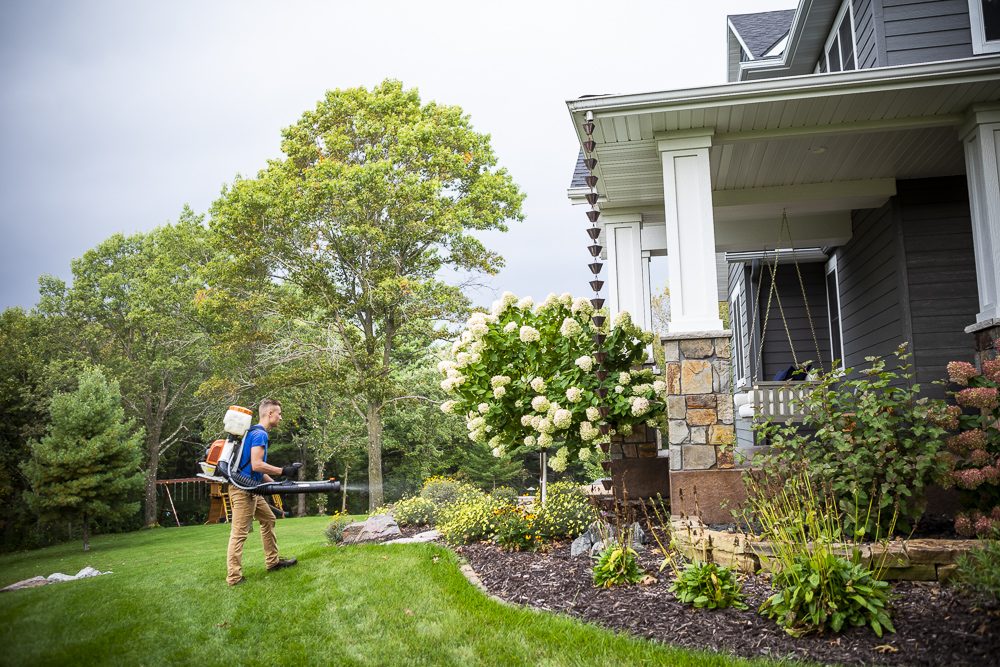
A treatment reduces mosquitoes for roughly three weeks. That is not a shortcoming of the product, it is the mosquito life cycle. New adults are emerging constantly through the summer, so control is a season-long program rather than a one-time spray. Honest expectation setting matters here: no mosquito program delivers one hundred percent control, but a well-timed barrier program produces a large, obvious reduction in biting pressure in the areas where you actually sit.
What yard mosquito treatment costs
In general, mosquito spraying in the Minneapolis area runs about $450 to $600 per season for a typical residential yard. Price moves with the size of the property and the amount of vegetation that has to be treated, since a wooded lot with heavy understory takes far more material and time than a small open yard.
RainMaster mosquito control service starts at $579 for a season, based on the size of your yard, with six treatments each year spaced approximately every three weeks from spring through fall. Our prices are published on our site, which in this industry is unusual and deliberate.
Watch for the following when you compare quotes:
- Number of visits. A $400 program with four visits is not cheaper than a $579 program with six, it is a shorter season with a gap in the middle of mosquito season.
- Interval. Three weeks matches how long the barrier holds. Monthly or six-week intervals leave uncovered stretches.
- Whether tick control is bundled or billed separately. See below.
- Per-visit upcharges for yard size, extra acreage, or re-treatment after rain.
Mosquitoes and ticks are the same service
RainMaster mosquito treatments help with ticks too, and we do not charge twice for it. Ticks and mosquitoes occupy the same habitat: damp, shaded vegetative areas with cover and moisture. The perimeter and understory zones we treat for mosquitoes are the same zones where blacklegged ticks and American dog ticks wait for a host.
Plenty of companies bill mosquito control and tick control as two line items even though it is the same product applied to the same areas on the same visit. At RainMaster you pay for mosquito spraying and you get relief from both pests for one price.
Worth knowing about ticks, since the myth is everywhere: ticks do not drop out of trees. They climb to the tips of grasses, leaf litter, and low brush and wait for something to brush past, then crawl on. That behavior is exactly why a ground-level barrier treatment of the perimeter works on them. It is also not a replacement for a veterinarian-recommended flea and tick product on your pets, or for checking yourself after yard work.
Where the treatment goes
Killing mosquitoes is about location. Our specialists treat the perimeter of the yard and the places mosquitoes and ticks actually rest and breed:
- The undersides of plant leaves
- Shady areas
- Damp and low-lying areas
- Under decks
- Under tree canopies and low limbs
- Wood piles
You see a sharp reduction in biting mosquitoes within hours of the treatment drying, and the areas you use most, the patio, the deck, the yard around the swing set, are usable that same evening.
What you should get for the price
Price is not the only thing worth comparing. A few things we include that cost nothing extra and that make a real difference:
- Advance notice. You hear from us the day before we come. No coming home to a flag in the yard and realizing the dogs were out all afternoon.
- Recommendations after each visit. Our technicians note the breeding sources they find on the property, since no amount of spraying beats dumping the water out of a tarp or clearing a clogged gutter. Standing water as small as a tablespoon can produce mosquitoes.
- Event timing. If you have an outdoor wedding, a graduation party, or a first birthday coming up, tell us the date and we schedule a visit ahead of it rather than hoping the rotation lines up.
What you can do between visits to lower the bill's workload
Barrier spray handles resting adults. Source reduction handles the next generation, and it is free.
- Dump and refill birdbaths and pet bowls weekly.
- Clear gutters, which are the most commonly missed breeding site on a house.
- Turn over or store buckets, wheelbarrows, empty pots, kids' toys, and old tires.
- Pull water off tarps, boat covers, and pool covers.
- Keep the lawn mowed and clear clippings, since tall grass and clipping piles hold the humidity adult mosquitoes need.
None of that replaces treatment on a wooded lot next to a wetland, but on an average suburban property it meaningfully lowers the pressure the mosquito and tick program has to overcome.
Bottom line
- Mosquito treatment in the Minneapolis area generally runs about $450 to $600 per season, driven by yard size and vegetation.
- RainMaster service starts at $579 per season with six treatments spaced about every three weeks, spring through fall.
- Compare the number of visits and the interval, not just the headline price. Three weeks matches how long a barrier holds.
- Tick control uses the same product in the same areas, so it should not be a separate charge. With us it is not.
- Source reduction is free and real. Gutters, tarps, and anything holding water produce the next generation.
Frequently asked questions
How long does one mosquito treatment last?
About three weeks, which is why a season program is spaced on that interval. New adult mosquitoes emerge continuously through the summer, so a single treatment gives you a few good weeks and then the population rebuilds.
Why do mosquito companies hide their prices?
Most of the industry prices by property after a site visit and prefers to quote over the phone. Yard size genuinely affects the cost, but that does not stop a company from publishing a starting price, which is why ours is on the site.
Do I have to pay extra for tick control?
Not with us. Ticks and mosquitoes rest in the same shaded, damp perimeter areas, and the same treatment addresses both. Many companies bill them separately anyway, so it is worth asking directly.
Is the yard safe for kids and pets after treatment?
Once the application has dried, yes. We notify you the day before so you can plan around it and keep pets in until it is dry.
University of Minnesota Extension, Ticks and tickborne disease.
Wisconsin Department of Natural Resources, Outdoor health and wildlife resources.


