


How Much Does Lawn Care Cost in Eau Claire, WI?
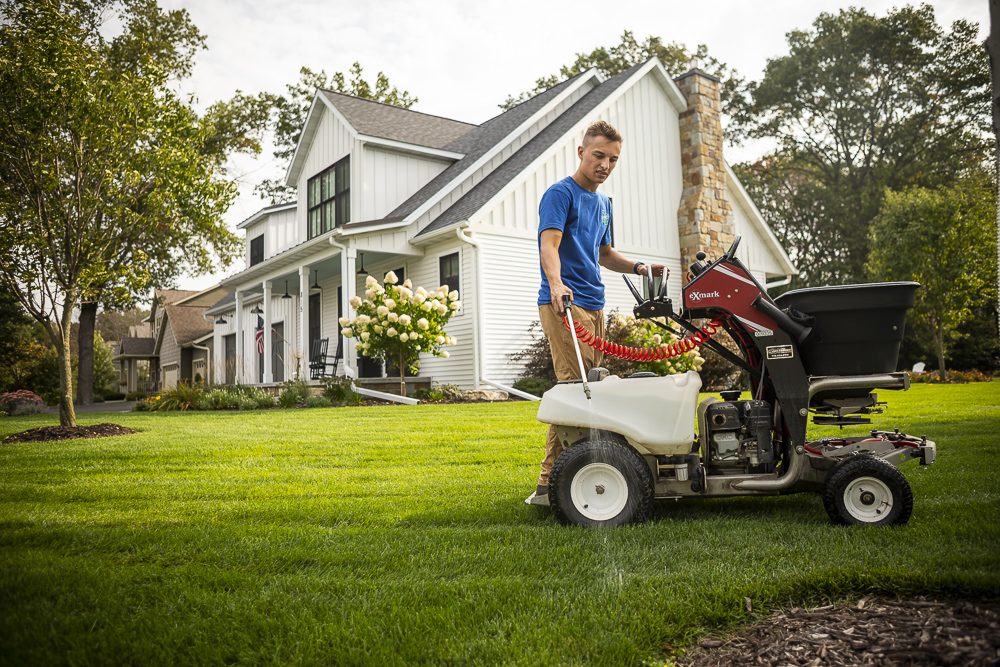
Most lawn care companies in Eau Claire will describe their services online and leave the price for a phone call. That makes it hard to compare anything. Here are real numbers for the Chippewa Valley, what the spread between a low and high price actually buys, and the questions worth asking before you sign.
What lawn care costs in Eau Claire
Price depends on three things: the size of the lawn, how many services the program includes, and how much ground the lawn has to make up. For a 5,000 square foot lawn in the Eau Claire area, plan on roughly $400 to $1,000 a year for a treatment program.
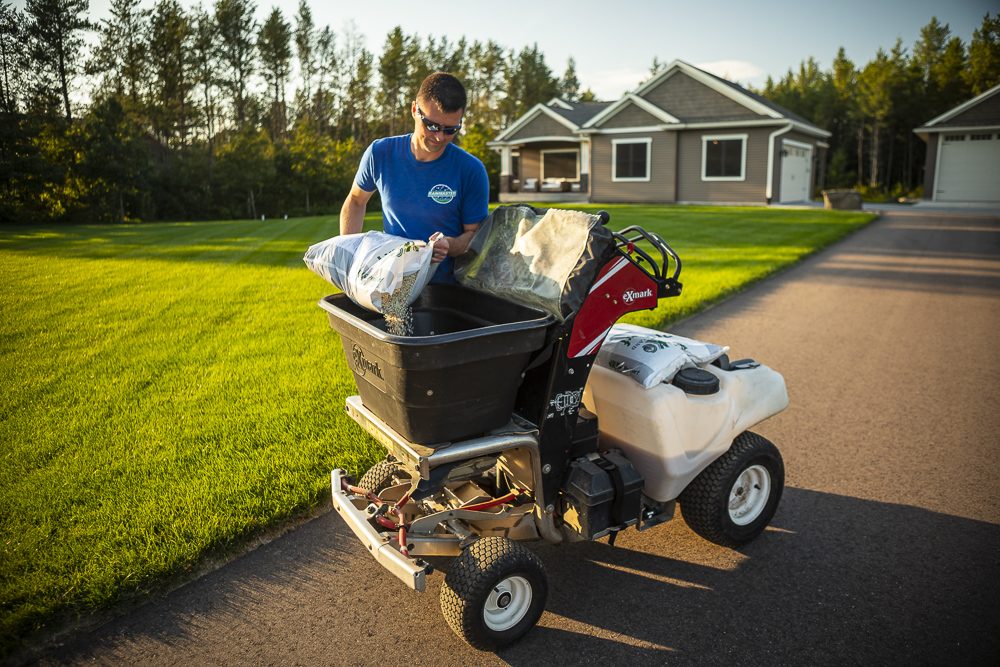
That is a wide range, and the spread is not arbitrary. At the bottom you are buying fertilizer and broadleaf weed control, applied on a schedule. At the top you are buying those plus soil work, grub prevention, pH correction, aeration, and seed. The lawn that needs the most help is usually the lawn where the cheapest program disappoints, because the limiting factor is the soil rather than the fertilizer.
RainMaster lawn care program pricing
Our prices are published rather than quoted, and all three are based on a 5,000 square foot lawn. Larger properties are priced on actual measured square footage.
Healthy Habitat, from $449 per year
A basic approach that handles the most common lawn care problems. It includes weed control and crabgrass prevention, fertilization to build color, thickness, and roots, and soil pH testing.
Terrific Turf, from $779 per year
An intermediate program for maintaining a healthy lawn with proactive care. It includes everything in Healthy Habitat, plus pH correction to improve nutrient availability, grub protection with a grub guard selected to be easier on pollinators, and work to improve soil structure.
Luscious Lawn, from $1109 per year
An advanced program for new and established lawns aiming at optimum health, and the right choice when a lawn needs real repair. It includes everything in Terrific Turf, plus seeding to fill bare and thin spots.
Why the higher tiers cost more and do more
Everyone wants to spend less. Healthy Habitat will improve a lawn, which is why we sell it. But the two upper programs change the lawn more because they work on the part you cannot see.
Aeration is the clearest example. Soil in this region compacts, especially where clay content is high and especially under regular foot traffic. Compacted soil has fewer air spaces, which means water runs off instead of soaking in and roots cannot push through to find moisture and nutrients. Core aeration pulls plugs of soil out of the lawn and leaves open channels, so water, air, and fertilizer reach the root zone. Roots respond by growing deeper, and a deeply rooted lawn handles heat, drought, disease, and weed pressure far better than a shallow one. Pull the soil problem out of the equation and everything else you apply works better.
Soil pH works the same way. Nutrients are only available to grass within a certain pH range. Outside it, fertilizer sits in the soil unavailable to the plant, so you can fertilize a lawn all season and see very little for it. Testing tells you whether that is happening, and the right amendment corrects it.
What you should expect for the money
Price by itself tells you nothing. What matters is what shows up on your property. Here is what to ask about.
- Who is actually treating the lawn. Ask about training, certifications, and whether technicians are seasonal hires or year round employees. Our team includes specialists with horticulture degrees and decades of field experience, and we employ them year round rather than seasonally. Experienced people cost more, and they are the reason a diagnosis is right the first time.
- Whether the program is proactive or reactive. Preventing crabgrass is cheaper than killing it. Preventing grub damage is cheaper than reseeding. A program built around prevention should cost more up front and less over three years.
- What the grub control is. Grub products vary widely in how long they stay active and in their effect on pollinators. We pay more for a grub guard chosen to be easier on bees and to stay active through the growing season rather than fading before late summer larvae arrive.
- Seed quality. Bargain seed from a big box store frequently contains weed seed and older cultivars. Premium seed costs more per bag and is a real line item in a program price, and it is also the difference between filling a thin spot and planting next year problem.
- Fertilizer and weed control formulation. We use granular fertilizer, which costs more than the liquid most competitors apply. Granular breaks down slowly and feeds over weeks rather than days, and our blends include organic matter along with the nutrients. For weeds, liquid is the right tool, because it needs to contact the leaf rather than hope a granule lands on it.
- Recommendations specific to your lawn. A program should change based on what the technician finds. Expect notes on your property, not a template.
- Communication you can count on. Our specialists call after a visit if you were not home, and you get a summary of what was done and anything we noticed. If you call the office, someone answers.
Do not forget irrigation in the budget
A treatment program and a sprinkler system that waters unevenly will fight each other all summer. If you have a system, budget for seasonal irrigation maintenance alongside the lawn program, and expect occasional repairs as components wear. Watering that is even and correctly timed makes every dollar of the lawn program work harder.
Getting a real number for your lawn
Published prices are a starting point based on 5,000 square feet. The number for your property depends on measured square footage and what the lawn needs, which is why the first step is a look at the lawn. You can request a quote and get an exact price rather than a range.
Bottom line
- Budget roughly $400 to $1,000 a year for a treatment program on a 5,000 square foot Eau Claire lawn.
- RainMaster programs start at $449 for Healthy Habitat, $779 for Terrific Turf, and $1109 for Luscious Lawn, all based on 5,000 square feet.
- The upper tiers cost more because they address soil: aeration, pH correction, grub prevention, and seed.
- Compacted soil and incorrect pH will limit results no matter how much fertilizer goes down.
- Ask who treats the lawn, how long the grub control stays active, what seed is used, and whether the program is preventive or reactive.
Frequently asked questions
Why do lawn care prices vary so much in Eau Claire?
Because the programs are not the same. A low price generally buys fertilizer and broadleaf weed control on a schedule. A higher price adds grub prevention, pH correction, aeration, and seed, which are the services that change a struggling lawn rather than maintaining an already healthy one.
Is the cheapest lawn care program a waste of money?
No. A basic program with correct fertilization, crabgrass prevention, and weed control will visibly improve most lawns. It is the wrong choice for a lawn with compacted soil, bad pH, or significant thin areas, because those problems are not solved by fertilizer.
How is my price calculated if my lawn is not 5,000 square feet?
On measured square footage. Published prices are the starting point for a 5,000 square foot lawn, and a quote for your property is based on what is actually there.
Does lawn care include aeration?
In our programs, aeration is part of the two upper tiers rather than the basic plan. It is the single most useful service for a compacted lawn, which describes most properties with clay soil or regular foot traffic.
University of Wisconsin Division of Extension, Lawn Fertilization.
University of Wisconsin Division of Extension, Lawn Aeration and Topdressing.


