


How Much Does Irrigation Maintenance Cost? What to Expect in Minneapolis

Irrigation maintenance has two line items: the program that covers the seasonal visits, and a budget for the routine repairs that come with any system of buried pipe and moving parts. Here is what each runs in Minneapolis and what you should expect to get for it.
The cost of a maintenance program
Maintenance starts with a program that bundles some combination of spring activation, fall winterization, and tune-up visits through the busy summer months. Expect to pay $225 to $450 a year for a good irrigation maintenance program in Minneapolis, depending on the level of service you choose.
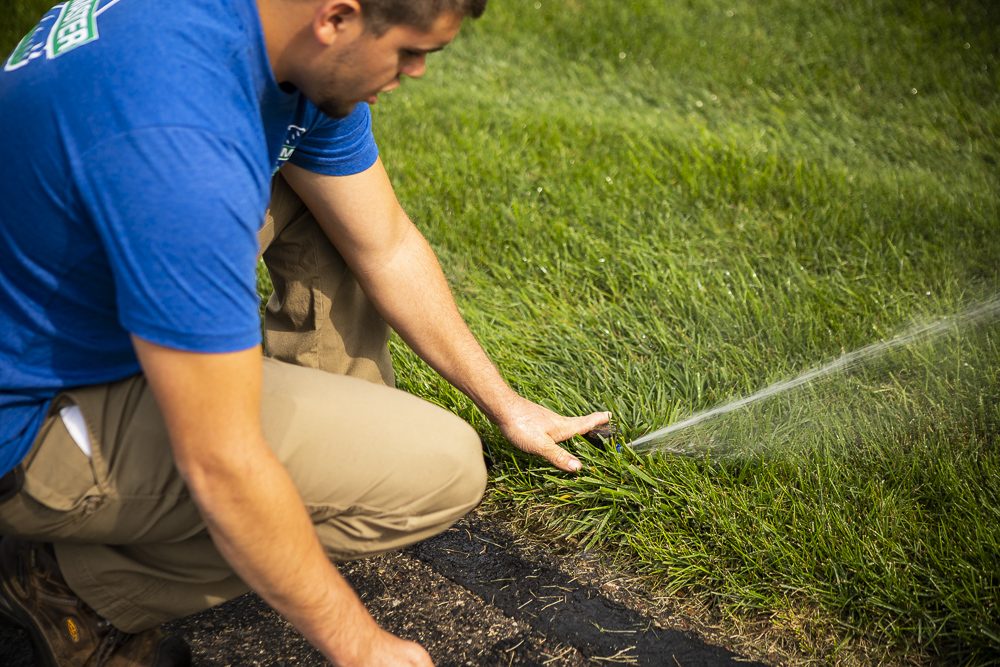
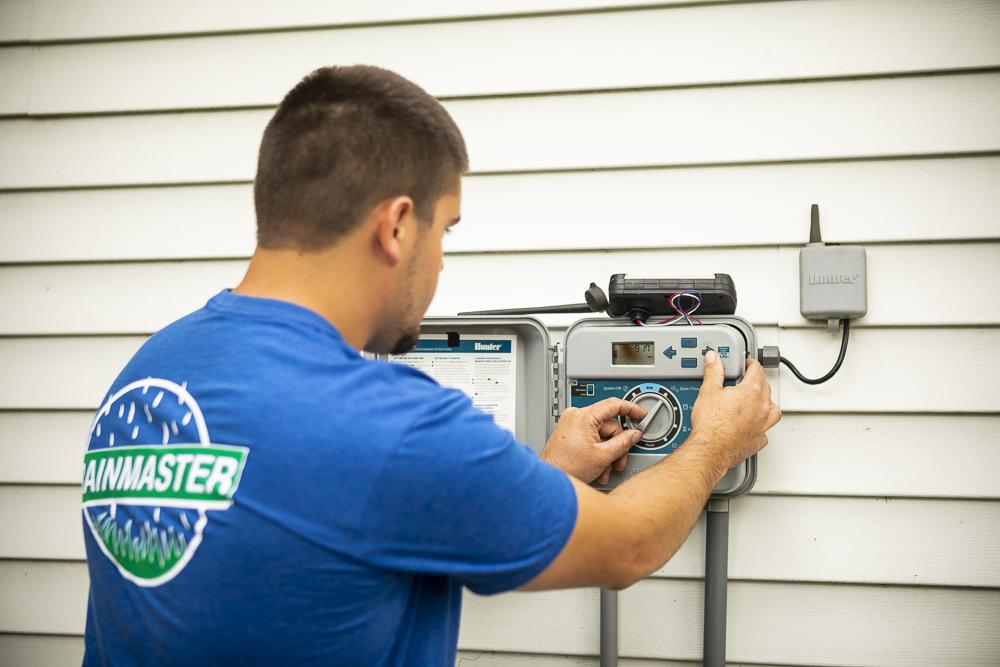
What varies between tiers is visit count and how much adjusting is done for you. A basic program covers activation and winterization. Higher tiers add a mid-season inspection or monthly visits where settings are updated for the weather and small problems are fixed as they appear.
Part of what you are buying is attention. Sometimes a visit finds nothing but a controller that needs reprogramming for the season. Other times it finds heads that need adjusting or replacing, a broken valve, a zone that will not shut off, or a fitting working loose, all of which are cheaper caught early than discovered as a failure.
Budget for routine repairs too
Parts wear out. Sprinkler heads get clipped, nozzles clog, valve diaphragms fail, and fittings loosen over seasons of pressure cycling. None of that is a sign of a bad system; it is normal for buried infrastructure.
Budget at least $300 a year for routine repairs on top of the program cost. That is the realistic number for keeping a system running correctly rather than limping. Deferring repairs costs more in two ways: emergency service calls priced higher than scheduled work, and the water you pay for while a broken head or cracked line runs unnoticed.
What spring activation includes
In Minneapolis, activation runs from mid-April through the end of May depending on the weather, once the risk of a hard freeze has passed. Most systems need adjustment before the watering season, and a proper activation covers four things:
- Inspect every sprinkler head. Frost heave over the winter tilts heads so they water the driveway instead of the lawn. Snowplows shear them off. Fittings loosen and leak. Nozzles clog with grit. Finding all of it means running each zone and watching it.
- Reprogram the controller. Many homeowners unplug the controller for winter and it loses its settings. Even when it holds them, last year's late-season program is wrong for a cool, wet spring.
- Check the rain sensor. Confirm batteries are good and the unit is not obstructed by debris. A failed sensor gives no warning; the system simply runs during rain.
- Test every zone. Each zone should open and close on command and cover its area evenly. This is where leaks, dead valves, broken laterals, and winter damage surface while they are still small.
What winterization includes
This is the visit where skipping it gets expensive. Water left in the system expands when it freezes and breaks whatever contains it. Shutdown has to happen before the first deep freeze, not after.
- Clear the water out of pipes, valves, and heads.
- Drain the backflow device. Freezing water damages the internal components and can crack the body, and a backflow assembly is not a cheap part.
- Winterize a lake pump if you draw from one: protect it with RV antifreeze, cap the pipe ends so animals cannot nest inside, and disconnect the wiring so it cannot be energized dry.
Why a mid-season inspection is worth including
Think about when the system does its work: July and August, the hottest and driest weeks, when the lawn has the least margin for error. Spring and fall visits bracket that period without looking at it.
A mid-season visit should check heads again, test every zone, and update the controller for peak summer demand. It is also the only time of year coverage can be judged accurately, because shrubs and perennials have reached full size and may be blocking spray patterns that were clear in April.
Efficiency that offsets the cost
A maintenance visit routinely finds water waste nobody knew about: heads spraying pavement, nozzles misting instead of producing droplets, low-head drainage emptying a zone downhill after every cycle, a controller still programmed for May in the middle of August, and in some cases a cracked lateral line leaking the whole time a zone runs.
Correcting those shows up on the water bill, which is why maintenance is not purely a cost line. On many systems, nozzle retrofits and correct controller programming save a meaningful share of seasonal water use without any new hardware beyond the nozzles.
Recommendations should be part of it
The person who watches your system run two or three times a year knows more about how your yard uses water than anyone else, and that should come back to you: whether you are watering too much or too little, which zone is weak, what a nozzle retrofit would save, how a smart controller would change the schedule, and which problems are about to become repairs.
Good irrigation specialists understand turf as well as hardware, because run times, cycle timing, and coverage are lawn health decisions. That is why irrigation and lawn care work better coordinated than split between two companies.
What RainMaster offers
We offer three irrigation maintenance programs so the level of service can match the system and the property, covering spring activation, mid-season inspection, fall winterization, repairs as needed, and recommendations along the way. RainMaster has served Minneapolis and Eau Claire since 1999. Call 888-839-8484 or request a quote.
Bottom line
- Expect $225 to $450 a year for a good irrigation maintenance program in Minneapolis, depending on the service level.
- Budget at least $300 a year on top of that for routine repairs. Parts wear out on every system.
- Spring activation means inspecting every head, reprogramming the controller, checking the rain sensor, and testing every zone. Activation runs mid-April through the end of May.
- Winterization has to clear water from lines, valves, heads, and the backflow device before the first deep freeze, plus the lake pump if you have one.
- A mid-season visit catches problems under peak demand and is the only time spray coverage can be evaluated with plants at full growth.
Frequently asked questions
How much does irrigation maintenance cost in Minneapolis?
A good maintenance program runs $225 to $450 a year depending on how many visits and how much seasonal adjustment it includes. Plan on at least $300 a year beyond that for routine repairs.
What does a spring irrigation activation include?
Inspecting every sprinkler head for frost heave, plow damage, loose fittings, and clogged nozzles; reprogramming the controller for spring conditions; checking the rain sensor; and running every zone to confirm operation and coverage.
Why is winterization so important?
Water left in pipes, valves, heads, or the backflow device expands when it freezes and cracks what holds it. It has to be cleared before the first deep freeze, and a cracked backflow assembly is an expensive, entirely preventable repair.
Does maintenance actually save money?
It offsets part of its own cost. Visits routinely find heads spraying pavement, misting nozzles, low-head drainage, a controller set for the wrong season, and leaking lines, all of which show up on the water bill. Scheduled repairs also cost less than emergency calls.
U.S. Environmental Protection Agency WaterSense, Sprinkler Spruce-Up.
U.S. Environmental Protection Agency WaterSense, Landscaping Tips.


