


How to Make Your Grass Greener: 10 Tips for Minneapolis & Eau Claire, WI
Color is a symptom. A lawn is deep green when its roots can reach water and nutrients, which means most of the work on green grass happens in the soil and in how you mow and water. Here are ten things that actually move the needle in Minneapolis and Eau Claire lawns, in rough order of impact.
1. Use granular fertilizer
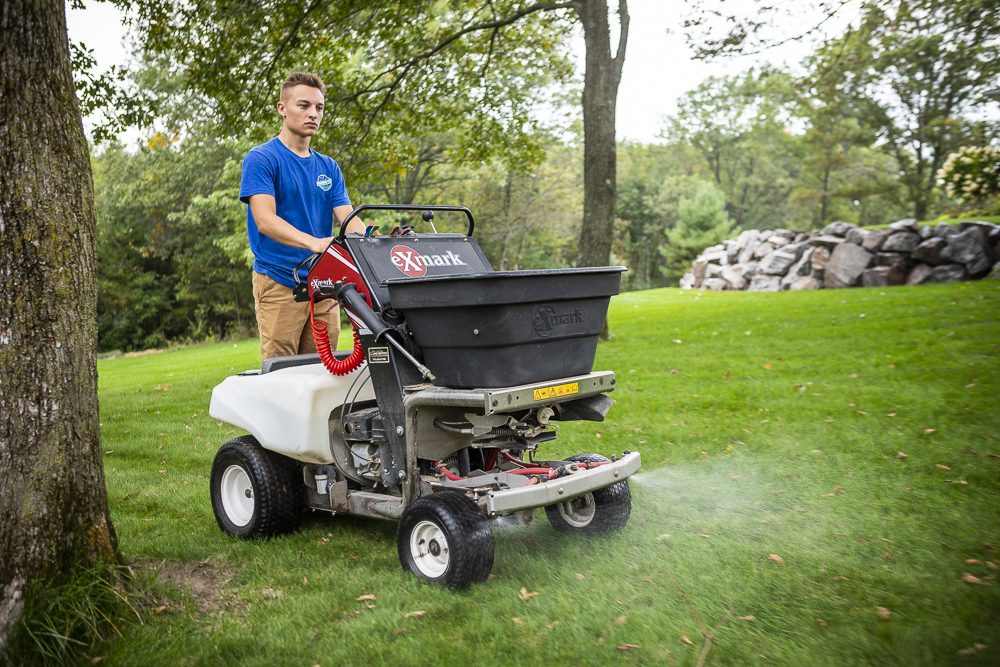
Granular fertilizer costs more than liquid and releases nutrients over weeks rather than all at once. That gives steadier growth and more consistent color between applications instead of a flush followed by a fade. It also pushes less soft top growth heading into summer heat, which matters for disease.
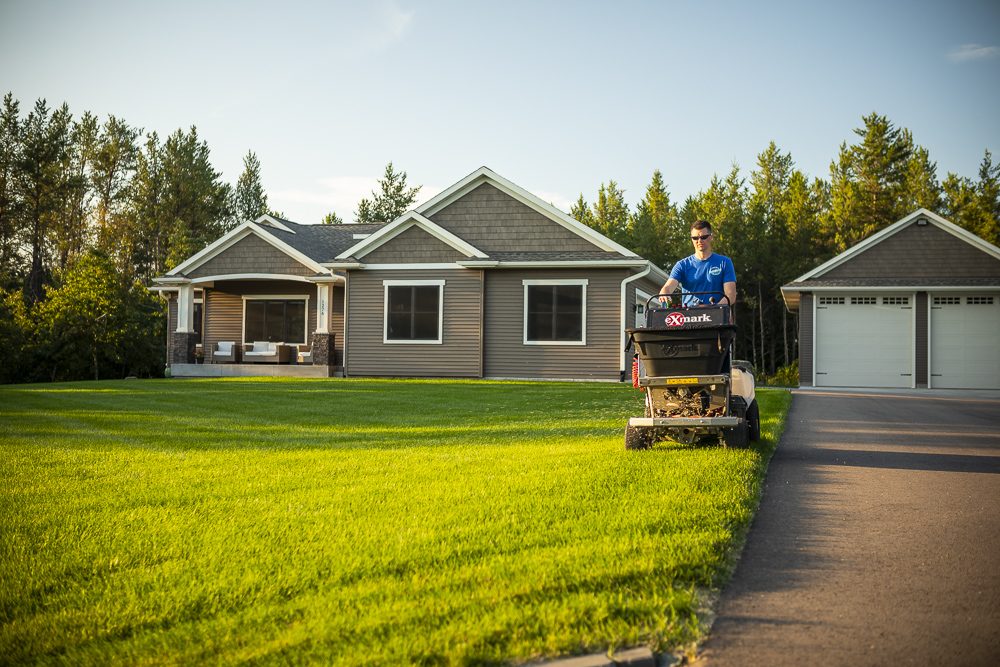

The deep green itself comes from nitrogen and iron being available to the plant, not from the product being granular. What granular gets you is a steadier supply of it. RainMaster uses professional-grade granular formulations.
2. Do not skip fall fertilizer
Fall is the most valuable fertilizer application of the year for cool-season grass, and the one most often forgotten. Top growth slows in fall but roots keep working, so nutrients applied then go into root development and stored carbohydrate reserves. Those reserves are what produce early green-up and strong growth the following spring.
3. Aerate
Compacted soil has little pore space, so roots cannot take up water or nutrients efficiently. A lawn in that condition cannot be green regardless of how much fertilizer goes down.
Core aeration pulls plugs of soil out, opening channels for air and water to reach the root zone. Roots respond by growing deeper and denser, and a deeper-rooted lawn is both greener and more tolerant of heat, drought, insects, and disease. Fall is the best window here, and the holes are an ideal seedbed, which is why aeration and overseeding are done together. See lawn care for how aeration fits into a program.
4. Test your soil pH
Cool-season turf takes up nutrients best when soil pH is roughly between 6.0 and 7.0. Outside that range, nutrients can be physically present in the soil and still be largely unavailable to the plant. That is why a lawn can be fertilized repeatedly and stay pale.
A soil test tells you where you are. If pH needs correcting, lime raises it and elemental sulfur lowers it. Note that gypsum does neither; it is calcium sulfate and supplies calcium and sulfur without moving pH.
5. Improve soil quality, not just fertility
Fertilizer feeds the plant. Soil quality determines whether the plant can use it. Organic matter, structure, and micronutrient availability all affect how a lawn responds to everything else you do.
Soil conditioner, a blend of minerals and organic inputs including iron, magnesium, and humic substances, improves the soil's ability to hold and release nutrients, which raises the return on the fertilizer you are already applying. It is included in our top-tier program and available as an add-on with the others.
6. Mow at the right height
Cutting short is tempting because it delays the next mowing. It also removes the leaf surface the plant uses for photosynthesis, which is how it makes its own food. Take off too much and the lawn is running on a deficit, which shows up as pale, thin turf.
Never remove more than a third of the blade in a single cut, and raise the deck as summer progresses: about 3 inches in June, 3.5 to 4 inches in July and August. Taller turf also shades soil, which keeps roots cooler and crowds out weeds.
7. Water deeply and less often
Longer, less frequent cycles force roots down after moisture, and deeper roots keep a lawn green through dry weeks. Daily watering keeps roots in the top inch of soil where they are first to suffer when the weather turns.
Target about an inch of water per week including rainfall, delivered early in the morning and finishing near sunrise. Morning watering avoids wind and evaporation and lets the canopy dry during the day, which keeps disease pressure down. If your irrigation system is set once in spring and never touched, it is almost certainly wrong by July.
8. Keep the mower blade sharp
A dull blade tears the top of the leaf instead of cutting it, leaving a ragged edge that loses more water, heals slowly, and gives disease an entry point. Torn tips also turn the whole lawn slightly gray-brown at the surface, which reads as poor color even when the plant is healthy. Sharpen at least once a season, more if you hit sand or edging.
9. Iron for temporary color
Chelated iron, a form plants absorb readily, produces a quick visible green-up. Be clear about what it is: a cosmetic response with no lasting benefit to the plant's health. It does not feed the lawn or build roots.
That makes it useful for a specific occasion, a backyard wedding or a photo, and not a substitute for anything else on this list. Our soil conditioner includes some iron as part of the mineral blend.
10. Be proactive about problems
Weeds, insects, and disease all take color out of a lawn before they do visible damage, and all three are easier and cheaper to address early. A trained technician spreading seed or applying fertilizer is also reading the lawn: early Japanese beetle feeding, grub damage starting, a disease pattern forming on a shaded side, a dry irrigation zone.
Catching those at the start is the difference between an adjustment and a repair. That is the real argument for a program rather than a reaction.
Putting it together
Staying on top of soil testing, fertilizer timing, aeration, seeding, and watering is a real amount of work across a season. RainMaster offers three program levels based on the results you want, how quickly you want them, and your budget, and we have worked on lawns in the Twin Cities and the Chippewa Valley since 1999.
Bottom line
- Green color comes from available nitrogen and iron plus roots that can reach water. Soil work matters more than any single product.
- Granular fertilizer releases over weeks for steadier color; fall fertilizer is the most valuable application of the year.
- Soil test before amending. Lime raises pH, sulfur lowers it, gypsum changes neither.
- Mow at 3 inches in June and 3.5 to 4 inches in midsummer with a sharp blade, never removing more than a third of the blade.
- Chelated iron greens a lawn quickly but is purely cosmetic and does nothing for plant health.
Frequently asked questions
What makes grass dark green?
Available nitrogen and iron, plus a root system deep enough to take up water and nutrients. That is why soil pH, aeration, and watering habits affect color as much as fertilizer does.
Does fall fertilizer really matter?
It is the most valuable application of the year for cool-season grass. Top growth slows but roots keep working, so fall nutrients go into root development and stored reserves that drive spring green-up.
Will iron make my lawn greener?
Chelated iron produces a fast visible green-up, but it is cosmetic and temporary with no lasting health benefit. It is worth using before an event, not as a substitute for fertilizer, aeration, or correcting soil pH.
How short should I cut my grass for better color?
Not short. Cutting removes the leaf area the plant photosynthesizes with. Stay at about 3 inches in June and 3.5 to 4 inches in July and August, and never remove more than a third of the blade in one pass.
University of Wisconsin Extension, Lawn Fertilization.
University of Minnesota Extension, Mowing Practices for Healthy Lawns.


