


How to Grow Grass: Comparing Seed, Sod, Hydroseed, & Other Lawn Repair Methods
Whether you are starting a lawn from nothing or repairing one that has thinned out, the method you choose changes the cost, the timeline, and the result you end up living with. Here is how seed, sod, and hydroseed actually compare in Wisconsin and Minnesota.
Seed versus sod
The appeal of sod is obvious. It is an instant lawn, it looks finished the day it goes down, and the roots are already developed and ready to knit into your soil.

What people do not expect is the cost and the follow-up. Sod costs several times what seed does for the same area. It also needs consistent irrigation to knit in, more attention than a seeded lawn in the first weeks, and it typically needs annual aeration for several years while it establishes, because sod is grown on a different soil than the one you are laying it on and the two have to integrate.
There is one case where we recommend sod over seed without hesitation: a slope. Seed washes off a grade in the first heavy rain, and sod holds. Otherwise, if you are willing to wait, seed gives a better long-term result, largely because you get to choose the grass mix rather than accepting whatever the sod farm grew.
Seed versus hydroseeding
Hydroseed is grass seed mixed with mulch into a wet slurry and sprayed onto prepared soil. The mulch is the point: it holds moisture against the seed, which is the single biggest variable in germination success.
Compared to dry broadcast seeding on bare soil, hydroseed has a real advantage in moisture retention and in covering large, irregular areas evenly. Compared to sod, you still wait for germination and establishment. It is also not a do-it-yourself job, since it requires the equipment, so it has to be hired out.
Why a seed blend beats a single grass
Every cool-season grass has tradeoffs. Fine fescues tolerate shade better. Kentucky bluegrass thrives in full sun and spreads to fill damage. Perennial ryegrass germinates quickly and handles foot traffic well.
A blend gets you some of each, and it also spreads your disease risk. A lawn that is a single variety can be taken down hard by one pathogen that variety is susceptible to. A blend rarely is.
Blending is also why seed beats sod for fit. On a shady lot, the mix shifts heavily toward fescue, with little or no bluegrass. On a sunny lot, more bluegrass. Perennial ryegrass earns its place on erosion-prone slopes and in yards with dogs where you need coverage fast: ryegrass can be up in about a week, while Kentucky bluegrass can take three to four weeks to germinate.
Be picky about the seed itself
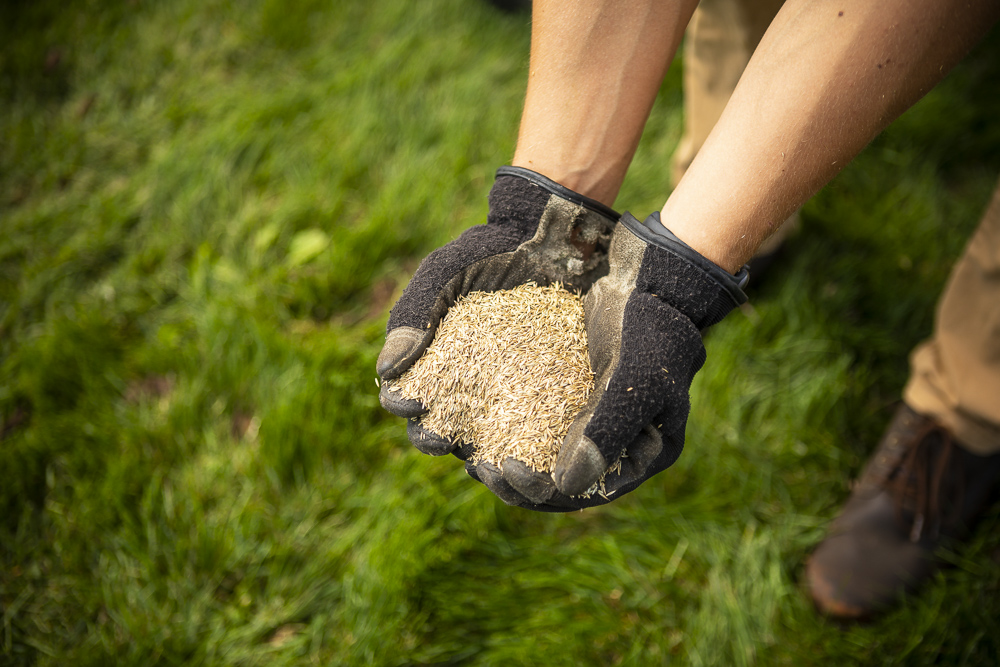
Seed looks the same poured into your hand, and it is not. The bag matters, and the seed label matters more. Look at the stated percentage of other crop seed, inert matter, and weed seed. Cheap seed stacked at a big box store frequently carries weed seed and undesirable grass species, which means you pay to introduce the problems you will pay someone to treat later.
Premium seed costs more per bag and is worth it. It is the one input in a new lawn that you cannot change later without starting over.
Fixing bare spots
Most homeowners deal with a few bare spots eventually, from pets, plow damage, salt, or heavy traffic. A proper patch seeding handles them:
- Rake out the dead, matted turf. Seed needs contact with soil, and it will not root through a mat of dead grass.
- Loosen the soil an inch or so deep so roots have somewhere to go.
- Spread the seed over the loosened soil at the rate on the label.
- Scratch it in and tamp it down so every seed has soil contact. This step is the one most often skipped and it matters most.
- Apply a starter fertilizer formulated for new grass.
- Keep it consistently moist until the grass is established, which usually means light watering more than once a day for the first two weeks.
Bringing back a lawn you think is gone
A lawn that looks past saving often is not. Before you tear it out, consider that the problem may be that the roots cannot breathe. When soil compacts, roots cannot take up water or nutrients, the turf weakens, and disease and weeds move in. The grass looks dead because it is starved, not because it is gone.
Core aeration pulls plugs of soil out and creates channels for air and water to reach the root zone. It also helps break down thatch, the layer of dead stems and roots between the green blades and the soil surface. Overseeding right after aeration puts seed into those open holes, which are the best seedbeds available on an established lawn.
A well-timed aeration and overseeding in fall turns around a lot of lawns that homeowners had written off. It is worth trying before paying for a full renovation.
After the grass is up
Establishing the lawn is the start, not the finish. New turf needs a nutrition plan, correct mowing height from the first cut, and watering that shifts from frequent and light to deep and infrequent as roots go down.
RainMaster offers three program levels. Luscious Lawn is the high-end proactive program for the quickest results or a lawn that needs significant help. Terrific Turf is the mid-level and most popular option for growing a thick, green lawn and handling most challenges. Healthy Habitat is the basic plan covering the essentials. Pair any of them with irrigation if keeping new seed moist by hand is not realistic, and see the lawn care program details for what each level includes.
Bottom line
- Sod costs several times more than seed, needs consistent irrigation to knit, and typically needs annual aeration for several years.
- Choose sod on slopes, where seed washes out. Otherwise seed gives a better long-term result because you choose the mix.
- Hydroseed holds moisture better than dry broadcast seeding and has to be hired out.
- A blend of fescue, bluegrass, and ryegrass spreads both the site tolerance and the disease risk. Ryegrass germinates in about a week; bluegrass takes three to four.
- Read the seed label. Cheap seed carries weed seed and undesirable species you will pay to treat later.
Frequently asked questions
Is sod better than seed?
It is faster, not necessarily better. Sod gives you an instant lawn at several times the cost, with more watering and several years of aeration while it integrates with your soil. Seed lets you choose a grass mix matched to your sun, shade, and traffic.
When should I seed a lawn in Wisconsin or Minnesota?
Late summer into early fall is the best window. Soil is warm, air is cooling, rainfall is more reliable, and weed competition has dropped off. Spring is workable but competes with crabgrass pre-emergent timing.
How long does grass seed take to come up?
It depends on the species. Perennial ryegrass can germinate in about a week, fine fescues in one to two weeks, and Kentucky bluegrass in three to four. A blend comes in waves for that reason.
Can aeration and overseeding save a lawn that looks dead?
Frequently, yes. If the problem is compaction and thinning rather than dead crowns, aerating and seeding into the holes recovers a lot of lawns that look beyond help.
University of Minnesota Extension, Seeding and sodding home lawns.
University of Wisconsin Extension, Lawn establishment.


