


How a Healthy Lawn Boosts Curb Appeal & Improves Home Value
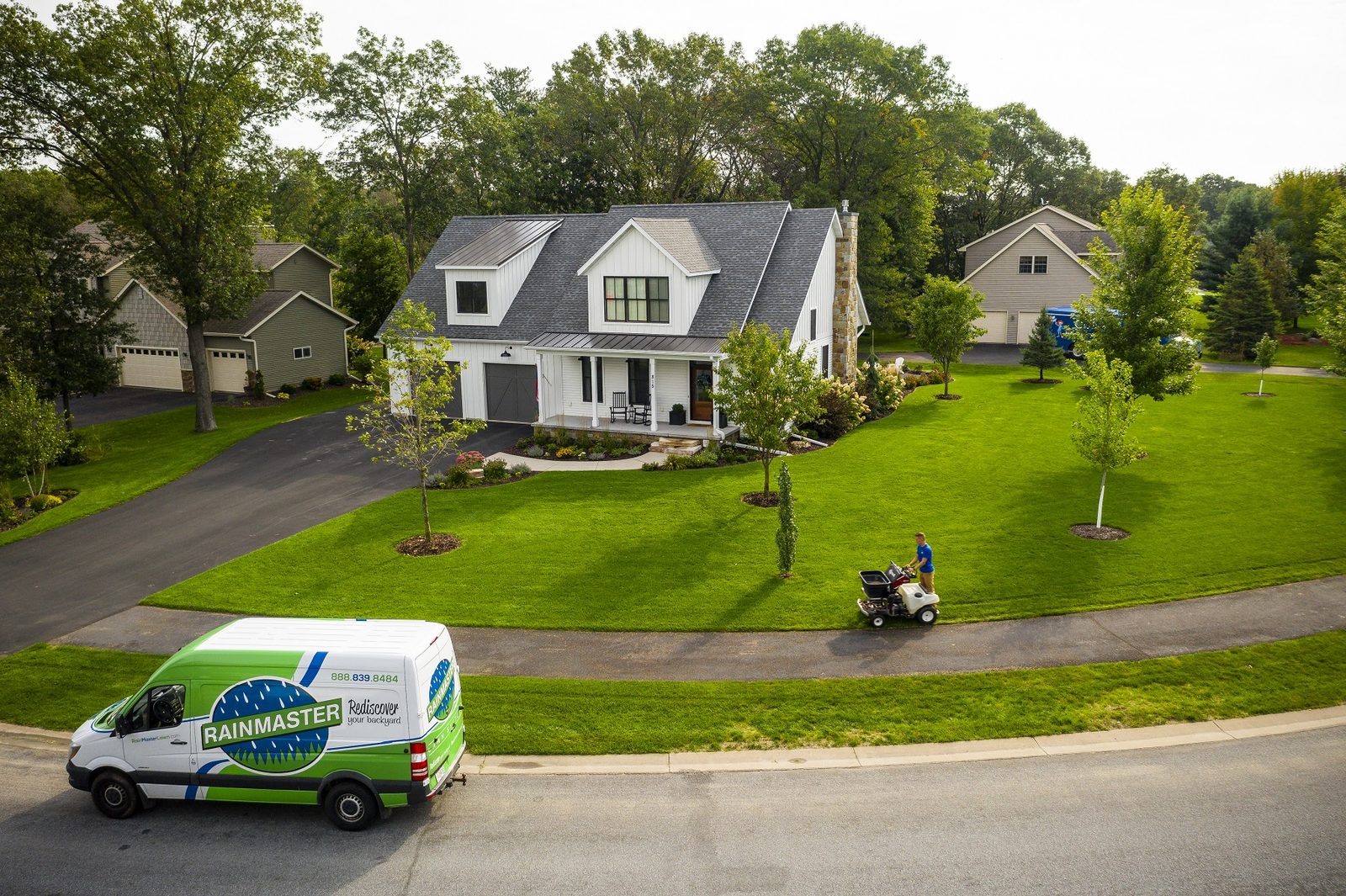
Curb appeal is the first thing a buyer, an appraiser, or a neighbor reacts to, and a lawn is the largest single surface in most front yards. A thick green lawn signals that the whole property has been maintained, and a thin weedy one signals the opposite before anyone reaches the door. Here is what it takes to produce the first version.
Why the lawn carries so much of the impression
Great landscaping is a combination of elements: mature shade, trimmed shrubs, defined beds, seasonal color. The lawn is the connective tissue between all of them, and it is the biggest uninterrupted area a visitor sees.
Real estate professionals and landscape designers consistently point to curb appeal as a significant factor in how quickly a home sells and in the impression it leaves, and the lawn is the dominant part of that first look. The reason is inference. A buyer looking at a healthy lawn concludes the roof, the gutters, and the furnace were probably looked after too. A buyer looking at crabgrass and bare patches starts wondering what else was deferred. Neither conclusion is strictly logical, and both happen in about four seconds.
We will not put a percentage on it. Plenty of numbers get passed around about landscaping and resale value, and most of them are either unsourced or lifted from studies with conditions that do not match a specific house in Eau Claire or Minneapolis. The directional point is well established and it is enough: a maintained lawn helps a property show well, and a neglected one actively works against it.
Stop mowing so short
The single most common mistake, and it is free to fix. When you mow, you are removing leaf surface, and leaf surface is where the plant makes food through photosynthesis. Take off too much and you are starving the grass at the same time you are exposing the soil.
Two rules. Never remove more than about a third of the blade in one pass, which means mowing more often during fast growth rather than cutting lower. And keep the lawn at roughly three to four inches through the season, higher in summer heat. Taller grass shades the soil, keeps soil temperature down, holds moisture longer, and suppresses weed germination directly, since most weed seeds need warm, lit soil to start.
Check the mower blade while you are at it. A dull blade tears rather than cuts, leaving a frayed edge that browns within a day or two and gives disease an easy entry point. If the lawn looks tan right after mowing, the blade is almost always the reason.
Water deeply, not often
The instinct is to water a lot and frequently. It backfires. Shallow daily watering keeps roots in the top inch of soil, which leaves the lawn with no reserve the first time conditions turn hot and dry.
Water longer and less often, targeting about one inch per week including rainfall, and finish close to sunrise so the leaf is not wet overnight. Deeper watering drives roots down, and deeper roots mean better color, better drought tolerance, and better disease resistance.
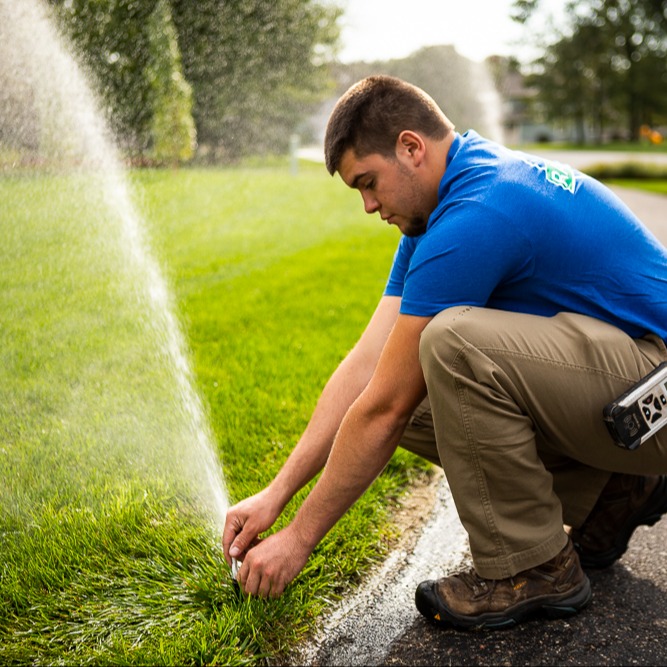
A properly designed irrigation system makes this easy, delivering the right amount in the right place without you thinking about it. It also needs seasonal maintenance to keep doing that, since a clogged nozzle or a controller still set for spring quietly undoes the whole plan.
Get serious about crabgrass prevention
Nothing undercuts curb appeal faster than coarse crabgrass clumps spreading through the front lawn in August.
Crabgrass is an annual, so control is about preventing germination rather than killing what is up. The pre-emergent window is driven by soil temperature and usually falls between April and early May here. We apply twice, once in early spring and once in late spring, because a single application can lose effectiveness before the germination window closes.
Weed control is a season, not an event
Different weeds are vulnerable at different times, and one application a year does not clear a lawn. Spring germinating annuals, winter annuals that germinate the previous fall, and established perennials each need their own timing and often their own product.
That is why a comprehensive program includes five visits through the year rather than one or two. Perennials like creeping Charlie and Canada thistle need professional grade materials applied more than once in a season, with fall doing much of the real work.
Feed the lawn on a schedule
A lawn is a crop and it has a feeding schedule. The first round of fertilizer and weed control should be complete by Memorial Day, with three more applications through the summer, and a final feeding in fall.
The fall application is the one not to skip. Top growth slows but roots stay active, so a fall feeding builds root mass and stores carbohydrates the plant spends on green up next spring. It is the application that most affects how the lawn looks in April.
On product: granular costs more than liquid and is worth it. Granules break down over weeks, so the lawn is fed steadily rather than spiking and crashing, and blends with organic matter build soil along with feeding the plant, which is where deep color comes from.
Aeration, when everything else is right and it still looks thin
If mowing, watering, fertility, and weed control are all handled and the lawn still will not thicken, the problem is usually underneath. Compacted soil has almost no air space, water runs off it rather than soaking in, and roots cannot push through to find moisture and nutrients. Clay soil compacts naturally and foot traffic accelerates it.
Core aeration pulls plugs of soil out and leaves channels for air, water, and nutrients to reach the root zone. Roots follow them down, the lawn thickens, and it handles summer better. Seeding right after aeration takes advantage of the open cores, which give seed the soil contact that drives germination.
What this adds up to
Curb appeal from a lawn is not a product you buy, it is a sequence: right mowing height, deep infrequent watering, pre-emergent in the correct window, repeated weed control, fertility including fall, and aeration when soil is the limiting factor. Done consistently over a season or two, that is the lawn the whole street notices, and it is also the lawn that makes the rest of the property read as cared for.
Bottom line
- The lawn is the largest surface in most front yards, so it carries most of the curb appeal impression, for better or worse.
- Mow at three to four inches and never remove more than a third of the blade. Keep the mower blade sharp.
- Water deeply and infrequently, about an inch a week including rain, finishing near sunrise.
- Crabgrass pre-emergent goes down before germination, driven by soil temperature in April to early May. Two applications cover the full window.
- Do not skip fall fertilization. Roots stay active after top growth slows, and that application drives next spring's green up.
Frequently asked questions
Does a healthy lawn really affect home value?
It affects how a property shows, which affects buyer impression and time on market. Buyers and appraisers infer overall maintenance from what they see first, and the lawn is the biggest part of that. Specific percentage claims circulating online are mostly unsourced, so treat them skeptically.
What is the fastest way to improve curb appeal from the lawn?
Raise the mowing height and sharpen the blade. Both are free, both take effect immediately, and taller grass looks denser while suppressing weed germination at the same time.
How often should I fertilize for the best looking lawn?
Five applications through the season works well here: the first complete by Memorial Day, three through summer, and a final feeding in fall while roots are still active. The fall round has the largest effect on spring appearance.
Why is my lawn still thin after fertilizing and watering correctly?
Usually compacted soil or a soil pH out of range. Compacted soil blocks water and root growth, and incorrect pH leaves nutrients in the soil where the plant cannot take them up. Aeration and a pH test will tell you which.
University of Wisconsin Division of Extension, Lawn Aeration and Topdressing.
University of Wisconsin Division of Extension, Crabgrass Management in Lawns.


