


A Guide to Lawn Sprinkler System Inspection: What to Do & How Often in MN and WI
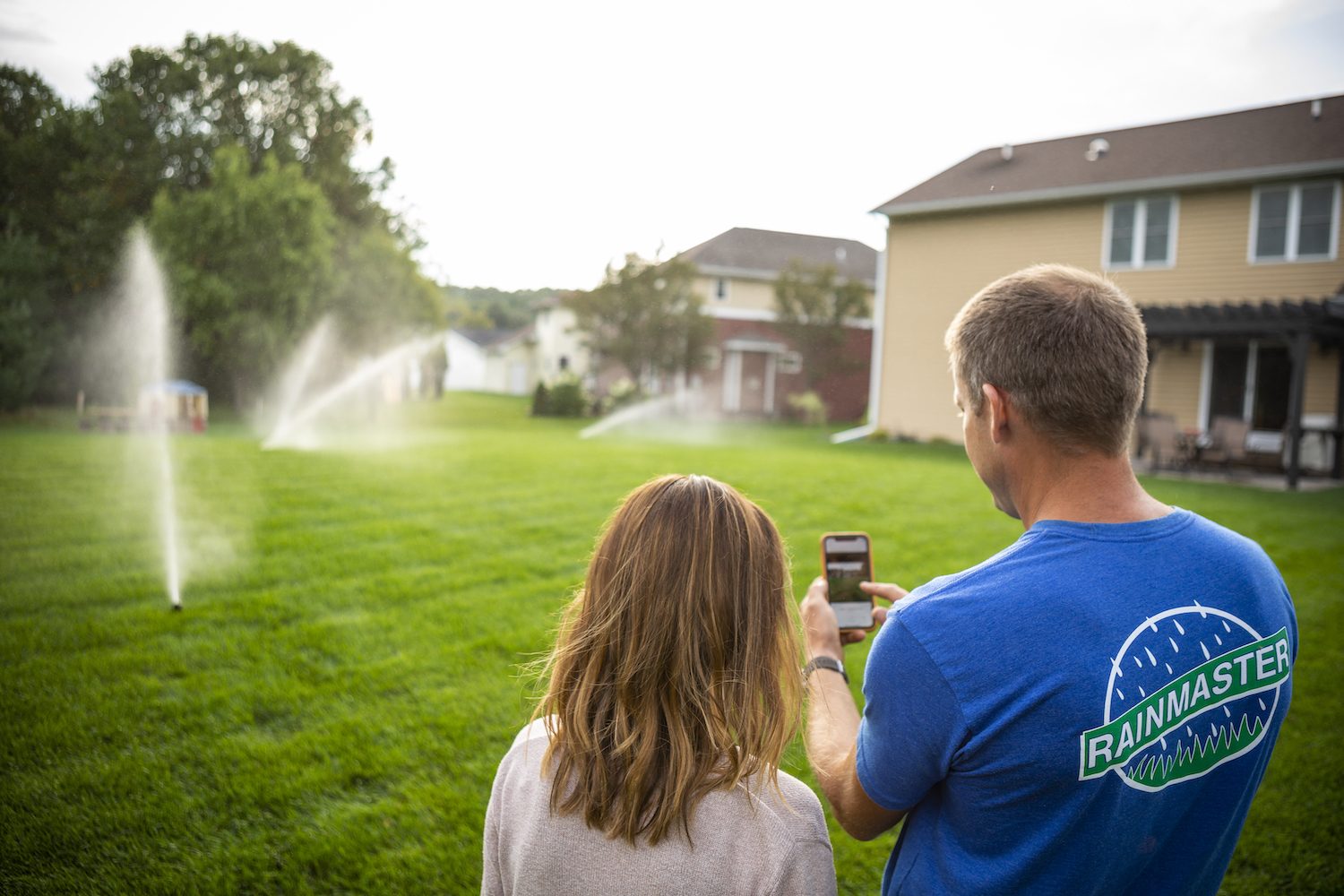
A sprinkler system fails quietly. Water still comes out, so nothing looks wrong until an area of lawn browns or the water bill jumps. Three inspections a year catch almost everything, and each one checks different things. Here is the full checklist for Minnesota and Wisconsin conditions.
Spring startup checklist
Winter is long here, and a system coming out of five months of frozen ground needs more than a valve turned on. Startup in this region runs from mid April to the end of May depending on the weather.
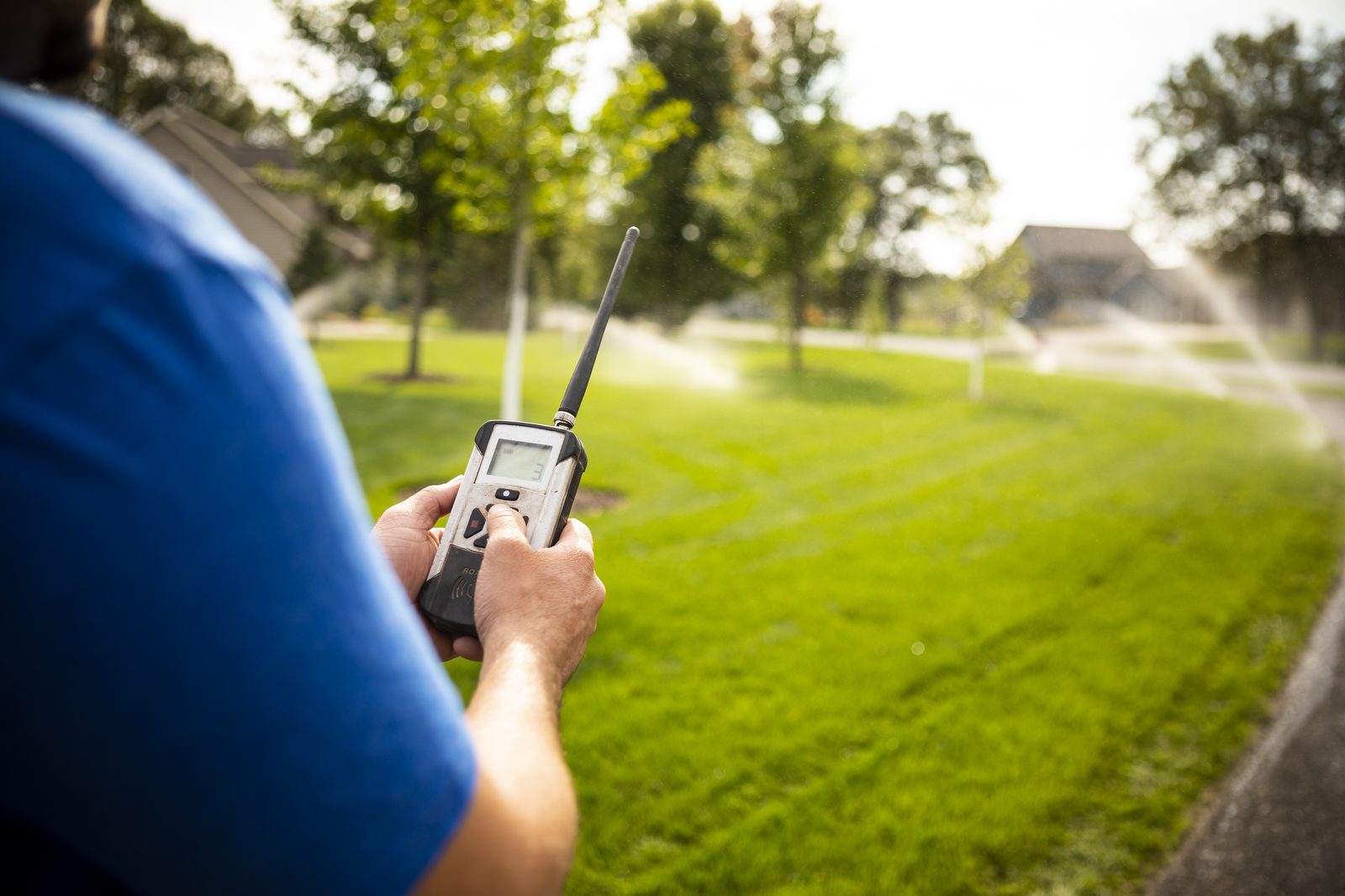
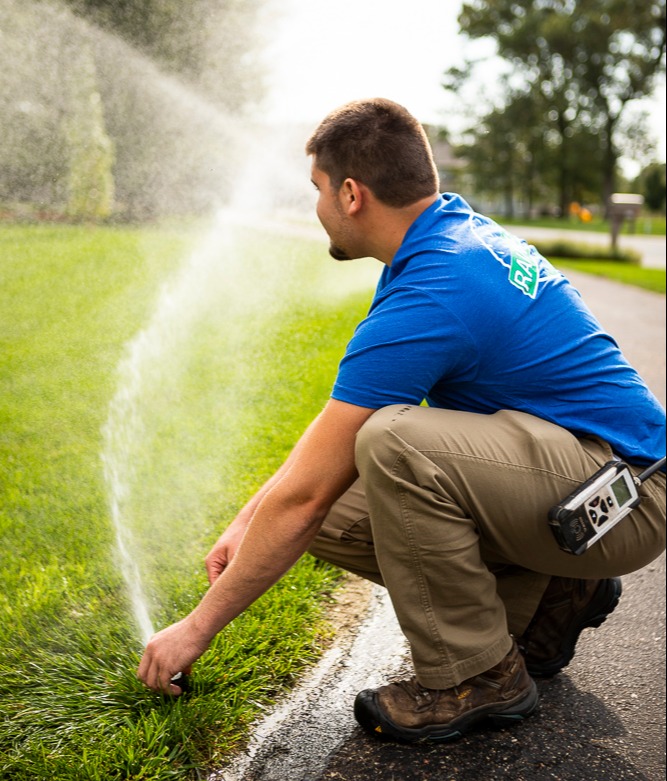
Inspect every sprinkler head
Every head, individually, with the zone running. There is a long list of things that change over a winter.
- Frost heave moves heads. Freeze and thaw cycles push heads up, tip them, and rotate them, so a head that watered the lawn in October now waters the driveway.
- Soil settles. A head that has sunk below grade gets its pattern blocked by the surrounding turf, which leaves a dry ring around it.
- Seals wear and heads leak. A leaking head keeps an area saturated after the zone shuts off, which is a disease problem as much as a water problem.
- Snowplows and shovels do damage. Heads near drives and walks take the most abuse.
- Residue clogs nozzles. Grit and mineral deposits sitting in the lines all winter flow to the heads when the water comes on, and a partly clogged nozzle throws short without looking broken.
- Fittings come loose over a season of pressure cycles and ground movement.
Check the controller
Before the system is pressurized, the controller gets reprogrammed: run times, start times, and days per week for current conditions.
Many homeowners unplug the controller for the winter, and most lose their settings when they do. Even an untouched controller is usually set wrong, because last year's final settings were for September, and spring is cold and wet. An August schedule in May overwaters badly. This is the single most common thing we correct.
Check the rain sensor
If the system has one, the batteries get tested, the adjustment gets verified, and the sensor gets cleared of debris. A dead or obstructed sensor does not announce itself. It just stops interrupting cycles, so the system waters through rainstorms.
Run a zone test
Every zone gets turned on and off and watched through a full cycle. Things fail over a winter without any sign from the patio:
- A valve that will not open, or will not close.
- A leak in a lateral line, which shows as a soft wet area or a zone with weak pressure.
- Animal or rodent damage to exposed pipe or wire.
- Lightning damage to the controller or valve solenoids.
- Wiring faults that leave a zone dead.
Any of these waste water and cost money every time the system runs.
Summer checklist
Everything in the spring list happens again mid season, and this is the inspection people skip. It is also the one that protects the most turf.
Summer is when the system is under maximum demand and when failures are most expensive. On an 85 degree day with no rain in the forecast, a zone watering half the area it should will brown out that lawn within a week. Spring and fall visits alone leave three months unchecked during the only period when a failure causes immediate damage.
A mid season visit means every head checked and adjusted, zones tested under real demand, and the controller updated for hot weather. Sunrise has also moved by more than an hour since startup, so the schedule needs to shift with it.
Fall checklist
One item matters more than the rest: get the water out of the pipes, valves, and heads before the first hard freeze. Water left in the system freezes, expands, and cracks components, which turns a routine service into a repair bill.
Why a garage compressor is the wrong tool
A shop or garage air compressor typically runs 100 to 160 psi. That is high pressure and very little volume, which is the opposite of what the job requires. Clearing a sprinkler system needs a wall of air moving through the pipe, which is a question of volume, measured in cubic feet per minute, not pressure.
Our compressor has a diesel engine and produces large volumes of air at low pressure. We run between 60 and 80 psi. Most irrigation components are only rated for around 100 psi, so pushing 120 or more through the system can blow fittings apart, send heads flying, and split pipe. And a compressor left running too long in an attempt to get every last drop out generates enough heat to melt the gears inside the heads. This is the task where do it yourself goes wrong most often and most expensively.
Winterize a lake pump
If the system draws from a lake or river, the pump needs its own winterization so it does not crack. That means adding RV antifreeze to protect it and capping the pipe ends so animals do not move in over the winter. Pull the intake out of the water and store it, because spring flooding can carry it away.
Prepare the backflow device
The backflow preventer keeps irrigation water from flowing back into the drinking water supply. Freezing water in it damages the internal components and can crack the body, and if water is left in it you may be hiring a plumber in spring rather than an irrigation technician.
Every backflow design winterizes differently, with its own sequence of valves and test cocks to open. This is a case where the manual is often less help than it should be.
What inspections cost
Plan on roughly $200 to $400 a year depending on how often a technician visits. The low end covers basic spring activation and fall winterization. The high end includes monthly visits between startup and winterization. A mid level plan covers spring startup, a summer inspection, and fall winterization.
Three visits a year is the practical minimum for a system that works correctly and does not waste water.
Catch the small things early
The argument for waiting until something breaks has a flaw: by the time a sprinkler system obviously needs repair, it is an emergency. The grass is browning and expensive plantings are stressed. Small problems are warning signs, and they are cheap while they are small.
Inspections also pay for themselves in water. Technicians routinely find waste the homeowner had no idea about, from a head watering the sidewalk to a controller running a spring schedule in August, and they will tell you whether you are watering too much or too little. Our irrigation maintenance programs are built around that schedule.
Bottom line
- Three inspections a year is the practical minimum: spring startup, a mid season check, and fall winterization.
- Spring startup means inspecting every head, reprogramming the controller, testing the rain sensor, and running every zone. Controller settings are the most common thing found wrong.
- The summer visit is the one most often skipped and the one that protects the most lawn, since a failure in July browns out turf within a week.
- Never blow out a system with a garage compressor. Shop compressors run 100 to 160 psi while components are rated near 100 psi. Professional blowouts run 60 to 80 psi at high volume.
- Inspections run roughly $200 to $400 a year depending on visit frequency.
Frequently asked questions
How often should a sprinkler system be inspected?
Three times a year at minimum: spring startup, a mid season check, and fall winterization. Monthly visits through the irrigation season are available and worth it on larger or more complex systems.
Can I blow out my own sprinkler system with an air compressor?
It is the most common way homeowners damage a system. A garage compressor delivers 100 to 160 psi with little volume, and most components are rated near 100 psi, so it can blow fittings apart and launch heads. Running it too long can also melt the gears inside heads.
What does a spring sprinkler startup include?
Inspecting and adjusting every head, reprogramming the controller for spring conditions, checking the rain sensor batteries and placement, pressurizing the system, and running every zone to find leaks, failed valves, and wiring faults.
Why does my controller always need reprogramming?
Because the settings left from last fall were built for fall conditions, and many homeowners unplug the controller over the winter and lose them entirely. An August schedule running in May overwaters significantly.
U.S. Environmental Protection Agency WaterSense, Sprinkler Spruce-Up.
Irrigation Association, Irrigation maintenance and efficiency resources.


