.svg)

Grub Control: Protecting Your Lawn from Underground Damage
White grubs are beetle larvae that feed on grass roots one to three inches below the soil surface, and the damage they cause usually shows up as spongy brown patches in late summer. In Wisconsin and Minnesota lawns, a preventive application timed to late June or early July stops them before they hatch, which works better and costs less than treating an established population.
Understanding white grubs
Several beetles common across the Chippewa Valley and the Twin Cities produce the larvae we call white grubs: Japanese beetles, June bugs, and masked chafers. The life cycle is the same in each case. Adults fly in midsummer and lay eggs in moist turf, the eggs hatch into small grubs that feed on roots through late summer and fall, and the grubs then move deeper into the soil to overwinter below the frost line. They come back up to the root zone briefly in spring before pupating.
Numbers matter more than presence. A single grub in a square foot of healthy turf causes no damage you would ever notice. Populations of 6 to 10 per square foot destroy turf rapidly, because at that density the grubs sever enough roots that the grass can no longer take up water.
Where grubs show up first
Beetles look for moist soil to lay eggs in, so irrigated, sunny turf tends to take the damage before dry turf does. That is not an argument for watering less. It is an argument for scouting the irrigated areas of the lawn first in August, since that is where problems appear.
Identifying grub damage
Grub damage appears as irregular brown patches that feel spongy when walked on. The turf peels back easily, like carpet, because the roots holding it down have been eaten away. Damage shows up in late summer or early fall, when grubs are largest and feeding most actively.
- Brown patches in late summer despite adequate water. If irrigation is running correctly and the turf still browns out, roots are the place to look.
- Turf that rolls back easily, revealing severed roots and bare soil underneath.
- Increased bird, skunk, or raccoon activity digging in the lawn. Animals tearing up turf at night are feeding on something.
- C-shaped white grubs visible when you pull back damaged turf.
How to confirm before anyone treats
The peel test settles it. At the edge of a brown patch, cut three sides of a one-foot square of sod about three inches deep, fold it back like a flap, and count the grubs in the soil and on the underside of the sod. Do this in three or four spots around the lawn, then fold the flaps back down, press them in, and water them. Healthy, well-watered turf usually tolerates a few grubs per square foot without treatment. Drought-stressed or thin turf tolerates fewer, because it has less root mass to lose.
This step matters because several problems look like grub damage. Drought stress, dog spots, dull mower blades, chinch bugs, and summer patch disease all brown out turf in August. The difference is that none of them cause sod to lift free of the soil.
Prevention versus curative treatment
Preventive grub control applied in late spring or early summer stops grubs before they hatch. These treatments are more effective and less expensive than curative applications, which have to use stronger products to kill established grubs that are already large and feeding deep in the root zone.
One detail decides whether a preventive application works: it has to be watered in. The active ingredient needs to move down through the thatch into the top inch or two of soil, where eggs are hatching. Product sitting dry on top of the thatch layer does very little. If no rain is forecast, the application should be followed by irrigation.
Best treatment timing
Apply preventive grub control in late June or early July, ahead of the egg hatch that follows the midsummer beetle flight. If you miss that window and find active grubs, curative treatments work best from late August through September, while the grubs are still small and feeding close to the surface.
By mid to late October, as soil temperatures drop, grubs move down out of reach and nothing applied to the surface will reach them. Spring applications are the least effective option of all. Overwintered grubs are nearly full grown, they are close to done feeding, and killing them at that point does not undo damage already done the previous fall.
Repairing grub damage
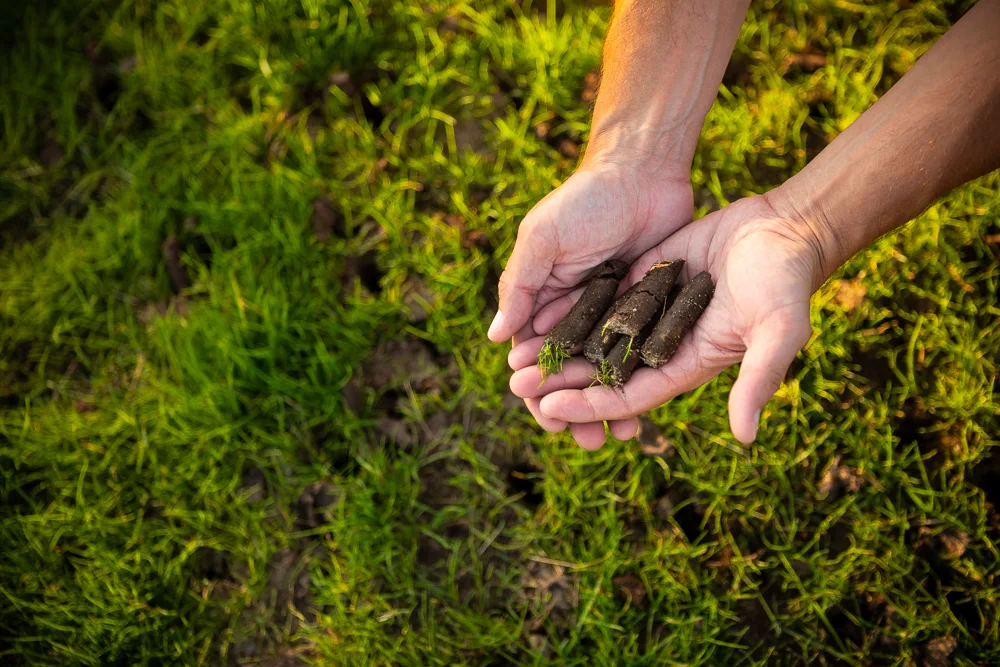
Damaged areas need overseeding once grubs are controlled, because dead turf will not knit back together on its own. Prepare bare spots by loosening the soil, applying seed, and keeping the area consistently moist until the seedlings are established. For larger affected areas, slice-seeding is worth the cost: it cuts the seed into the soil and gives the seed-to-soil contact that broadcast seed on hard ground never gets.
Timing favors repair in this climate. Late August through mid September is the strongest seeding window across Wisconsin and Minnesota, with warm soil for germination, cooler air, and much less weed competition than spring seeding faces. If damage surfaces in October, it is usually better to plan a dormant seeding or an early spring repair than to put seed down too late to root before the ground freezes.
Our pest control and lawn care programs are scheduled around these windows, so preventive grub control and fall seeding land when they do the most good. If you are seeing patches now, request a quote or call 888-839-8484 and we will scout the lawn before recommending anything.
Bottom line
- White grubs feed on roots one to three inches down; damage shows as spongy brown patches in late summer where sod peels back like carpet.
- Populations of 6 to 10 per square foot destroy turf quickly, while a few grubs per square foot in healthy turf need no treatment.
- Confirm with a peel test before treating, since drought, disease, and chinch bugs look similar.
- Preventive control goes down in late June or early July and must be watered in; curative treatment works from late August into September.
- Repair bare areas by slice-seeding or overseeding in the late August to mid September window.
Frequently asked questions
How do I know if I have grubs or just a dry lawn?
Pull on the brown turf. Drought-stressed grass stays anchored, while grub-damaged sod lifts free of the soil because the roots are gone. Cut a one-foot square three inches deep, fold it back, and count what is underneath.
When should grub control be applied in Wisconsin and Minnesota?
Preventive applications go down in late June or early July, before eggs hatch. Curative applications are made from late August through September while grubs are small and near the surface.
Does every lawn need grub control every year?
No. Lawns with a history of damage, heavily irrigated sunny turf, and properties near past beetle pressure are the candidates. Many lawns never cross the threshold where treatment pays for itself.
Will grass grow back on its own after grub damage?
Only where enough crowns survived. Areas that have gone fully brown and lift free need to be seeded, and slice-seeding gives the best results on anything larger than a few square feet.
University of Wisconsin Extension, Japanese Beetle.
University of Wisconsin Extension, Lawn Establishment.