


Fixing Bad, Compacted Soil: Lawn Care Tips for Minneapolis & Eau Claire, WI
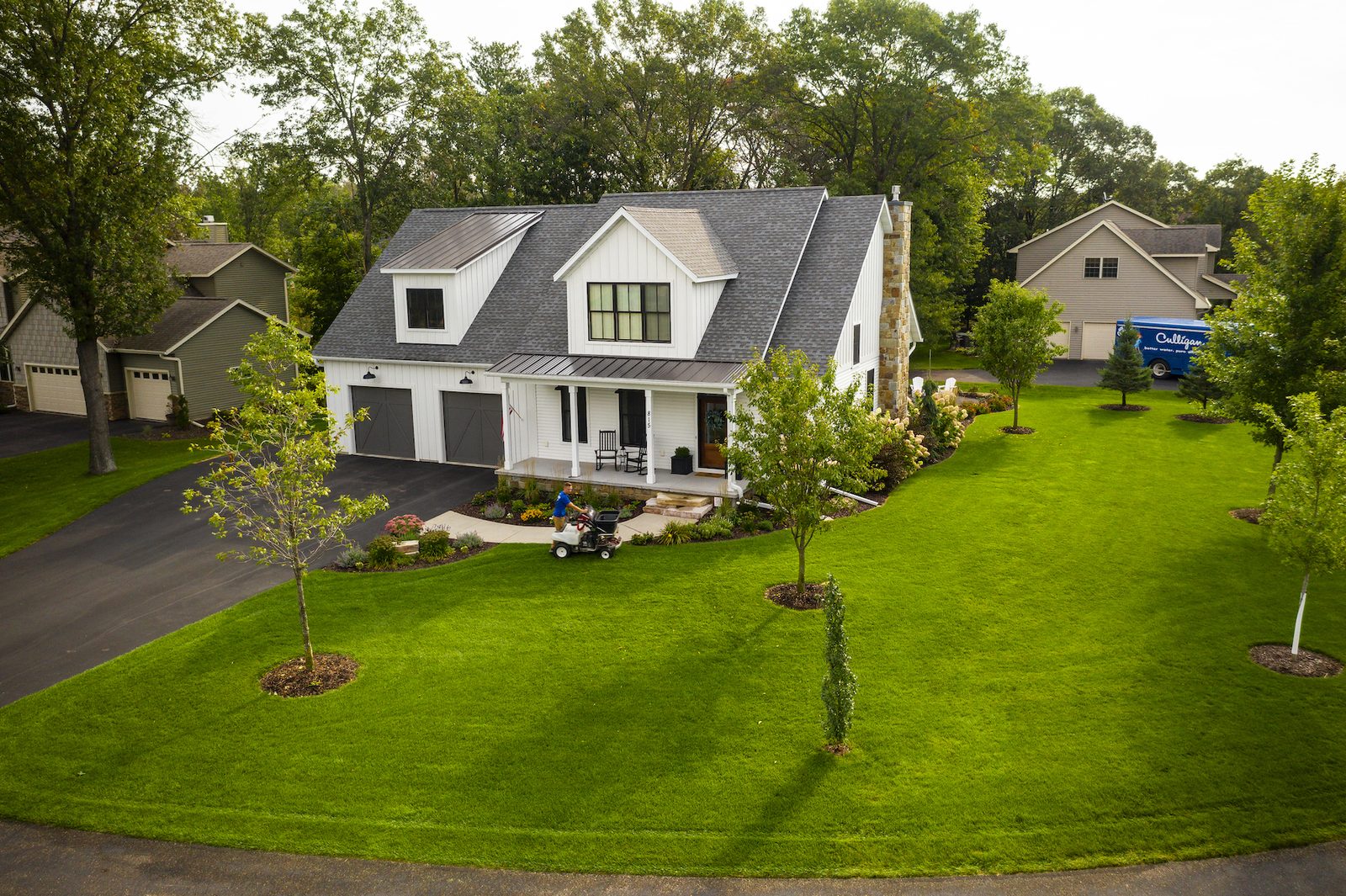
A thin, struggling lawn is usually a soil problem before it is a grass problem. Compacted, heavy clay or fast-draining sand both keep roots from getting what they need, and no fertilizer program fixes that on its own. Here is what actually improves soil under an established lawn.
Why soil matters more than anything above it
The soil under your lawn is where the grass gets everything it uses. Healthy soil is biologically active: earthworms, fungi, and microbes breaking down organic matter into forms roots can take up. It holds water without staying saturated, and it holds nutrients instead of letting them wash through.
When soil is compacted, too sandy, or heavy clay, the grass struggles no matter how well you feed it. Good soil also makes a lawn more resistant to drought, weeds, and pest pressure, because a deep root system can find water and crowd out competition.
Aeration is the first fix
Core aeration is the single most effective thing you can do for compacted soil. Compacted soil means the pore space between soil particles has been squeezed out, so air and water cannot move and roots cannot expand. The turf weakens, and disease and weeds take the opening.
Clay soils compact most readily, because the particles are small and flat and press tightly together. A core aerator pulls plugs of soil out of the lawn and leaves open channels for water, oxygen, and nutrients to reach the root zone. Leave the cores on the surface to break down; they return soil and microbes to the top layer.
Once a year is the baseline for most lawns in this region. Heavy clay, high-traffic yards, and lawns with a thatch problem benefit from more frequent aeration. Fall is the best timing, since it pairs with overseeding and gives the lawn cool weather to recover in.
Feed the soil, not just the grass
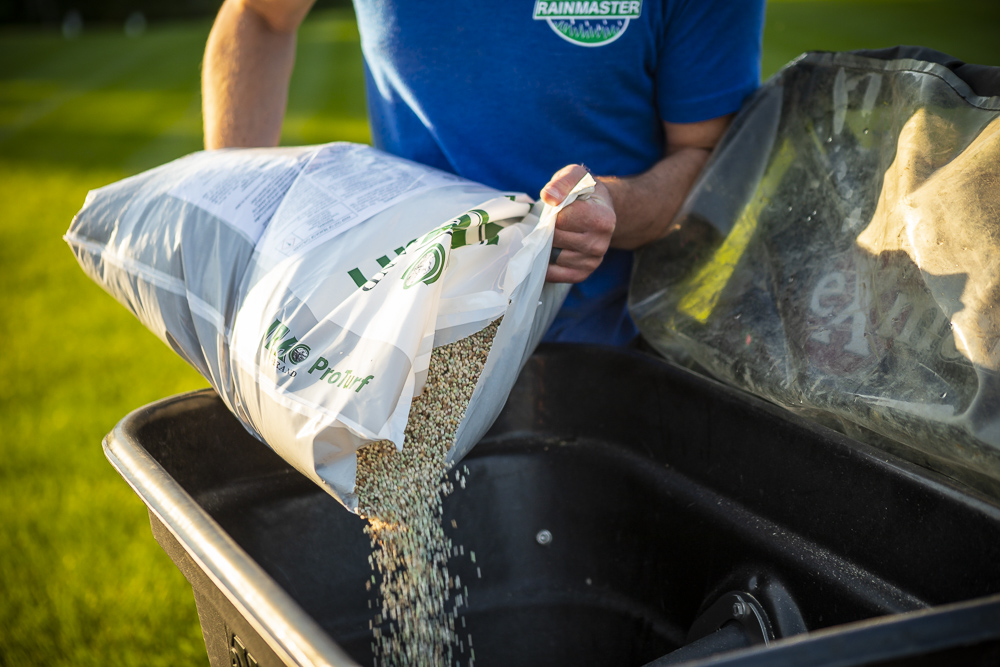
Fertilizer is food for the lawn, but the right fertilizer also feeds soil biology. Slow-release granular products are worth the higher price here. They break down over weeks rather than dumping soluble nitrogen all at once, which gives steadier growth and less leaching. Blends that include organic nutrients add material for soil microbes to work on.
Base what you apply on a soil test rather than a guess. A test tells you pH, organic matter, and nutrient levels, and it is the cheapest diagnostic in lawn care.
Soil conditioner
Soil conditioner is a blend of minerals applied to improve soil structure and build organic matter. On clay it helps loosen; on sand it improves the soil's ability to hold water and nutrients. The practical effect is that the fertilizer and other treatments the lawn already gets work better, because the soil can actually hold and deliver them. At RainMaster, soil conditioner is included in the top-tier program and available as an add-on with the other program levels.
Reduce the traffic that causes compaction
Compaction is created by repeated pressure in the same place, so some of the fix is behavioral and free.
- Spread out play and foot traffic. A worn path across one corner of the yard will not recover while it is still being walked daily.
- Change your mowing pattern. Mow a different direction each time rather than driving the same wheel lines every week.
- Stay off wet soil. Soil compacts far more easily when it is saturated. Mowing or parking on a soaked lawn does more damage than the same activity on dry ground.
- Keep vehicles and trailers off the turf. One afternoon of a loaded trailer on wet lawn can create compaction that takes years of aeration to undo.
About gypsum
Gypsum, or calcium sulfate, comes up constantly in conversations about clay soil, and it is worth being precise about what it does.
Gypsum does not lower soil pH. It supplies calcium and sulfate, and it is essentially pH neutral. If a soil test shows your pH is too high, the amendment that lowers it is elemental sulfur, not gypsum. If pH is too low, lime raises it.
Gypsum's reputation for loosening clay comes from sodic soils, where high sodium has collapsed the soil structure and calcium from gypsum displaces it. Those soils occur in arid regions, not in Wisconsin or Minnesota. On typical Upper Midwest clay, gypsum does very little for structure, and aeration plus organic matter does far more. We mention this because the advice is widespread and it sends people after the wrong product.
Add organic matter
Around Eau Claire a lot of yards sit on sandy soil, which means water and nutrients move straight through before roots can use them. Both sand and clay are improved by the same thing: organic matter.
- Top dress with compost after aeration, while the lawn is full of open holes. A thin layer worked in gives you the most benefit for the effort.
- Leave your clippings. Returning clippings recycles nitrogen and organic matter back into the soil. To be clear about a persistent myth: grass clippings do not cause thatch. Thatch is built from stems, crowns, and roots, and clippings break down too quickly to contribute.
- Mulch leaves into the lawn in fall rather than bagging all of them, as long as the layer is light enough to break down and not mat over winter.
If the soil is genuinely poor and years of amendment are not realistic, bringing in topsoil is a landscaping project rather than a lawn care one, and worth getting quoted that way.
A lawn care program built around aeration and a nutrition plan based on a soil test is the practical path for most properties. Start with the soil test so the amendments you pay for are the ones the lawn needs.
Bottom line
- Core aeration is the first and most effective fix for compacted soil; once a year minimum, more on heavy clay.
- Soil test before amending. It tells you pH, organic matter, and what nutrients are actually short.
- Gypsum does not lower soil pH. Elemental sulfur lowers pH and lime raises it.
- Gypsum helps structure only in sodic soils, which are not found in Wisconsin or Minnesota.
- Grass clippings do not cause thatch. Leave them, and top dress with compost after aerating.
Frequently asked questions
How do I know if my soil is compacted?
Try pushing a screwdriver into moist soil. If it takes real force to go in a few inches, the soil is compacted. Water pooling or running off instead of soaking in, and visible wear paths that never recover, are the other common signs.
Does gypsum lower soil pH?
No. Gypsum is calcium sulfate and is essentially pH neutral. Elemental sulfur is what lowers soil pH. This is a common piece of bad advice, and it is worth checking a soil test before buying either one.
Should I bag my grass clippings to prevent thatch?
No. Clippings break down quickly and do not build thatch, which comes from stems, crowns, and roots. Returning clippings recycles nitrogen back to the lawn.
How often should I aerate in Wisconsin or Minnesota?
Once a year is the baseline, typically in fall. Lawns on heavy clay, with heavy foot traffic, or with a measurable thatch layer benefit from aerating more often.
University of Wisconsin Extension, Lawn aeration.
University of Wisconsin Extension, Soil testing.


