


Lawn Care in Minnesota & Wisconsin: Seasonal Guide for a Healthy Lawn
Cool-season lawns in Minnesota and Wisconsin need different things in April than they do in July, and most lawn problems here trace back to doing the right task in the wrong month. This is the seasonal sequence, and the reasoning behind each step.
Lawn care by season
Your lawn responds to the calendar, so the work does too. Here is the shape of the year:

- Spring: pre-emergent timed to soil temperature, first fertilizer by Memorial Day, grub control before midsummer hatch, mow high, irrigation startup.
- Summer: mow high and raise the height further in July and August, water deeply rather than daily, watch for disease, spot-treat weeds.
- Fall: core aerate and overseed, apply fall fertilizer, keep leaves off the lawn, treat perennial weeds.
- Winter: winterize the irrigation system and keep salt and snow piles off the turf.
Start with the soil
Soil decides what you see. Compacted, sandy, clay, or off-pH soil means the lawn cannot use what you apply to the surface.
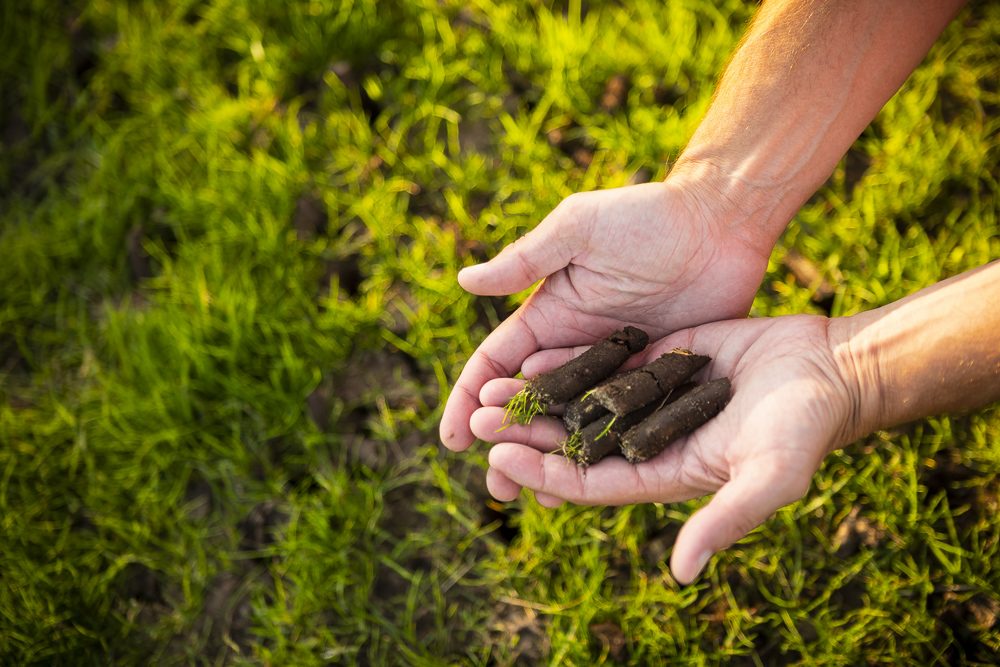
Aeration is the fix for compaction. Tight soil has little pore space, so roots cannot take up water or nutrients efficiently, the stand thins, and weeds and disease fill the gaps. Core aeration pulls plugs out and opens channels to the root zone, which no product can do.
Organic matter goes in after aeration, while the holes are open. Topdress with compost, and leave your clippings rather than bagging them: they are mostly water, decompose fast, and return nitrogen. Clippings do not cause thatch.
Soil pH controls nutrient availability. Outside roughly 6.0 to 7.0, nitrogen, phosphorus, potassium, and several micronutrients get chemically tied up and the grass cannot use them even though they are present. Lime raises pH on acidic soil, the more common need around Eau Claire. Lowering pH requires elemental sulfur. One widespread error worth correcting: gypsum does not lower soil pH. Gypsum is calcium sulfate, essentially pH neutral, so it supplies calcium without acidifying. We include pH testing in all three levels of our lawn care programs and pH balancer in the top two.
Fertilizing
Granular fertilizer releases slowly, which for a season-long program beats liquid: steady feeding instead of a surge, and far less burn risk if the rate is slightly off.
First application by Memorial Day, then roughly three more across the season. Do not skip the fall feeding. That last application builds root reserves that show up as early green the following spring, and it is the most valuable application of the year here.
Do not overdo it either. Excess nitrogen and salt pull moisture out of the plant, which is fertilizer burn, and the damage appears days or weeks later as yellow stripes where the spreader overlapped.
Weed control
No single product handles every weed. Crabgrass needs pre-emergent timed to soil holding around 55 degrees, generally mid-April to early May here, and because pre-emergent stays active only six to ten weeks we split the application across early and late spring. Canada thistle spreads by seed and creeping roots, so treat before it flowers. Dandelion gets a specialty weed shield product, with broadleaf herbicide for escapes. Creeping Charlie resists many common broadleaf products and needs professional-grade material.
Fall is the strongest window for perennials, because the plants are moving carbohydrates into their roots and carry systemic herbicide with them. Prevention still beats removal, and prevention is a dense lawn: mow high, water correctly, and run preventive and curative treatments from early spring through late fall.
Lawn disease
Lawn diseases here are fungal, and each is tied to specific conditions. Not all are summer problems.
- Red thread: pink or red threadlike strands on blades. A cool, wet weather disease tied to low nitrogen, and it does not harm roots.
- Dollar spot: small bleached patches, favored by heavy dew and low nitrogen.
- Necrotic ring spot: circular straw-colored patches under about 12 inches, driven by compaction and heat stress. It attacks roots.
- Ascochyta leaf blight: large irregular patches turning straw-brown fast. Largely cosmetic.
- Brown patch: the genuine hot-weather disease, driven by heat, humidity, overwatering, and summer nitrogen.
- Snow mold: matted gray or pink patches revealed when snow melts off in spring.
Several clear up on their own, while the ones that destroy roots leave dead areas needing reseeding. Prevention is a short list: balanced fertility spring and fall, annual aeration, deep infrequent watering finished early, mowing at three to four inches, and not mowing wet grass.
Lawn pests
Moles are a nuisance rather than a turf pest. They are not rodents, and they eat earthworms and grubs rather than roots, so their tunnels signal a food source in the soil.
White grubs are the real problem: white, C-shaped larvae of Japanese beetles, June beetles, and chafers. They sever grass roots, so affected turf lifts away like loose carpet. The important correction is that preventive grub control does not kill eggs. The product is applied so the active ingredient is in the root zone when eggs hatch in midsummer, and newly hatched larvae ingest it while they are small. Treating large grubs in fall is much less effective. We apply Grub Guard in spring, ahead of hatch, and it holds through the growing season.
Aeration and overseeding
These pair because aeration creates the best seedbed you can get without tearing the lawn up. Seed drops into the open holes and gets the soil contact germination requires. Aeration also produces deeper roots and speeds thatch breakdown.
Late August through mid September is the window. Soil is still warm while air has cooled, fall moisture is more reliable, and seedlings establish before dormancy. It also avoids the conflict with spring crabgrass pre-emergent, which blocks grass seed as effectively as weed seed. Skip bargain seed, which commonly carries weed seed, and match the blend to your site: more fine fescue in shade, more Kentucky bluegrass in sun.
Mowing and watering
Mow high. The leaf blade is where the plant photosynthesizes, so removing too much starves the grass, and never take more than one third of the blade in a pass. Aim for three inches in June and three and a half to four inches in July and August. Change direction each time, and keep the blade sharp, since a dull blade tears the leaf tip and leaves a wound that admits disease.
Water deeply and infrequently so roots go down looking for moisture, since daily watering produces a shallow-rooted lawn that cannot handle a dry August. Finish as close to sunrise as possible: midday sun evaporates water before it infiltrates, and evening watering leaves the canopy wet overnight, which is what most fungal pathogens need.
Aim for about an inch per week including rainfall. How long that takes depends on your site: clay absorbs slowly and needs longer cycles, while sand takes water fast and dries fast. An irrigation professional measuring actual output per zone beats guessing at run times.
Bottom line
- Spring: pre-emergent at soil temperature near 55 degrees, first fertilizer by Memorial Day, grub control before midsummer hatch.
- Fall does the heavy lifting: aeration and overseeding late August through mid September, fall fertilizer, and perennial weed treatment.
- Lime raises pH and elemental sulfur lowers it. Gypsum is pH neutral and does not acidify soil.
- Preventive grub control does not kill eggs. It works on newly hatched larvae, so timing is the whole decision.
- Mow at three to four inches with a sharp blade, and water about an inch per week in deep cycles finished by sunrise.
Frequently asked questions
When should I fertilize my lawn in Minnesota or Wisconsin?
First application by Memorial Day, then roughly three more across the season, with a fall feeding that is the most valuable of the year. Fall nitrogen builds root reserves that drive early green-up the following spring.
How high should I mow my lawn here?
About three inches in spring and early summer, raised to three and a half or four inches through July and August, never removing more than one third of the blade per pass. Taller grass shades the soil, roots deeper, and suppresses weed germination.
Does gypsum lower soil pH?
No. Gypsum is calcium sulfate and is close to pH neutral. It supplies calcium and sulfur and can improve structure in tight soils, but lowering pH requires elemental sulfur based on a measured starting point.
Should I bag my grass clippings?
No. Clippings are mostly water, break down quickly, and return nitrogen and other nutrients to the soil. They do not cause thatch, which comes from tougher stem and root tissue outpacing decomposition.
University of Minnesota Extension, Fertilizing lawns.
University of Wisconsin Division of Extension, Lawn aeration and topdressing.


