


Eau Claire Lawn Care, Irrigation, & Mosquito Control Case Study

The Carlson family in Eau Claire uses RainMaster for three things at once: lawn care, irrigation maintenance on a 17-zone system, and mosquito and tick control. What makes the property work is not any single service, it is that all three run on a set schedule and the homeowners follow the watering and mowing recommendations they are given.
Mosquito and tick control: six visits, every three weeks
The family uses RainMaster for Eau Claire mosquito control along with their lawn care. The barrier spray reduces mosquitoes on the property all season, applied on a regular three-week cycle for six visits total, spring through fall.
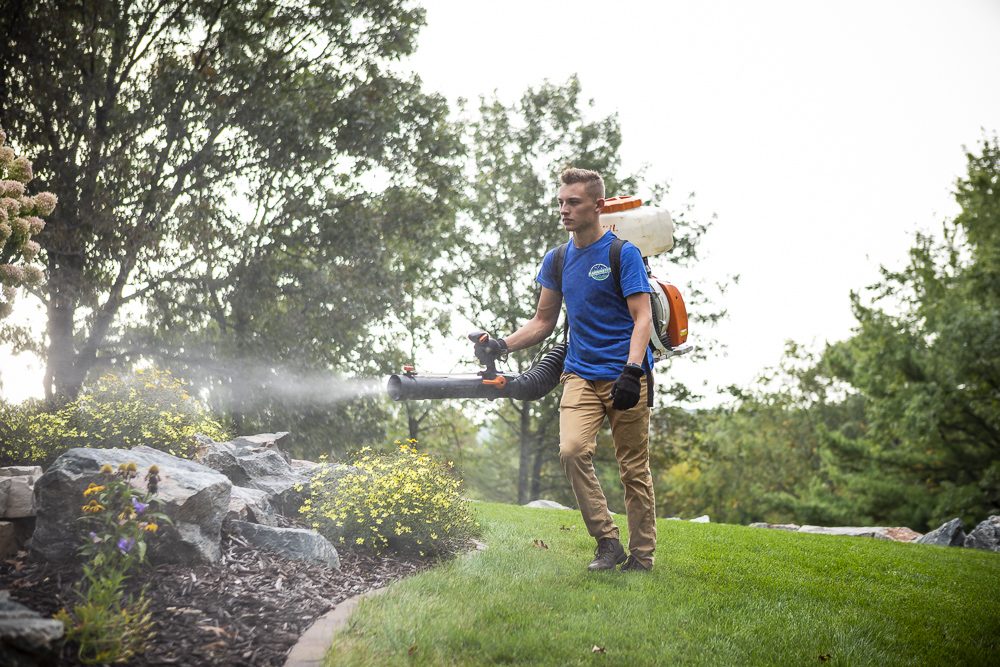
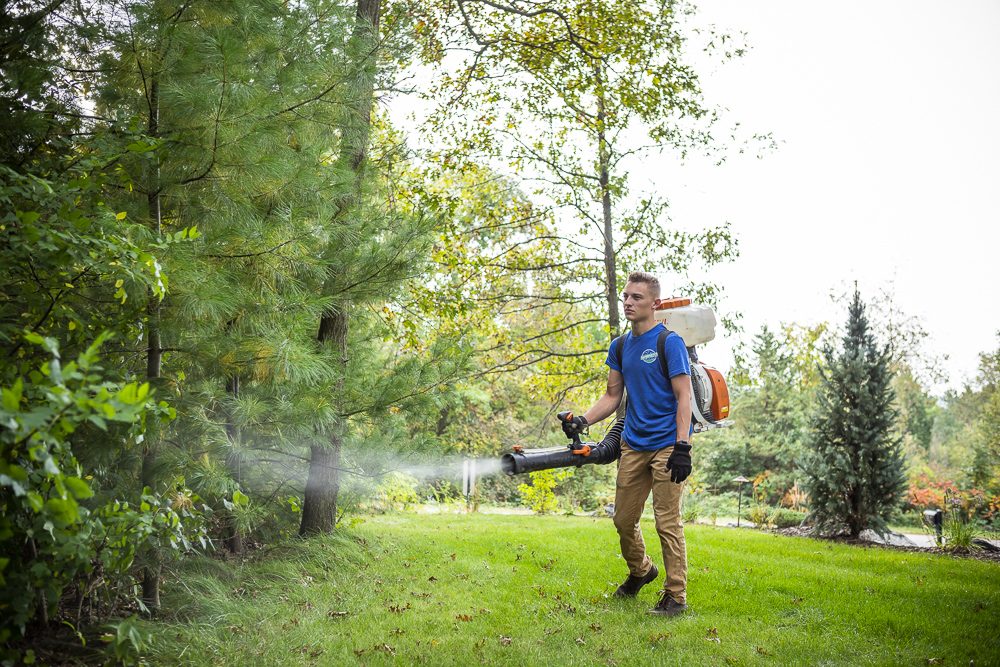
Timing on that cycle is the whole point. Mosquitoes reproduce continuously through the summer, so there is always a new batch emerging, and a treatment that is allowed to lapse for six weeks gives the population time to rebuild. Three weeks keeps the treated surfaces active against the adults that are resting on them.
Technicians treat the perimeter of the yard, concentrating on the places mosquitoes actually rest and breed during the day:
- Undersides of plant leaves
- Shady areas
- Wet areas
- Under decks
- Low tree limbs
- Wood piles
The reduction shows up immediately after the first application. No mosquito program delivers complete control, since adults fly in from surrounding property, but the difference in a treated yard is obvious. The program reduces ticks as well, which matters in this part of Wisconsin, where the blacklegged tick that carries Lyme disease is established.
Lawn care: the Terrific Turf program
The Carlsons are on RainMaster Terrific Turf, the most popular of the three program levels and the one built to grow a thick green lawn and handle most of what a lawn in this climate runs into. It includes:
- Organic-based granular fertilizer across the season for steady, even feeding rather than a surge of growth.
- Crabgrass prevention plus a booster application, which is pre-emergent timed to the spring soil temperature window, with a follow-up to extend the control through the germination period.
- Weed shield treatments for broadleaf weeds through the season.
- A pH test and pH balancer, because soil chemistry controls whether the fertilizer can be taken up at all.
- Bee-friendly grub guard to prevent grub feeding, which is what causes turf to pull up like loose carpet in late summer.
- Core aeration, which relieves compaction, opens a path for water and nutrients to the root zone, and gives thin areas a chance to fill in.
Together those cover the full set of issues a lawn here faces: feeding, weed pressure, soil balance, insect damage, and compaction.
The challenge: one property, many conditions
The landscaping on this property is extensive, with the lawn surrounded by healthy, mature plantings. That diversity is what makes it a demanding property to service, says Josh Haley, the lawn care technician who takes care of it.
"There are many shaded and open areas that we just need to make sure are getting the proper care, as well as a lot of plants," Haley says. "We need to be mindful of those when we visit the property."
Shade and full sun on the same lawn are two different management problems. Turf in shade grows thinner, stays wet longer, and is more prone to disease, so it needs less water and a lighter touch. Full-sun areas lose more moisture, carry more weed pressure, and need more irrigation in a dry stretch. Treating the whole lawn as one unit is how one half or the other ends up struggling.
Irrigation: Optimum Operation on a 17-zone system
The family is on RainMaster Optimum Operation, the middle tier irrigation maintenance program, which puts service at the beginning, middle, and end of each season: spring activation, a mid-season inspection, fall winterization, and discounted service calls.
Brad Hempleman, a RainMaster irrigation technician, worked on the original installation of the system at the Carlson home in 2017.
"It is a huge property with 17 zones," Hempleman says. "The system went in really smoothly. They do a great job to keep the whole system up and running properly and smoothly."
Even a well-built system on a well-kept property has problem areas. "A challenge could be the slopes in the yard and making sure those areas get the proper coverage and are not being overwatered," he says.
Why slopes are the hard part
On a grade, water applied faster than the soil can absorb it runs downhill before it soaks in. The top of the slope ends up dry and the bottom ends up saturated, from the same zone running the same length of time. The standard fix is cycle and soak: instead of one long run, the zone runs several shorter cycles with a soak period between them, so each pass has time to infiltrate. Head selection and nozzle choice matter too, since lower precipitation rate nozzles put water down slowly enough for sloped ground to take it.
The mid-season inspection is what keeps a 17-zone system honest. Heads drift out of adjustment from mower traffic, nozzles clog, and plantings grow up and block spray between May and July. On a property this size, a walk-through in midsummer catches those before they show up as brown areas in August.
What the homeowners do
The Carlsons do their part, following RainMaster recommendations: mow high, keep the mower blade sharp, and update the irrigation controller as the seasons progress and the lawn water requirement changes. Those three habits matter as much as anything a technician does. Mowing high supports deeper roots and shades out weed seed, a sharp blade cuts cleanly instead of tearing the leaf and opening it to disease, and a controller adjusted through the season avoids both the overwatering of a cool spring and the underwatering of a hot August.
What this looks like on your property
Nothing about this setup is exotic. It is a lawn care program matched to the property, an irrigation maintenance program that bookends the season with a check in the middle, and mosquito and tick control on a three-week cycle, all scheduled so the homeowner does not have to track it.
If you want a green lawn and a yard you can use without swatting, call 888-839-8484 or request a quote and we will go through the options together.
Bottom line
- Mosquito barrier treatment runs every three weeks for six visits, spring through fall, because mosquitoes reproduce continuously; the same application reduces ticks.
- The Terrific Turf program covers fertilization, crabgrass pre-emergent plus booster, broadleaf weed control, pH testing and balancer, grub prevention, and core aeration.
- A property with both shade and full sun needs the two handled differently, in watering and in treatment.
- On a 17-zone system, slopes are the hardest part: cycle and soak run times and lower precipitation rate nozzles prevent runoff at the top and saturation at the bottom.
- Homeowner habits carry real weight: mow high, keep the blade sharp, and adjust the controller as the season changes.
Frequently asked questions
How often does mosquito barrier spray need to be applied?
Every three weeks through the season, which works out to six visits from spring through fall. Mosquitoes reproduce continuously, so longer gaps let the population rebuild.
Does mosquito control also help with ticks?
Yes. The same perimeter treatment reduces tick numbers, which matters in Wisconsin and Minnesota, where the blacklegged tick that carries Lyme disease is established.
What is included in a mid-tier irrigation maintenance program?
Spring activation, a mid-season inspection, fall winterization, and discounted service calls. On a large system the mid-season visit is the one that catches drifted heads, clogged nozzles, and spray blocked by plant growth.
Can one company handle lawn care, irrigation, and mosquito control?
Yes, and there is a practical advantage to it: the watering schedule, the fertilization and weed control program, and the pest treatments are planned around each other instead of working against each other. Call 888-839-8484 to go over your property.


