


Does My Lawn Need Lime or Gypsum? Answers for Minneapolis & Eau Claire, WI
Lime raises soil pH on acidic lawns, and gypsum adds calcium and sulfur without changing pH much. Which one your lawn needs, if either, is a question a pH test answers in a minute, and guessing is how people waste money on amendments their soil does not want. Soil in Eau Claire tends to run acidic, while much of the Minneapolis area leans alkaline.
Soil pH is the quietest reason a lawn underperforms. Everything else gets blamed first: the fertilizer, the seed, the mowing, the weather. But if pH is out of range, the lawn cannot use what you put on it, and no amount of extra fertilizer fixes that.
What soil pH means
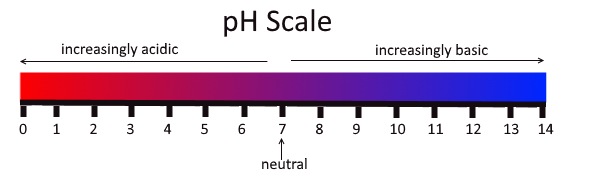
pH measures acidity and alkalinity on a scale from 0 to 14. Zero is extremely acidic, 14 is extremely alkaline, and 7 is neutral. Cool-season grasses, which is what grows here, do best between about 6.0 and 7.0.
The scale is logarithmic, so each whole number is a tenfold change. A soil at 5.5 is not slightly more acidic than one at 6.5, it is ten times more acidic. That is why pH problems are worth measuring rather than estimating.
Why it decides whether your fertilizer works
Nutrients have to be in a chemically available form before roots can take them up, and availability depends on pH. In the 6.0 to 7.0 range, nitrogen, phosphorus, potassium, and the micronutrients are all reasonably available at once. Outside it, things get locked up:
- Below about 6.0 phosphorus availability drops, and aluminum and manganese become more soluble, which stresses roots.
- Above about 7.5 iron and manganese get tied up. The classic symptom is turf or a shrub that stays pale yellow-green through the summer no matter how much nitrogen it gets, because what it is actually short of is iron.
In both cases you are paying for fertilizer the plant cannot reach. Correcting pH is what unlocks it.
Does my lawn need lime?
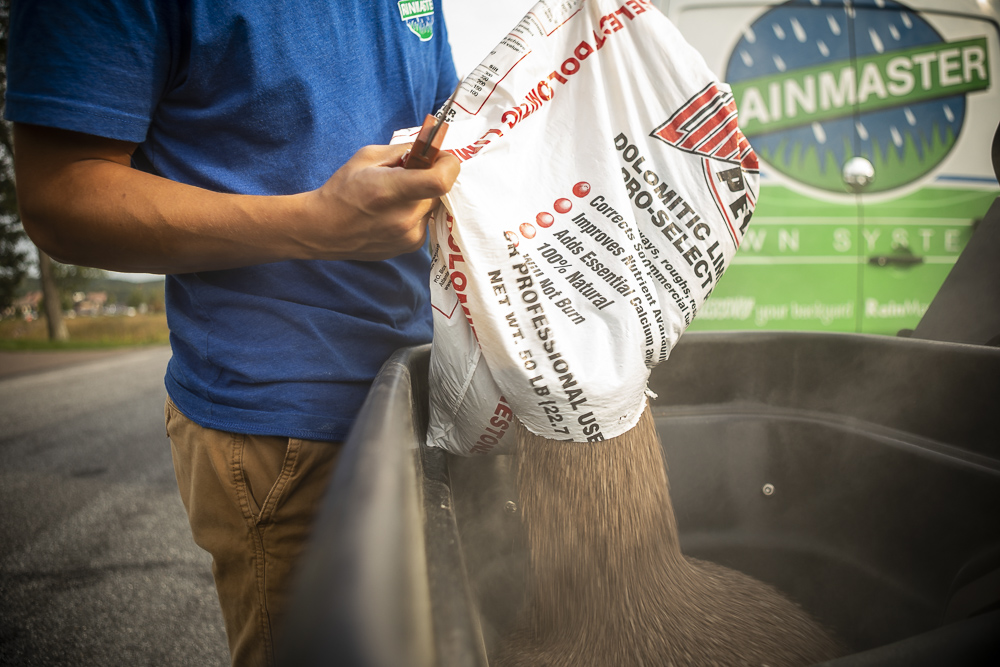
If the pH is too low, lime is the amendment. Lime is ground limestone rock, containing calcium carbonate and often magnesium carbonate in the case of dolomitic lime. Those compounds neutralize acidity and raise pH, and they supply calcium and magnesium as a side benefit.
Two things to know about lime. First, it is slow. Lime has to dissolve and react with soil, which takes months, so an application made this fall is working on next season's pH. Second, the amount required depends on soil texture as much as on the pH reading. A sandy soil moves with a modest application, while a heavier clay loam with more buffering capacity needs considerably more to move the same amount. That is why the rate should come from a test rather than a bag label.
Lime is also easy to overdo. Pushing pH too high creates the iron problem described above, and bringing an over-limed soil back down is slower than raising it was.
Does my lawn need gypsum?
Gypsum is hydrated calcium sulfate. It supplies calcium and sulfur and dissolves far more readily than lime, and it is worth being precise about what it does: gypsum adds calcium without raising pH. It is useful on alkaline or sodium-affected soils, on compacted heavy soils where calcium helps soil structure, and on soils short of sulfur.
If the goal is actually to lower a high pH, the amendment that does that is elemental sulfur, and on a strongly alkaline soil the realistic goal is managing symptoms, including supplemental iron, rather than rewriting the soil chemistry of an entire lawn.
We refer to both lime and gypsum as balancer, because in practice they are the two materials used to bring a soil back toward the range where a lawn can feed itself.
Eau Claire and Minneapolis soils are different
Lawn soil pH varies city to city and lawn to lawn within the same neighborhood, depending on parent material, what was trucked in during construction, and years of fertilizer and watering. There are regional patterns worth knowing, though. Soils around Eau Claire and the Chippewa Valley tend to run acidic, which is typical of sandier, higher-rainfall soils where calcium has been leached out over time. Much of the Minneapolis area leans the other direction, toward alkaline, and the pale summer turf that comes with it.
Neighbors can still differ. A yard built on fill, a strip next to a limestone driveway base, or a bed that gets runoff from a concrete walk can all read differently from the lawn ten feet away.
Test before you amend
Our lawn care technicians check pH with a meter inserted directly into the soil during a visit, which gives an immediate reading for the areas that matter. For a full nutrient picture, the soil testing labs at the University of Minnesota and the University of Wisconsin both run lawn samples and report pH along with nutrient levels and a lime recommendation.
Either way, the sequence is the same: measure, then amend, then retest the following season to see whether it moved. Applying lime or gypsum without a number in hand is how a lawn ends up with the opposite problem.
How we handle it
We consider pH important enough that pH testing is included in all three levels of our lawn care programs, and pH balancer is included in the top two levels. The reason is straightforward. You are already paying for fertilizer. Making sure the grass can actually use it is the cheapest improvement available on most lawns.
If your lawn has been fed for years and still looks tired, pale, or thin, pH is the first thing worth ruling out. Request a quote and we will test it and go through what the number means for your yard.
Bottom line
- Cool-season lawns want a soil pH between about 6.0 and 7.0; outside that range, fertilizer gets locked up and roots cannot reach it.
- Lime raises pH on acidic soil, works slowly over months, and the rate depends on soil texture, so test first.
- Gypsum supplies calcium and sulfur without raising pH; elemental sulfur is what lowers a high pH.
- Eau Claire area soils tend to run acidic, while much of the Minneapolis area leans alkaline, with lawn to lawn variation.
- pH testing is part of all three of our lawn care program levels, and balancer is included in the top two.
Frequently asked questions
How do I know if my lawn needs lime?
Test the soil. If pH is below about 6.0, lime is warranted, and the test should also tell you how much, which depends on soil texture. Yellowing or thin turf alone is not enough to diagnose it, because several other problems look the same.
Does gypsum lower soil pH?
Not meaningfully. Gypsum adds calcium and sulfur without changing pH much. If a high pH itself needs to come down, elemental sulfur is the amendment for that job.
When is the best time to apply lime in Wisconsin or Minnesota?
Fall is the usual window. Lime reacts slowly with soil, so a fall application has the winter and spring to work before the next growing season, and it pairs well with core aeration, which helps it move into the root zone.
How often should lawn soil pH be tested?
Once a year is reasonable, and that is how we handle it. After an amendment is applied, retesting the following season tells you whether the pH actually moved and how much more is needed.
University of Minnesota Extension, Soil testing and lawn fertilizer guidance.
University of Wisconsin Extension, Soil pH and lawn care resources.


