


Does Homemade Mosquito Yard Spray Work? 4 Facts and Other Options

Homemade mosquito yard sprays do very little, and whatever they do is gone within a day or two. The ingredients in the popular recipes have no residual activity, so nothing remains on the leaf surface to affect the next batch of mosquitoes. Eliminating standing water and treating the places mosquitoes rest are what actually reduce the population in a yard.
What the recipes are, and why they fade
The homemade mixes circulating online sound like something out of a grandmother kitchen. One combines mint mouthwash, Epsom salt, and stale beer, sprayed around the yard. Another calls for apple cider vinegar, water, and essential oils of citronella, peppermint, lemongrass, cedarwood, and geranium. The instructions always include re-spraying as needed, which is the tell.
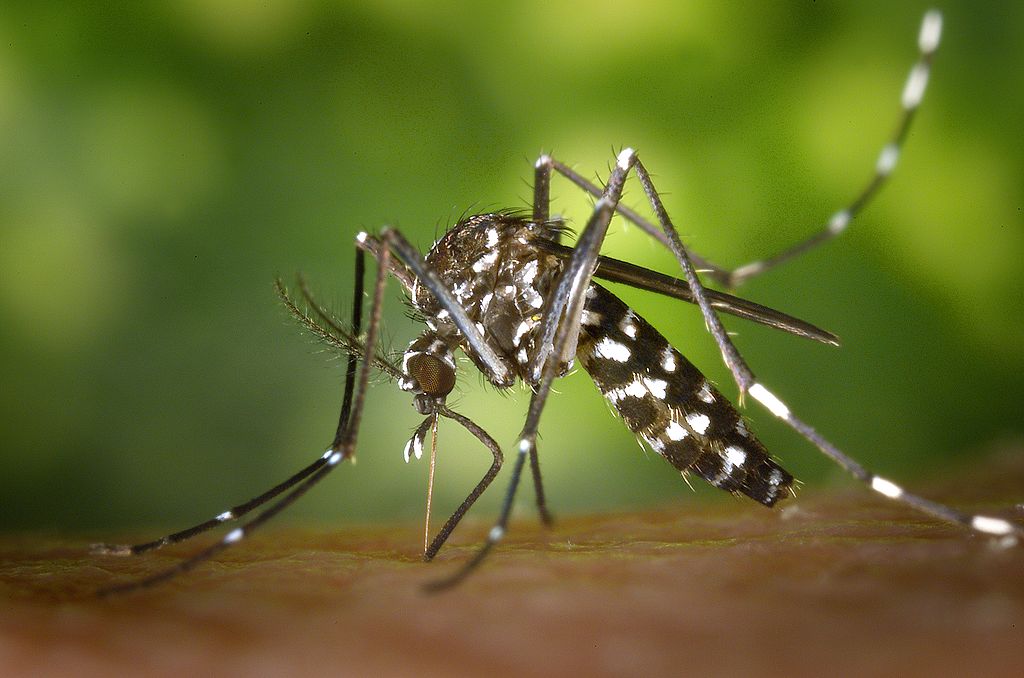
Here is what is going on with them. Essential oils can repel mosquitoes briefly, and that is a real effect, but the oils are volatile: they evaporate within hours and they break down in sunlight. The water-soluble ingredients wash off in the first rain or the next irrigation cycle. Nothing in these mixes kills mosquito larvae in water, and nothing stays active on a leaf surface where adult mosquitoes rest during the day. On top of that there is no application rate, so a homeowner has no way to know whether a given mix is doing anything at all.
A fair summary: harmless to try, inexpensive, and not a mosquito control program.
Start with standing water
This is the part that gets skipped, and it is the highest-value work on most properties. Many of the mosquitoes biting you in your own yard were produced in your own yard, in water that sat still for about a week. Walk the property and empty, drain, or change anything holding water:
- Corrugated downspout extensions, which hold water in every ridge
- Clogged gutters and gutter outlets
- Tarps over boats, firewood, or patio furniture, where water pools in the folds
- Bird baths, which need to be dumped and refilled weekly
- Kiddie pools, buckets, wheelbarrows, and watering cans left out
- Plant pot saucers and the trays under deck planters
- Old tires, toys, and anything stored upside down that is not actually upside down
- Low areas and clogged drain outlets that hold water for days after a rain
Tipping out a saucer is not glamorous, but on a residential lot it removes more mosquitoes than any spray does.
How a professional barrier treatment works
Mosquitoes do not spend the day in the open. They rest on shaded, humid surfaces and come out to feed in the morning and evening. A barrier treatment targets those resting sites with a product that stays active on the surfaces where mosquitoes land.
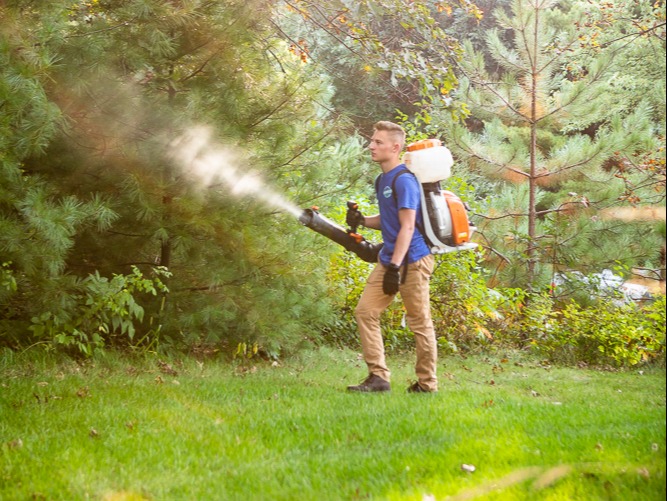
For properties in and around Eau Claire and the Twin Cities, RainMaster treats the perimeter of the yard every three weeks, six visits total from spring through fall, concentrating on the places mosquitoes lurk and breed:
- Undersides of plant leaves
- Shady areas
- Wet areas
- Under decks
- Low tree limbs
- Wood piles
The reduction is immediate after the first application. No mosquito program delivers complete control, because adults continue to fly in from neighboring property and from any untreated water nearby, but a treated yard is noticeably different to be in. The same treatment reduces ticks, which is worth as much as the mosquito reduction in this region.
The three-week interval exists because mosquitoes are reproducing continuously all summer. There is always a new generation emerging, and a treatment allowed to lapse gives that generation a head start.
Four differences between DIY and a professional service
- Coverage and equipment. A spray bottle reaches the outside of a shrub. Professional application equipment pushes product into the canopy and the undersides of foliage, which is where mosquitoes actually are during the day.
- Products with a label and a residual. Licensed applicators use products registered for this use, applied at a rate and interval on the label, that remain active on treated surfaces for weeks instead of hours.
- Timing and training. Knowing where to apply, when in the season to start, what to avoid spraying, and how to handle blooming plants and pollinators is the difference between a treatment that works and one that just wets the yard. Applicators here are licensed and trained for it.
- It actually happens. The honest problem with DIY is consistency. A service shows up on a three-week cycle whether anyone remembers it or not, and a technician walks the property each time and flags new standing water or a trouble area that developed since the last visit.
Why the reduction is worth paying for
Beyond the comfort of being able to use your own patio, there is a health reason. West Nile virus is present in Wisconsin and Minnesota and is spread by mosquitoes, and the blacklegged tick, which carries Lyme disease, is established across much of this region. Reducing both populations in the area where your family and pets spend their time is a reasonable precaution to take.
What to keep doing on top of the service
A yard treatment is not a substitute for personal protection when you are out in the evening or in the woods. Use an EPA-registered repellent on skin, including products with DEET, picaridin, or oil of lemon eucalyptus, cover up at dusk when mosquito activity peaks, and run a fan on a patio or deck, since mosquitoes are weak fliers and moving air keeps them off. Keep the standing water walk-through on your list a few times a season.
Take the yard back
Mosquitoes do not care how much you have invested in your patio, your firepit, or your lakeside cottage. Between removing breeding water and a barrier treatment on a regular cycle, you get most of the yard back.
If you are ready to stop swatting, call 888-839-8484 or request a quote, and ask about combining mosquito and tick control with your lawn care program so everything lands on one schedule.
Bottom line
- Homemade sprays have no residual: essential oils evaporate within hours and the rest washes off in the first rain.
- Removing standing water is the highest-value step, and most of it is in gutters, downspout extensions, tarps, saucers, and bird baths.
- A barrier treatment targets daytime resting sites and stays active on those surfaces for weeks.
- The cycle is every three weeks, six visits spring through fall, because mosquitoes reproduce continuously; the same treatment reduces ticks.
- No program is complete control; keep using an EPA-registered personal repellent at dusk and in wooded areas.
Frequently asked questions
Does homemade mosquito yard spray work at all?
Only briefly. Essential oils can repel mosquitoes for a short time, but they evaporate and break down in sunlight, and the rest of the mix washes off. Nothing in the common recipes kills larvae or stays active on resting surfaces.
How long does a professional mosquito treatment last?
Applications are made on a three-week cycle through the season, which is what keeps treated surfaces active against each new generation of adults.
Will mosquito control get rid of every mosquito?
No program offers complete control, because adults fly in from neighboring property. What a treated yard gives you is a large reduction, and it holds as long as the cycle is maintained.
What can I do myself between visits?
Walk the property and empty anything holding water for a week or more: downspout extensions, clogged gutters, tarps, bird baths, saucers, buckets, and kiddie pools. That work removes mosquitoes before they ever hatch.
University of Minnesota Extension, Mosquito and tick management around the home.


