


DIY vs. Professional Crabgrass Killer Products & Results: Tips for Minneapolis & Eau Claire, WI
Store-bought crabgrass killer works if you follow the directions exactly, and most of the time that is where things go wrong. Here is what separates a DIY crabgrass program from a professional one in Minneapolis and Eau Claire, and why a thick lawn beats both.
DIY crabgrass control, and the mistakes that sink it
You can buy crabgrass control off the shelf, apply it yourself, and get results. The condition is following the label precisely, and the common errors are predictable.

If the label says apply more than once, applying once and wondering why crabgrass came back is not a product failure. If the package says pre-emergent, it will not kill crabgrass that has already sprouted, no matter how much you use. If rain washes an application off before it moves into the soil, that application is gone and the money with it.
There is also a concentration difference worth knowing. Consumer crabgrass control is sold pre-diluted and ready to apply, with the rate set for the average case. We mix our own, so we know the exact concentration and exactly how much goes down per 1,000 square feet of your lawn.
Storage is the unglamorous DIY problem. Leftover liquid product that freezes in an unheated garage over a Wisconsin or Minnesota winter is no longer good, so next spring starts with another trip to the store.
Why timing beats product choice
Crabgrass is an annual. It germinates in spring, grows all summer, sets seed, and dies at frost. A single plant can produce tens of thousands of seeds before it goes, and those seeds sit in the soil waiting, including seeds that do not germinate the first year and come up in later seasons.
That life cycle is why pre-emergent control is the whole game. The objective is to stop those seeds from becoming the next generation of seed-producing plants, and the window for that is when the seeds germinate.
Germination is driven by soil temperature, not by the calendar. In Minnesota and Wisconsin that means the right start date moves year to year, anywhere from March to May depending on the spring. Curative weed treatments then run from roughly April through early October, because weeds keep germinating all season.
Two applications instead of one
Most lawn care companies make a single crabgrass application in spring. At RainMaster you get two, one in early spring and one in late spring. The reason is that pre-emergent control does not last indefinitely in the soil, and crabgrass germination is spread over weeks rather than happening all at once. A second round extends the protected window through the back half of the germination period.
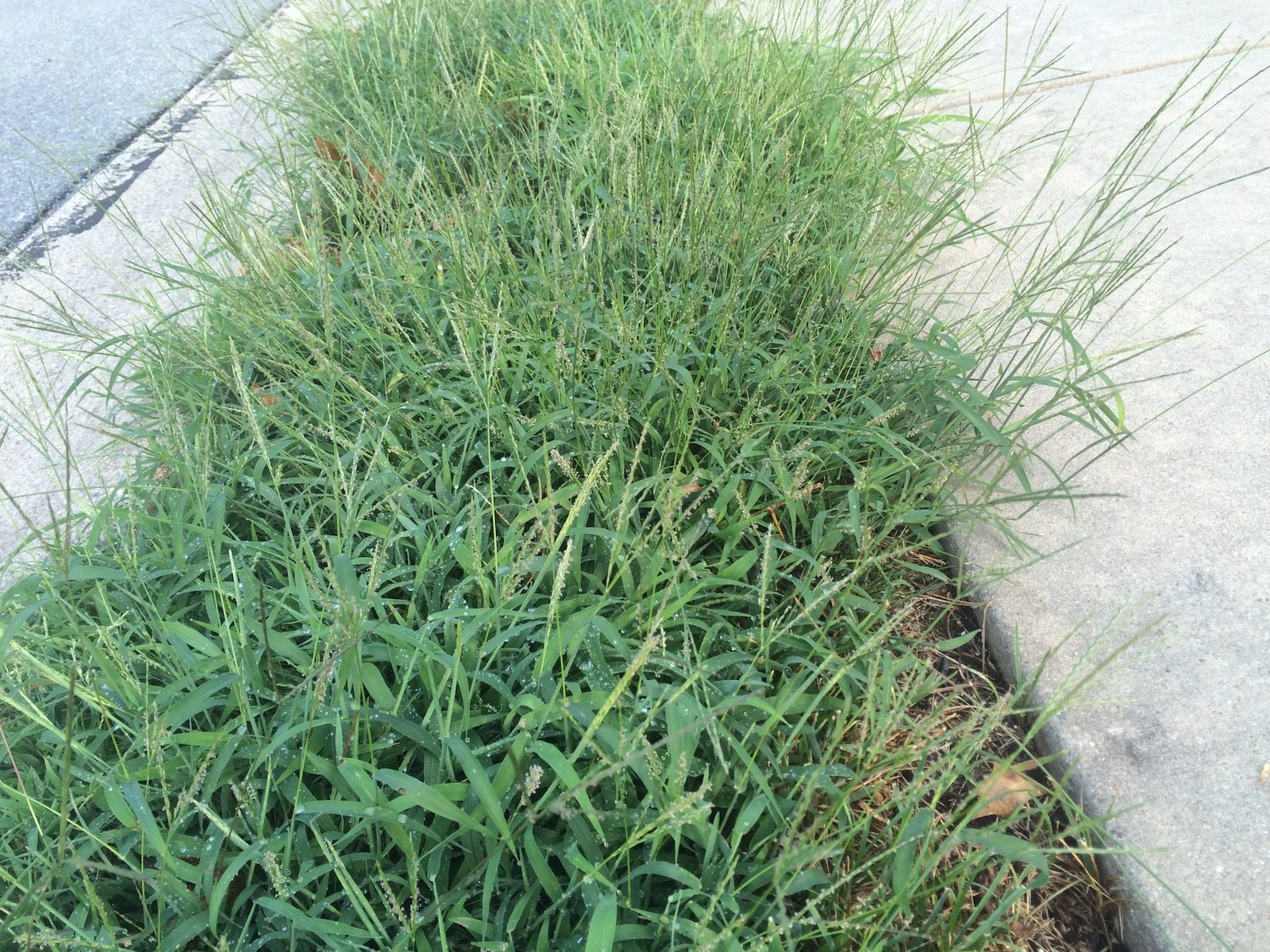
Even with good pre-emergent coverage, crabgrass gets through in thin areas and along hard edges where soil heats up fastest, like driveway and sidewalk borders. That is what post-emergent spot treatment is for, applied to the plants that made it rather than to the whole lawn.
The best crabgrass control is a lawn it cannot get into
Preventing crabgrass is considerably easier than removing it, and dense turf does most of the work. Crabgrass needs sunlight hitting bare soil to germinate. Deny it that and most of the problem disappears.
Mow high
The instinct when you see weeds is to cut shorter. It does the opposite of what you want. Taller grass grows thicker and shades the soil, which keeps soil temperature down and blocks the light crabgrass seed needs. Short mowing heats the soil surface and leaves the grass with a weaker root system to compete with.
Water properly
A lawn that is chronically too wet or too dry favors weeds over turf. Deep, infrequent watering builds root depth. A professionally installed irrigation system is the efficient way to do that consistently. If that is not in the budget, hoses, timers, and sprinklers used on a real schedule are far better than watering when you happen to think about it.
Treat spring through fall
The crabgrass you see in July did not appear overnight. It germinated weeks earlier. A complete program includes both preventive and curative treatments from early spring through late fall, because the timing of each matters more than the total number of applications.
And no, you cannot skip crabgrass prevention because the lawn looks good. Seed banked in the soil is waiting regardless of how the turf looks today.
Why you may still see some
Weed control is not instant. It commonly takes 10 days or more for treated weeds to die, and the goal is killing the plant rather than knocking it down quickly so it regrows.
Weeds that had not germinated when we visited will come up afterward. That is normal, and the answer is a return visit at no charge or treatment on the next scheduled visit. The point of being on a lawn care program rather than buying bottles is that follow-up is part of it.
Bottom line
- Pre-emergent crabgrass control will not kill crabgrass that has already sprouted, and label rates and repeat timing are not optional.
- Germination timing is set by soil temperature, so the correct start date in WI and MN ranges from March to May.
- Two pre-emergent rounds, early and late spring, cover a germination period that is spread over weeks.
- Expect 10 days or more for treated weeds to die, and expect later germinators to need a follow-up visit.
- Mowing tall and watering deeply shade and cool the soil, which denies crabgrass seed the conditions it needs.
Frequently asked questions
When should crabgrass pre-emergent be applied in Minnesota or Wisconsin?
When soil temperatures reach the range where crabgrass germinates, which in this region can fall anywhere from March to May depending on the spring. Calendar dates are unreliable, which is why applications are scheduled off soil temperature.
Why do I still see crabgrass after a pre-emergent application?
Pre-emergent control thins out over weeks while crabgrass germination continues, and thin areas and pavement edges germinate first and heaviest. Those escapes get spot-treated with a post-emergent product.
Can I seed my lawn and apply crabgrass preventer the same spring?
Not with standard products, since pre-emergent control inhibits the new grass seedlings along with the crabgrass. There are professional-grade options that allow both, which is worth asking about before the first application goes down.
How long does crabgrass killer take to work?
Usually 10 days or more to see the plant die on a post-emergent treatment. Faster knockdown often means the top growth burned and the plant recovers.
University of Wisconsin Extension, Crabgrass.
University of Minnesota Extension, Lawn care and fertilizing lawns.


