


DIY Lawn Care or Professional Service: What's Best for Your Lawn?
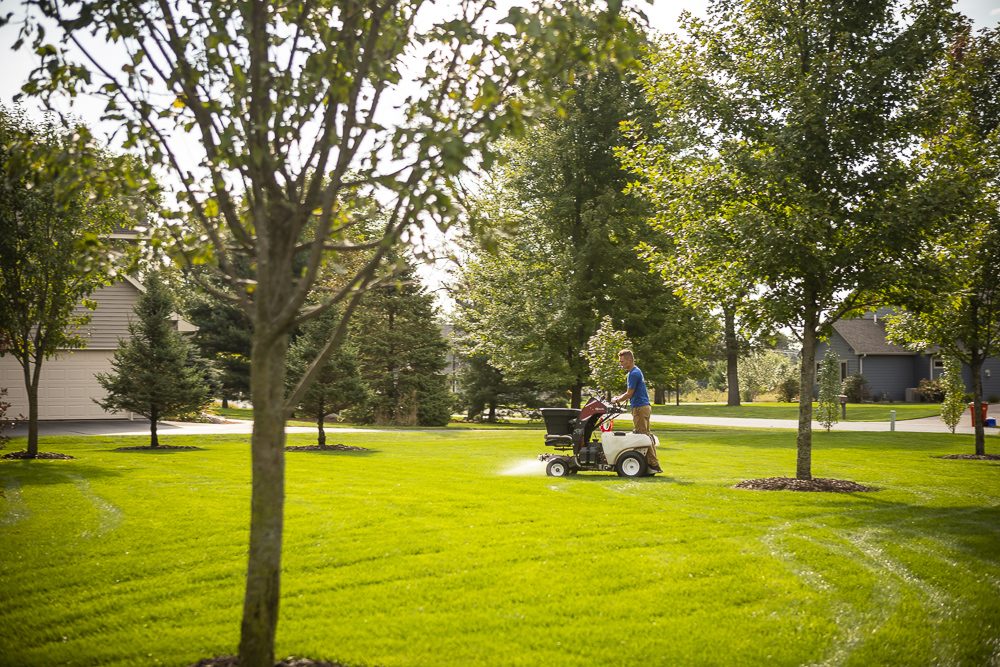
This is not about mowing. Mowing is the easy part. The question is who handles fertilizer, weed control, seed, grub control, and the soil work that decides how the lawn actually looks. Here is an honest look at what each path requires in Eau Claire and Minneapolis.
Will you have the time, in the right weeks?
Nearly everyone who buys lawn products intends to use them. The bag by the garage door is proof of good intentions. What derails it is not laziness, it is that lawn care runs on windows, and the windows do not negotiate.

Crabgrass pre-emergent has to be down before germination, which in this region is driven by soil temperature and usually lands between April and early May. Grub prevention has to be in the root zone before the eggs hatch in summer. Fall fertilizer has to go on while roots are still active. Miss the window and the product in the bag is worth nothing, no matter how good it is.
So the real question is not whether you can spread fertilizer. It is whether you will spread it on the specific weekend it needs to happen, five or six times a year, for years.
Do you know which products to use, and how to apply them?
The lawn aisle is deep and unhelpful. Which seed blend for a shaded north exposure? Which fertilizer analysis now rather than in September? Which herbicide for creeping Charlie as opposed to clover? One bag or three?
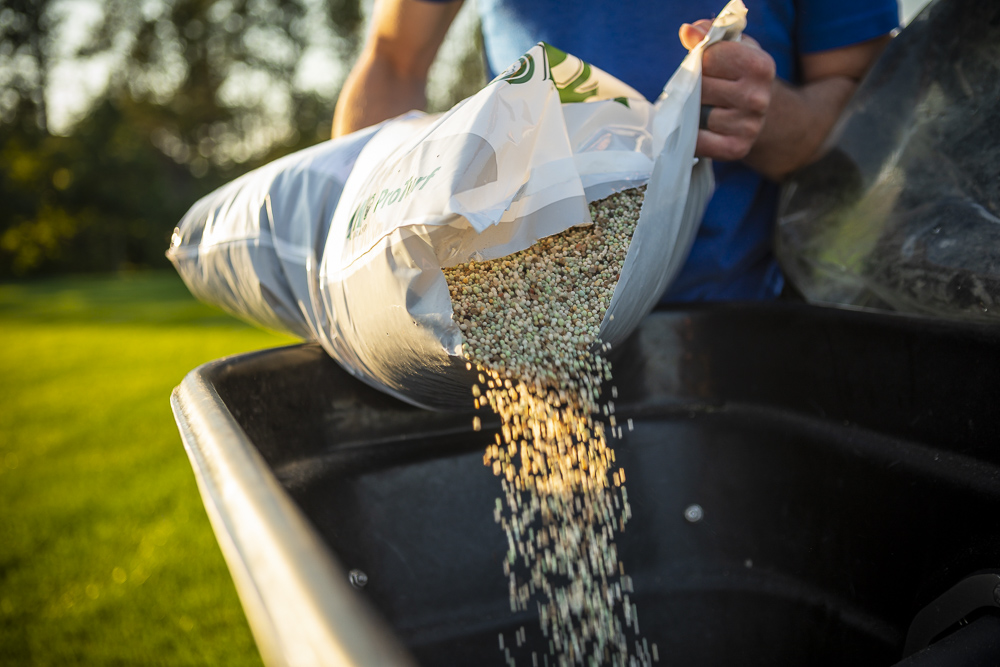
Two things are worth knowing before you load the cart. First, quality varies more than the packaging suggests. Bargain seed frequently includes weed seed, so people spend a Saturday planting the weeds they will spend next summer fighting. We use premium granular fertilizer rather than the liquid common in the industry, because granules break down over weeks and feed steadily instead of spiking.
Second, application error is real. Fertilizer at the wrong rate burns turf, and herbicide applied outside its temperature range either does nothing or damages the grass along with the weed. We see the results of both every season.
Weeds are tougher than the label suggests
Some weeds give professionals a hard time, which should tell you something about consumer products.
Creeping Charlie is the clearest example in Minnesota and Wisconsin. It is a tenacious perennial that spreads by creeping stems, and it needs a professional grade specialty herbicide applied more than once in a season, with fall applications doing much of the real work. Typical home improvement store weed control does not finish it.
Dandelions we handle differently, with a specialty weed shield designed to reduce how many emerge in the first place rather than only killing what is already up. Anything that slips through can be treated with a broadleaf herbicide later.
The common thread: weed control is not a single event. Different weeds are vulnerable at different times, many of the worst spring weeds actually germinate the previous fall, and some products only work in a specific temperature range, which means switching materials through the season.
What does your lawn actually need?
Plenty of people assume fertilizer is the whole job. It is not. A thick green lawn is a function of roots and soil, and if those are wrong, fertilizer is a rounding error.
The lawn might need iron, magnesium, humic acid, or organic matter rather than more nitrogen. Our programs go past the nitrogen, phosphorus, and potassium in a store bag to target what a given lawn is short on, and we are phosphorus free, which matters in a region with this much surface water to protect.
It might need aeration, because compacted soil has no air space and roots cannot take up water or nutrients through it. Or the pH might be out of range, which locks nutrients in the soil where the plant cannot reach them. Neither of those is solved by anything you can put in a cart.
The hassle is the real cost
Bags stacked in the garage. Dates to track. A spreader to clean and calibrate. The risk of damaging the lawn with a misapplication. And the weekends it consumes, which are the same weekends the weather is actually good here.
Hand it off and there is no equipment to maintain, no product leaking onto the garage floor, and no recurring calendar reminder you will push twice and then skip.
A trained set of eyes is part of what you are buying
When you are hauling a spreader around your own yard, you are trying to finish. You are not scouting.
When our technicians are on a property applying fertilizer or treating weeds, they are reading the lawn. Japanese beetle feeding, early grub activity, a disease starting in a shaded low spot, a sprinkler zone leaving a dry strip, thinning that says the soil is compacted. Catching those early is the difference between an adjustment and a repair. That is five or six site visits a year from someone trained to notice problems while they are still small.
So which one should you choose?
Do it yourself is a legitimate choice if you enjoy the work, you keep a calendar, and your lawn has no underlying soil problem. You will spend less on materials and you will get a reasonable lawn.
Hire it out if your lawn needs repair rather than maintenance, if you have missed application windows before, or if the time is worth more to you than the savings. Plenty of our customers tried the other way first and decided the result did not justify the Saturdays.
We offer three levels of program in Minneapolis and Eau Claire so the decision is not all or nothing. Healthy Habitat covers the basics a better lawn needs. Terrific Turf is the mid level option and our most popular, built to grow a thick green lawn and handle most challenges. Luscious Lawn is the proactive high end program for the fastest results on a lawn that needs real help.
Bottom line
- Lawn care runs on timing windows set by soil temperature and insect life cycles. Product applied outside its window does nothing.
- Bargain grass seed often contains weed seed, so cheap seed can plant next year's weed problem.
- Misapplication is a real risk. Fertilizer at the wrong rate burns turf and herbicide at the wrong temperature can damage grass.
- Tough perennials like creeping Charlie need professional grade materials applied more than once in a season, with fall doing much of the work.
- Compacted soil and out of range pH are the two problems no store bought product solves, and they limit everything else.
Frequently asked questions
Can I get professional results doing my own lawn care?
On a lawn with sound soil, a disciplined homeowner who hits the application windows can get a good lawn. On a lawn with compaction, bad pH, or entrenched perennial weeds, store products are not the limiting factor and the result will plateau.
Why does my store bought weed killer not work on creeping Charlie?
Because it is a perennial that spreads by creeping stems, and a single application of a consumer product does not get enough material into the plant. It takes professional grade specialty herbicide applied more than once in a season, with fall applications being the most effective.
How many visits a year does a lawn program need?
Five or six for most lawns here, spread so that each application lands in the right window: pre-emergent in early spring, grub prevention before hatch, in-season fertility and weed control, and a fall feeding while roots are still active.
Is professional fertilizer really different from store fertilizer?
The formulation is. We use premium granular blends that break down over weeks, including organic matter alongside the nutrients, rather than the liquid common in the industry that feeds in a spike. We also run phosphorus free to protect local surface water.
University of Wisconsin Division of Extension, Dandelion (Taraxacum officinale).
University of Minnesota Extension, Fertilizing Lawns.


