


Creeping Charlie vs Wild Violet: How to Identify & Kill These Weeds

Creeping charlie and wild violet get confused constantly, because both are low-growing perennials that spread in patches and both throw purple flowers. They also share the trait that makes them infamous here: standard broadleaf weed control barely touches either one.
Creeping charlie, also called ground ivy
This tenacious perennial gets its name from the creeping stems that run along the soil surface. Those stems, plus seed, are how it spreads, and it spreads relentlessly.
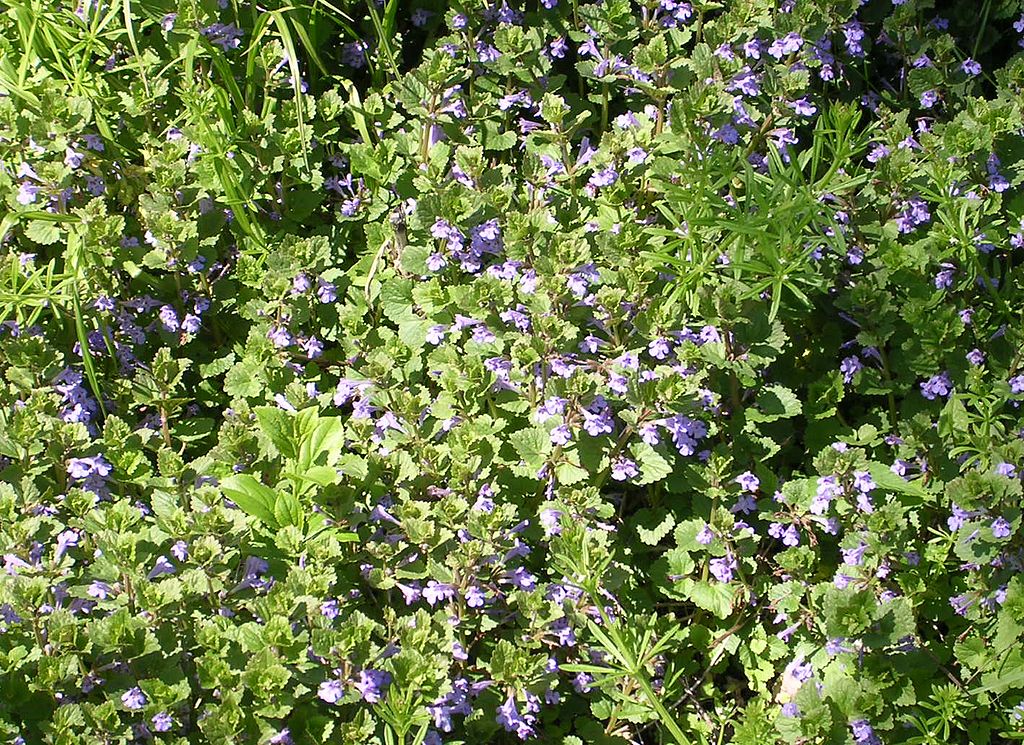
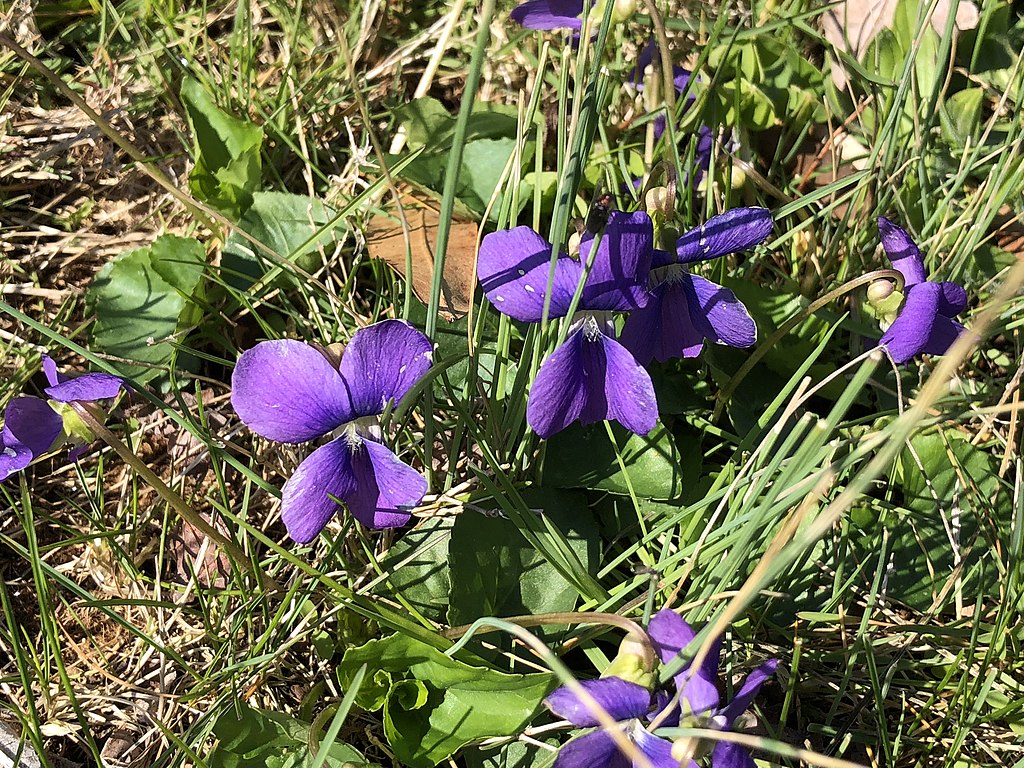
Creeping charlie is a green trailing plant with round to kidney-shaped leaves, scalloped edges, and small purple flowers. It grows tight to the ground and forms a dense mat that functions like a groundcover, which is exactly the problem: it occupies space your turf would otherwise hold.
Two details explain why it is so hard to kill. The stems root at the nodes, so every point where a stem touches soil can become an independent plant. And it thrives in shade and in damp soil, the same conditions where turf is already weakest.
Creeping charlie or wild violet: how to tell
Wild violet is also a low-growing perennial that spreads in patches, and it is genuinely pretty, covered in purple flowers in spring. The flower color and general habit are what cause the confusion.
Look at the leaves and the stems.
- Leaf shape. Wild violet leaves are heart-shaped with rounded or toothed edges. Creeping charlie leaves are rounder, more kidney-shaped, with a distinctly scalloped margin.
- Where the leaves attach. This is the reliable tell. Wild violet leaves rise on individual stalks from the base of the plant, so there is no creeping stem running across the ground. Creeping charlie leaves grow in pairs along a trailing stem you can trace across the soil.
- Stem shape. Creeping charlie stems are square in cross section. Violet has no runners to feel.
- Smell. Crush a creeping charlie leaf and it smells distinctly like mint, because it is in the mint family. Violet does not.
How to get rid of creeping charlie
Like most lawn weeds, creeping charlie thrives in an unhealthy lawn, so a thick lawn is the first defense. But once it has a foothold, it is genuinely difficult, and it is not affected by most broadleaf herbicides.
If you have one or two plants, pull them by hand and get the whole runner. For an established patch, hand pulling is often counterproductive. Creeping charlie reproduces from seed, but it spreads much faster by rooting along its stems, so if you pull a patch and leave stem fragments behind, or toss them onto another part of the lawn, you have propagated it.
When necessary, we treat creeping charlie with a specialty liquid weed control, applied multiple times across the year. It takes a professional-grade product with the right active ingredient; retail products from the home improvement store generally do not do the job.
Timing is as important as product. Both of these weeds are most vulnerable in fall, when perennials are moving resources from the leaves down into the root system and will carry a systemic product down with them. A fall application often accomplishes more than two in June.
A bit more about wild violet
Do not be fooled by the pretty face. Like creeping charlie, wild violet is hard to control, and for a different structural reason: it grows from thick underground rhizomes, and it has a waxy leaf surface that sheds liquid applications.
Its emergence window is long, roughly April through September, which means there is no single moment to catch it all at once. Pre-emergent products do not affect it, because you are not fighting germinating seed, you are fighting established underground structures.
Both weeds typically need multiple herbicide applications to bring under control. They are persistent by design.
Preventing them in Wisconsin and Minnesota
The two have one more thing in common: preventing them is far easier than removing them. A thick, healthy lawn is the best defense against both and against weeds generally, because weeds establish in openings and a dense stand does not offer any.
Mow high
It is tempting to mow lower than usual to knock the patch down. It is satisfying and it backfires. Taller grass grows thicker. Mow short and the soil surface heats up, which helps weed seeds germinate, and short turf has a weaker root system, which makes it more vulnerable. Keep the lawn at 3 to 4 inches.
Water properly
A lawn that is consistently too wet or too dry encourages both of these weeds. Creeping charlie in particular prefers damp soil. Follow the basics: water early in the morning, water deeply, and do not water every day. A properly designed and scheduled irrigation system delivers that consistently, which takes one variable off your list.
Address shade
Both weeds tolerate shade better than turf does, which is why they so often start under trees and along the north side of a house. Thinning and raising the tree canopy and overseeding with fine fescue makes those areas defensible.
Run a proactive program
These weeds are working even when you cannot see them. A complete lawn care program with both preventive and curative treatments from early spring through late fall is what keeps up with them, rather than a reaction after a patch has already taken over ten square feet.
Equally important is the nutrition side. A custom nutrition plan built on an actual soil test nourishes roots and thickens the stand, and a thick stand is the thing creeping charlie and wild violet cannot get past.
Bottom line
- Creeping charlie has round, scalloped leaves in pairs on square creeping stems that root at the nodes, and the crushed leaf smells like mint.
- Wild violet has heart-shaped leaves on individual stalks rising from the base, with no runners, and grows from thick rhizomes.
- Neither responds to most standard broadleaf products, and pre-emergents do nothing against wild violet.
- Hand pulling an established creeping charlie patch spreads it, because every stem fragment left behind can root.
- Fall applications work best, when perennials move resources down into the roots; both usually need multiple treatments.
Frequently asked questions
What is the easiest way to tell creeping charlie from wild violet?
Trace the stems. Creeping charlie runs along the ground on square stems with paired leaves, and the crushed leaf smells like mint. Wild violet leaves come up on individual stalks from the base with no runner to follow.
Will regular weed and feed kill creeping charlie?
Generally no. Creeping charlie is not affected by most broadleaf herbicides, and retail products rarely contain the right active ingredient at an effective rate. It takes a specialty product applied multiple times.
When is the best time to treat creeping charlie and wild violet?
Fall. Perennials move resources from the leaves down into the root system then, which carries a systemic product where it needs to go. A fall application typically accomplishes more than repeated summer attempts.
Can I pull creeping charlie out by hand?
Only for a plant or two, and only if you get the entire runner. Pulling an established patch usually spreads it, because any stem fragment left in the soil or dropped elsewhere in the lawn can root and start a new plant.
University of Wisconsin Division of Extension, Weed identification and lawn management guidance.
University of Minnesota Extension, Fertilizing Lawns.

