


Sprinkler System Installation Costs in Eau Claire, WI & Minneapolis, MN
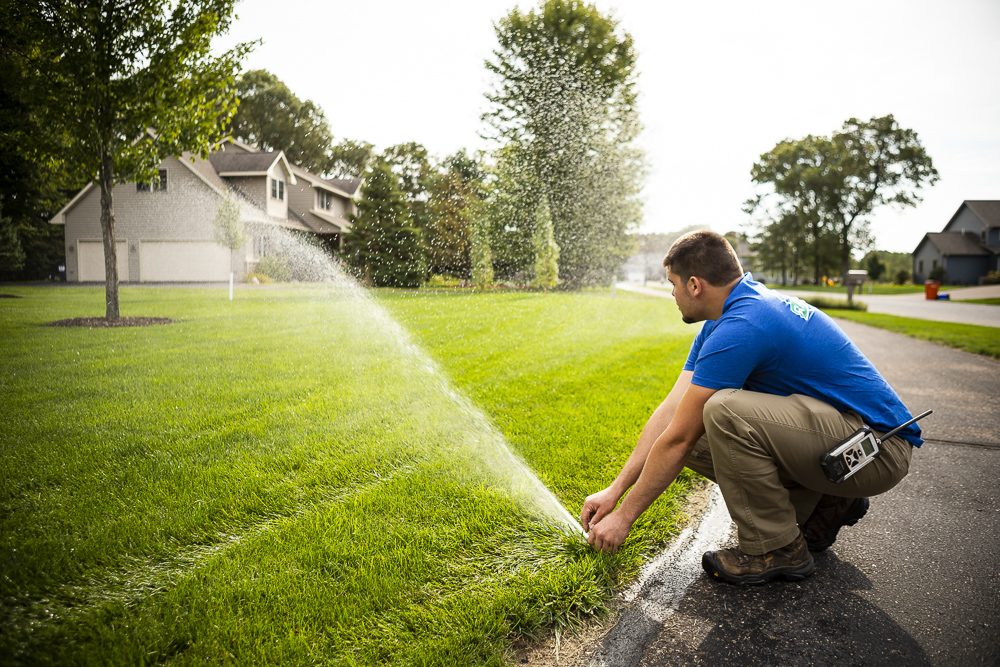
Sprinkler system quotes in this market range from a few thousand dollars to well over thirty thousand, and the spread is not arbitrary. It comes down to lot size, water source, design quality, and what the company includes rather than bills separately.
What a sprinkler system costs
Installed cost for a residential system in Eau Claire and the Twin Cities generally runs between $6,000 and $30,000 or more, depending on the size of the property and the water source. By lot size:
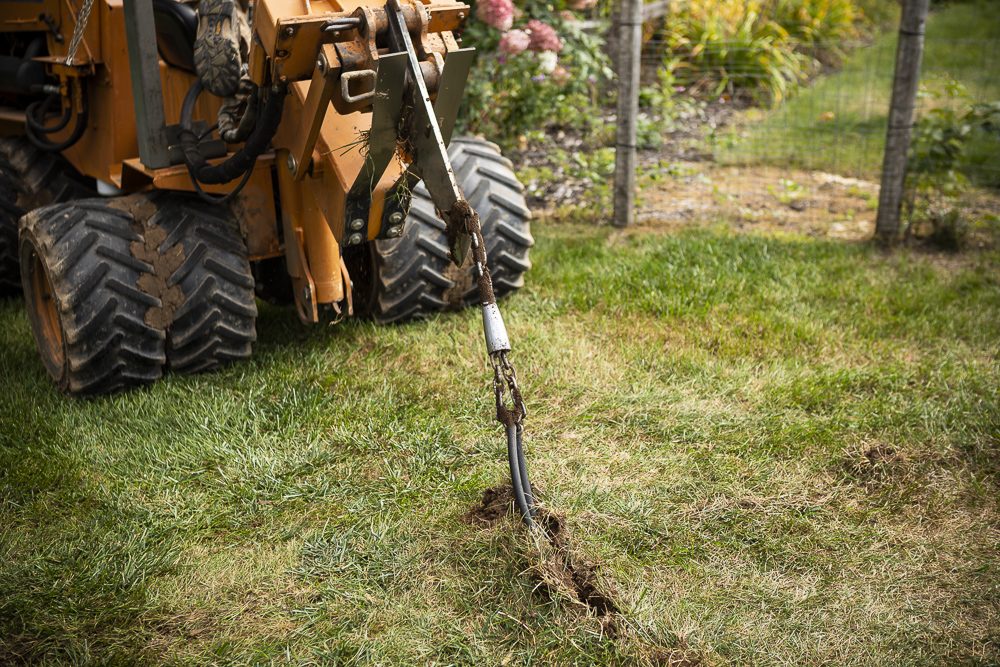
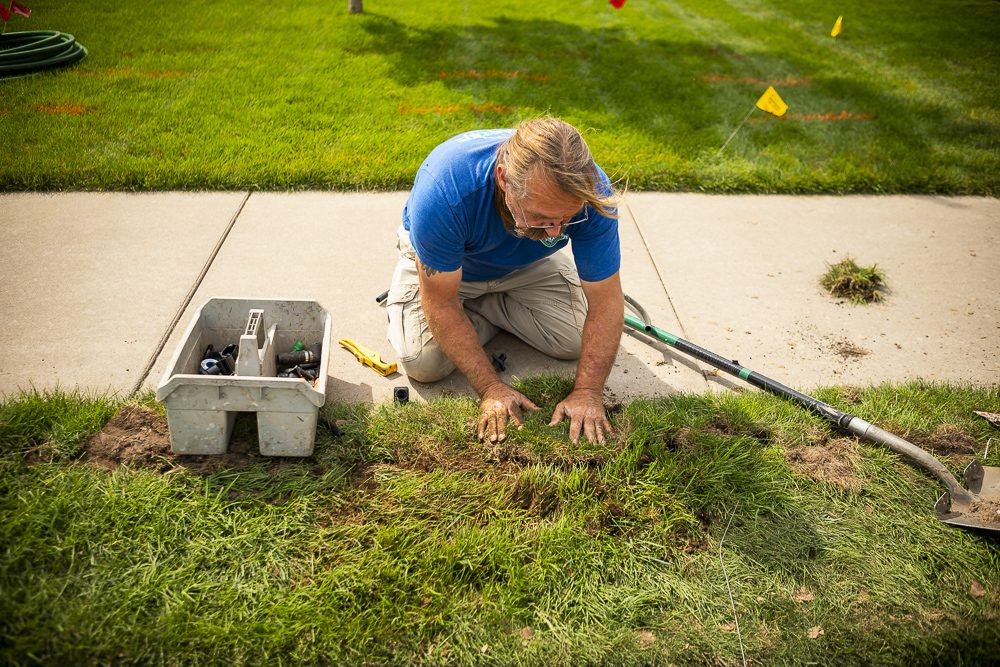
- Average city lot under 20,000 square feet: $6,500 to $10,000.
- Half-acre lot, 20,000 to 40,000 square feet: $9,000 to $11,000.
- Lot of 40,000 square feet or more: starting at $11,000.
Any company will need to see the property to give a real number. These ranges are for comparison, not a quote.
Why lot size does not scale the way you expect
More square footage means more pipe, more heads, more wire, and more labor, so bigger properties cost more. But a small city lot is not proportionally cheaper, and sometimes it costs about the same as a larger, simpler one.
The reason is geometry. A small lot is usually cut up: narrow side yards, beds, walkways, a patio, a shed, odd corners. Covering it without throwing water onto pavement or the side of the house takes many small heads on short radius, maybe a ten foot throw instead of thirty, which means more heads and more zones for less area. An open half acre can be covered efficiently with large rotors on long runs.
Design is where the money is really spent or wasted
The price should include expert design, and not every company provides it. This is the item that matters most over the life of the system, because spacing is permanent the moment the job is done.
The way a low bid gets built is by cutting materials and labor: two heads where there should be three, four zones where five would do the job. The system functions. Water comes out of the heads. What you get is uneven coverage, dry pockets you compensate for by adding run time everywhere, and overspray onto pavement and siding. Fixing it later can mean digging up and repositioning fifty to a hundred heads and adding zones, which is close to starting over.
Design requires understanding hydraulics and low-voltage electrical work, because head spacing depends on available pressure and flow, and zone layout depends on both. Nothing stops anyone from putting a name on a truck and selling irrigation, which is part of why so many people believe it is simple work. If the answer to what a system costs is $2,000, you are talking to the wrong contractor.
The RainMaster team includes trained and certified irrigation designers. Certification is not required in this industry, which is exactly why it is worth asking about.
Bad design also costs water every year it runs. Overspray onto streets, driveways, and building corners adds up to hundreds or thousands of gallons annually, and you never see the number because you have nothing to compare it to. In fall, that extra water on a driveway or sidewalk freezes, which is a slip and fall problem on top of a water bill problem.
Does the price include plumbing?
Usually not, and it is a real cost. A licensed plumber has to run the water line from inside the house to the outside so the irrigation system can be connected. Most irrigation companies leave you to arrange and pay for that separately, which means another contractor, another schedule, and another invoice.
RainMaster arranges the plumbing and includes it in the installed cost. When you compare bids, confirm whether plumbing is in or out, because a quote without it is not comparable to one with it.
What else should be in the price
Items that are sometimes included and sometimes sold as upgrades:
- Water-conserving heads and nozzles. Efficiency is a design and equipment decision, not something you can add later without replacing parts.
- The controller. It is the brain of the system and should be in the price. RainMaster uses smart controllers as standard equipment; most companies treat that as an upgrade.
- A follow-up inspection. RainMaster includes a visit about a month after installation to check operation and make adjustments once the landscape has settled and you have run the system through real conditions.
- A three-year parts and labor warranty.
- The "no dry spots" commitment. If an area is not getting water, RainMaster readjusts and corrects it.
- A sketch of the system design, so you know where heads, valves, and lines are located. This matters the first time anyone digs in your yard, lays sod, or installs a fence.
- Site cleanup and repair. Trenching disturbs turf. Grass should be repaired and seed spread as needed before the crew leaves.
- Product tier. Every irrigation manufacturer sells multiple quality levels of the same component. Ask which tier of heads, valves, and controller you are getting, because entry-level parts fail sooner and a price difference often traces directly to this.
Ask about service, not just installation
An irrigation system needs seasonal attention for as long as you own it: spring activation and inspection, a midsummer check during peak demand, and a fall blowout before the first hard freeze. Many companies install and do not service, and servicing takes a different skill set than installing.
Before you sign, ask who handles startup and winterization, whether scheduling is automatic, and what the maintenance programs cost. A system installed by a company that does not service it means finding a second contractor to inherit someone else's work, which rarely goes smoothly.
Plan ahead
Install schedules fill. Good companies book weeks out during the season, and spring is the busiest stretch of the year. If you want a system running by early summer, start the conversation in winter or very early spring. That also gives you time to get more than one bid and compare them properly, which is the single best thing you can do for the cost.
Get the site walked, get the design explained, and request a quote in writing with the inclusions spelled out.
Bottom line
- Expect $6,000 to $30,000 or more installed, with an average city lot in the $6,500 to $10,000 range and a half acre around $9,000 to $11,000.
- Small lots are not proportionally cheaper. Tight geometry takes more heads and zones per square foot.
- Design is the item that determines twenty years of water use, and spacing is permanent once the job is done.
- Confirm whether plumbing, the controller, the warranty, the design sketch, and turf repair are included. A quote without plumbing is not comparable to one with it.
- Ask who services the system seasonally. Installing and maintaining take different skills, and many installers do neither after the sale.
Frequently asked questions
Why are irrigation quotes so far apart?
Usually head and zone counts, product tier, and whether design, plumbing, controller, warranty, and turf repair are included. Two quotes for the same yard can describe very different systems, so compare the inclusions line by line.
Is a $2,000 sprinkler system possible?
Not for an in-ground system on a typical lot. A price that low means too few heads and zones, entry-level parts, no design work, or costs that will reappear later. The uneven coverage usually shows up in the first dry summer.
How many zones does a yard need?
It depends on available water pressure and flow, head type, and how the property is laid out. The correct number comes out of the design calculation. A company that cuts zones to lower a bid is passing you a permanent problem.
How long does installation take?
Most residential installs are completed in a day or two once scheduled, with turf repair and a follow-up adjustment visit afterward. Scheduling is the long part, since in-season lead times run weeks.
Irrigation Association, Irrigation industry standards and certification.
U.S. Environmental Protection Agency, WaterSense outdoor water efficiency.


