


Cost to Fertilize Your Own Lawn vs. Lawn Care Services in Minneapolis & Eau Claire
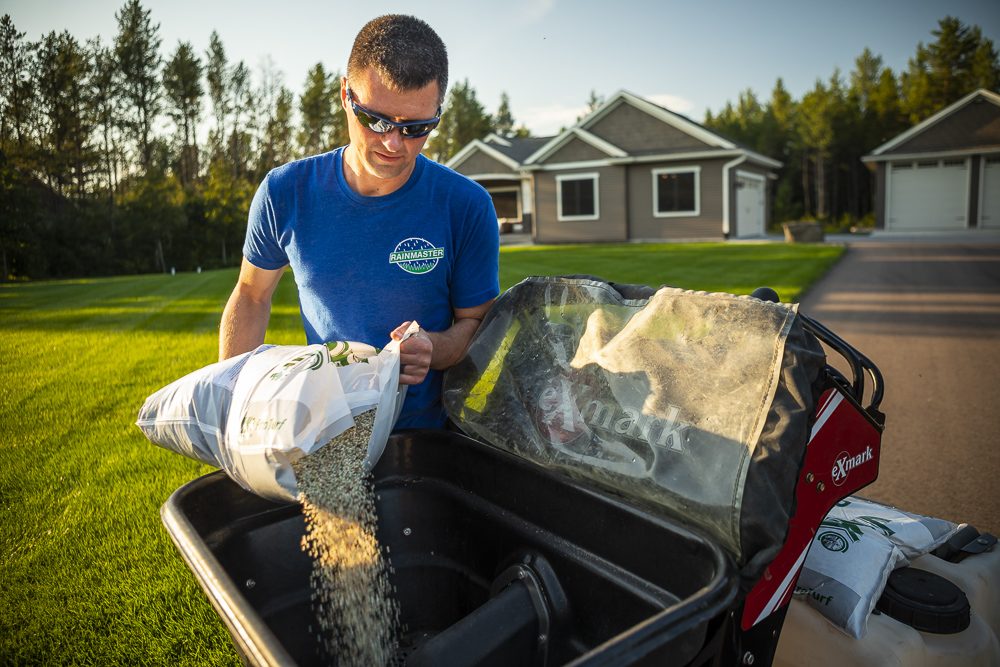
Comparing the price of a bag of fertilizer to the price of a lawn care program is not an apples-to-apples comparison, and it is the reason most homeowners get the DIY math wrong. Here is what each one actually costs in Minneapolis and Eau Claire, and what you are paying for in each case.
What fertilizer costs at the store
A 20-pound bag of name brand fertilizer that covers 8,889 square feet runs about $42.97. Put two bags in a cart and you are at roughly $86, which looks like a bargain next to an annual program price.
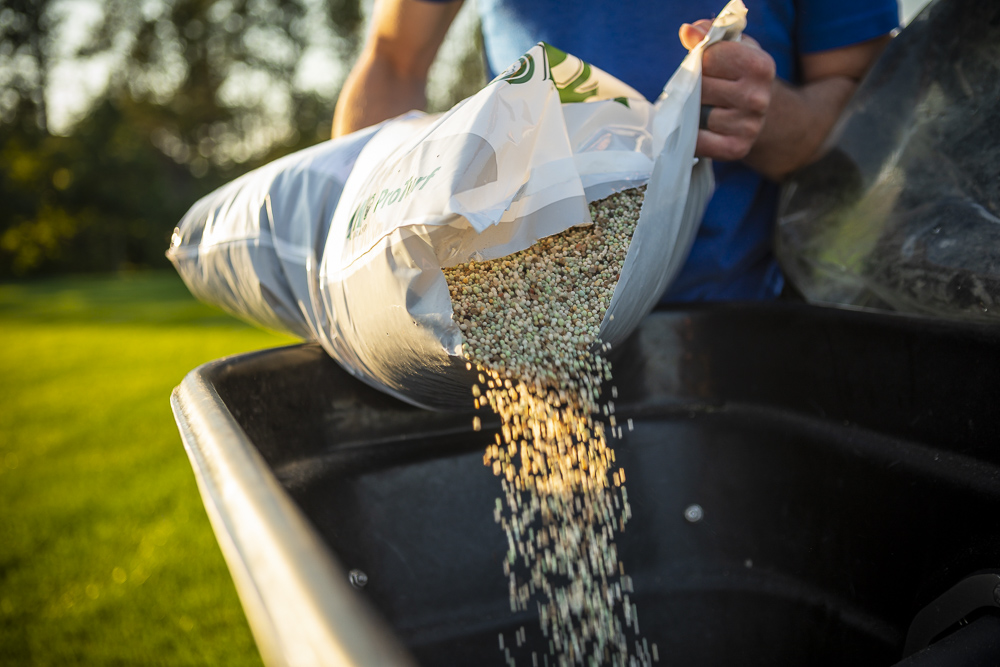
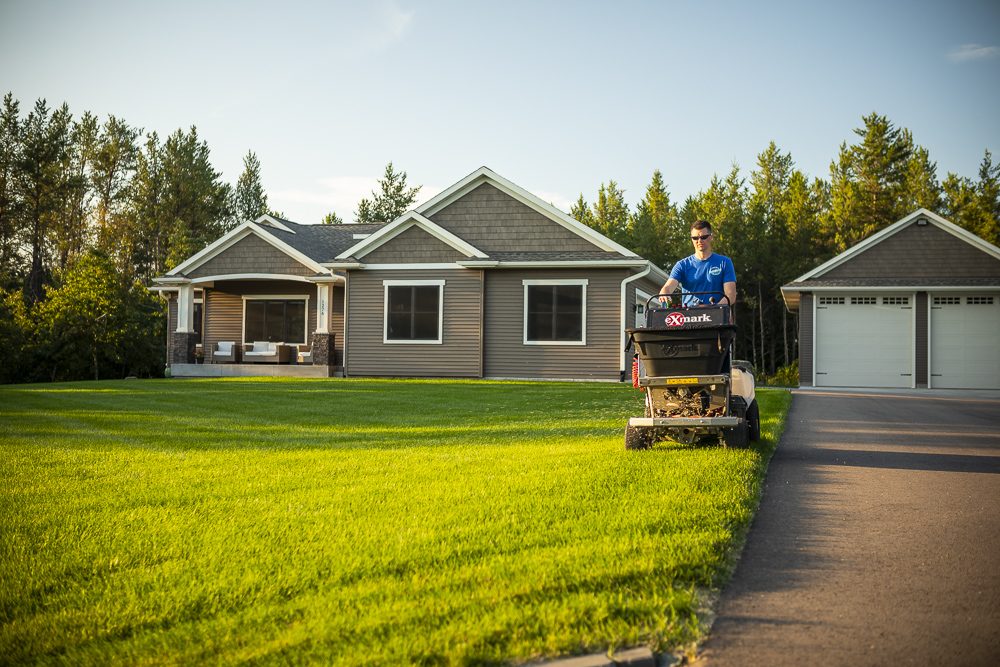
It looks that way because the two things are not the same purchase. The bags are fertilizer. A lawn care program is fertilizer plus weed control, insect and grub control, aeration, overseeding, soil amendments, diagnosis, and someone else deciding what the lawn needs and when. Compare the bag to the fertilizer line of the program and the gap narrows considerably.
What a professional program costs
Lawn service programs in Minneapolis and Eau Claire vary with the size of the lawn, how many services are included, and the results you are after. For a 5,000 square foot lawn, plan on spending between $400 and $1,000 a year. That range covers a basic plan at the low end and a proactive, high-touch program at the top.
Spread over a season of visits, that is the cost of someone measuring the lawn, choosing the right analysis for each application, calibrating equipment, applying at the correct rate, and adjusting as the lawn responds.
The parts of DIY that cost more than the bag
Choosing the right product
The fertilizer aisle is full of numbers: 10-10-10, 24-8-16, 32-0-4. Those three numbers are the percentages of nitrogen, phosphorus, and potassium in the bag, and they are not interchangeable. The right analysis depends on what your soil already has, which is a soil test question, and on the time of year. A starter fertilizer for new seed and a late fall application for an established lawn are different products for good reason.
Phosphorus is worth a specific note here. Both Minnesota and Wisconsin restrict phosphorus fertilizer use on established turf, so the middle number on the bag is not something to pick at random. Soil testing tells you whether you need it at all.
Knowing your square footage
Coverage on the bag is useless if you do not know the area you are covering. Most homeowners do not, and most estimates are off by a wide margin, usually because the whole lot gets counted rather than the actual turf area. Guess high and you overspend and risk burn. Guess low and you underfeed and see no results.
Owning and calibrating a spreader
You need a spreader, and it needs to be calibrated to the product you are using and your walking speed. Most consumer spreaders out of the box are not accurate. An uncalibrated spreader produces either striping, where you can see every pass as a dark green line, or uneven application that shows up as patchy color.
The expensive mistakes
Over-application is the common one. The same nutrients that green a lawn will damage it in excess. Too much nitrogen and the accompanying salt in the soil cause fertilizer burn, which looks like scorched yellow or brown streaks and can kill the grass outright. It most often happens from an overlapping pass, a spreader left open while standing still, or applying a summer feeding at a spring rate.
Timing mistakes are the other category. Heavy nitrogen going into July heat pushes soft growth right when the plant should be conserving. A crabgrass preventer applied in spring will also stop new grass seed from germinating, so a spring fertilize-and-seed plan on a standard program often results in paying for seed that never comes up.
What is included when you hire it out
When you hire RainMaster you are not just buying fertilizer. A program also:
- Controls weeds and crabgrass with the right product at the right stage of the weed's life cycle.
- Protects the lawn from insects and grubs before damage starts rather than after.
- Aerates to relieve compaction and improve how water and nutrients reach the root zone.
- Overseeds to fill thin areas so weeds have less open ground to claim.
- Corrects soil pH with the right amendment, based on a test rather than a guess.
There are three program levels to choose from: a basic plan with the essentials, a mid-level program that handles most challenges and grows a thick, green lawn, and a proactive top-tier program for the fastest results or for a lawn that needs significant help.
So is DIY cheaper
On product cost alone, usually yes. Counting your time, the equipment, the soil test, the trips to the store, and the real possibility of a mistake that costs you a season, the gap is much smaller than the shelf price suggests. The honest answer is that DIY fertilizing can work well if you test your soil, measure your lawn, calibrate your spreader, and follow a schedule. If any of those four is not going to happen, a program is the better value.
A lawn care program also gets you a diagnosis when something goes wrong, which is the part no bag includes.
Bottom line
- A 20-pound bag covering 8,889 square feet runs about $42.97; a full program for a 5,000 square foot lawn runs $400 to $1,000 a year.
- The program price includes weed control, grub control, aeration, overseeding, and soil amendments, not just fertilizer.
- DIY works if you soil test, measure your turf area, calibrate the spreader, and follow correct timing.
- Over-application causes fertilizer burn, and Minnesota and Wisconsin both restrict phosphorus on established lawns.
- Spring crabgrass preventer blocks new grass seed, so a standard program and a seeding plan have to be coordinated.
Frequently asked questions
Is it cheaper to fertilize my own lawn?
On product cost, generally yes. Once you include a spreader, a soil test, your time, and the risk of a misapplication that costs you a growing season, the difference is much narrower than the bag price suggests.
What do the three numbers on a fertilizer bag mean?
They are the percentages of nitrogen, phosphorus, and potassium by weight. A 24-8-16 bag is 24 percent nitrogen, 8 percent phosphorus, and 16 percent potassium. Which analysis you want depends on your soil test and the time of year.
How many times a year should a lawn in Wisconsin or Minnesota be fertilized?
Most established cool-season lawns here do well on a few timed applications spread across the growing season, weighted toward fall when the grass is building roots. The exact number depends on soil, grass type, and whether clippings are returned.
What does fertilizer burn look like?
Yellow to brown scorched streaks or patches, often matching a spreader pass or a spot where the spreader sat. It is caused by excess nitrogen and salt, and it can kill grass rather than just discolor it.
University of Wisconsin Extension, Lawn fertilization.
University of Minnesota Extension, Fertilizing lawns.


