


The Cost of DIY Lawn Care vs. Hiring a Professional in Minneapolis or Eau Claire, WI
On paper, do it yourself lawn care is cheaper, and nobody should pretend otherwise. The useful comparison is not the four bags against the annual program price. It is the total you spend, the result you get, and what your weekends are worth. Here is the arithmetic for Minneapolis and Eau Claire.
First, what a professional program costs
Programs in Minneapolis and Eau Claire vary with lawn size, the number of services included, and how much repair the lawn needs. Plan on roughly $400 to $1,000 a year for a 5,000 square foot lawn.
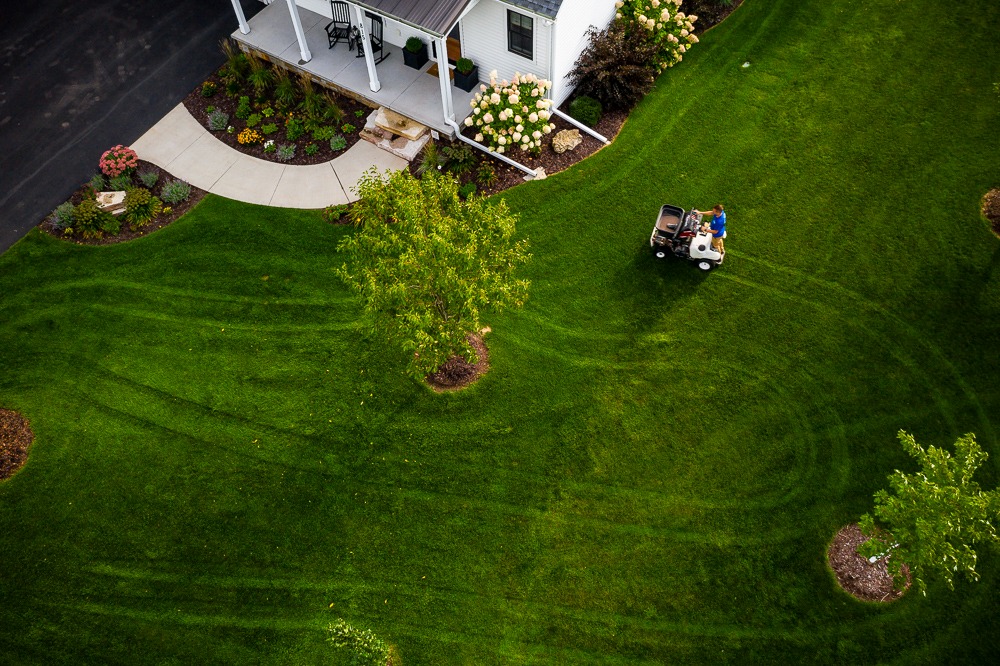
At RainMaster that spread is three published tiers. Healthy Habitat is the basic plan with the elements a better lawn needs. Terrific Turf sits in the middle and is our most popular program, built to grow a thick green lawn and handle most problems. Luscious Lawn is the proactive high end option for the fastest and best results, particularly on a lawn that needs significant work.
Now the actual cost of doing it yourself
Most homeowners start with the four step program sitting on a pallet at the hardware store: four bags applied from early spring through fall, covering crabgrass prevention, fertilization, broadleaf weed control, and some insect control.
- Four step program: about $100. That is the number people compare against, and it is the only line item most people count.
- Spreader: $40 to $70 for a basic model. One time, but it is real.
- Grass seed: around $20 a bag to fill thin spots, and most lawns need more than one bag.
- Grub control: $20 to $50 a bag. Four step programs do not include preventive grub control, and plenty of lawns here need it.
- Additional insect control: $20 to $40 a bag for anything the four step program does not cover.
Add it up and the math still favors the do it yourself route on materials alone. That is not in dispute. What the materials list leaves out is everything that decides whether the lawn actually improves.
The pile in the garage
Look in enough garages and you find the same thing: partially used bags of fertilizer, weed control, seed, and grub killer from two seasons ago. Nobody plans that. Life gets in the way, one weekend turns into the next, and the application window closes.
That is the hidden cost of do it yourself lawn care and it is the biggest one. Lawn care is a timing business. Crabgrass pre-emergent applied in June does nothing, because the seed germinated in May. Grub prevention applied in August does nothing about larvae already feeding. A program is not four bags, it is four bags applied in the right weeks, and the product you did not get to is money spent for zero result.
Confusion in aisle six
The lawn aisle is not organized to help you decide. Which seed blend for a shaded north side? Which fertilizer analysis for this time of year? Which weed killer for creeping Charlie as opposed to clover? Do you even have grubs, or is that brown area an irrigation problem?
Guessing wrong is not neutral. The wrong product at the wrong rate burns a lawn, and a herbicide applied at the wrong temperature either does nothing or damages the grass along with the weed. Most of the damaged lawns we are called out to look at were damaged by a well intentioned application.
Does the lawn actually need what is in the bag?
A four step program assumes the only thing standing between you and a thick lawn is fertilizer and weed control. Often it is not.
A green lawn is a function of roots and soil. If the soil is compacted, the lawn needs aeration before it needs anything else, because roots cannot take up water or nutrients in soil with no air space. If pH is out of range, nutrients in the soil are unavailable to the plant and fertilizer will not register. The lawn might need iron, magnesium, humic acid, or organic matter rather than more nitrogen.
Our fertility programs go past the nitrogen, phosphorus, and potassium in a store bag to target what the lawn is actually short on. We are also phosphorus free, which matters in a region with this much surface water to protect.
The bottom line is results
Three places where product quality shows up in the lawn:
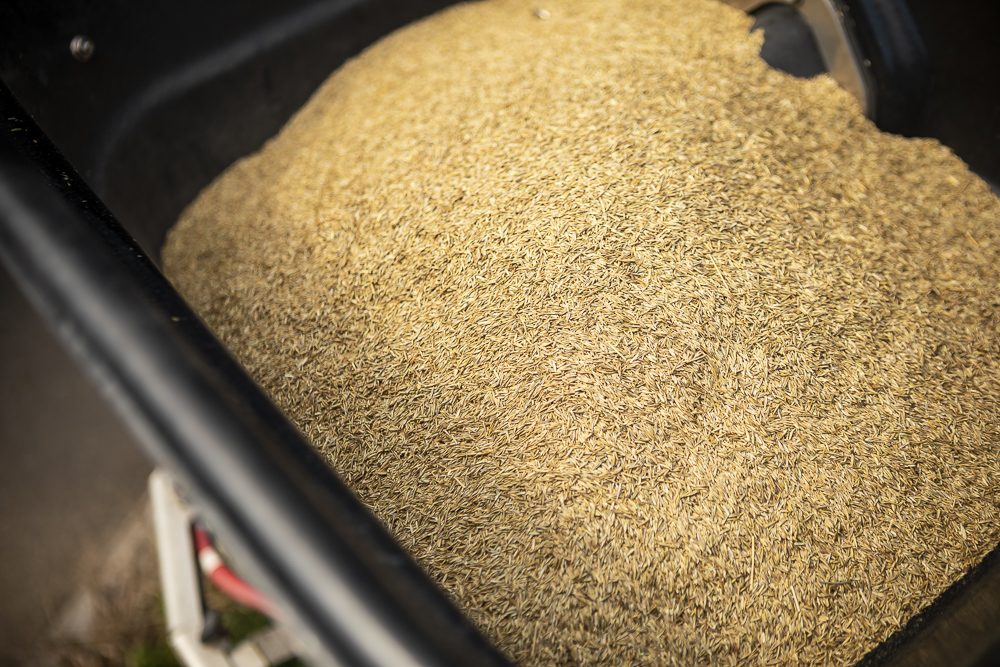
Seed. Bargain seed frequently includes weed seed and older cultivars. Premium seed costs more per bag and produces better color, better disease resistance, and fewer weeds to fight later.
Fertilizer. We use premium granular formulations rather than the liquid most programs apply. Granular breaks down over weeks, so the lawn is fed steadily instead of spiking and crashing.
Herbicide. Not every weed killer kills every weed, and some perennials shrug off consumer products entirely. Creeping Charlie and Canada thistle need professional grade materials applied more than once in a season to make progress.
What else you are buying
No equipment to store or maintain. No bags leaking in the garage. No calendar reminders you will reschedule twice. And an extra set of trained eyes on the property five times a year.
That last one gets undervalued. When you are hauling a spreader around, you are trying to finish. When our specialists are on the lawn, they are reading it. Early signs of grub activity, Japanese beetle feeding, a disease starting in a shaded low spot, or a sprinkler zone leaving a dry strip all get caught while they are still small and cheap to fix.
Where each option makes sense
Do it yourself genuinely works for a homeowner who enjoys the work, keeps a calendar, and has a lawn without underlying soil problems. It does not work well for a lawn that needs repair, or for someone who will miss the application windows. If you tried it, got frustrated by the time and the lack of results, and are done with it, you have plenty of company. A lot of our customers started exactly there.
Bottom line
- A four step store program runs about $100, plus $40 to $70 for a spreader, roughly $20 a bag for seed, $20 to $50 for grub control, and $20 to $40 for additional insect control.
- A professional program runs roughly $400 to $1,000 a year for a 5,000 square foot lawn.
- On materials alone, do it yourself is cheaper. The cost that does not show up on the receipt is missed timing, and product applied outside its window does nothing.
- A four step program cannot fix compacted soil or a pH out of range, which are the limiting factors on many lawns here.
- Professional seed, granular fertilizer, and professional grade herbicides are where the result difference shows up, especially on perennial weeds like creeping Charlie and Canada thistle.
Frequently asked questions
Is DIY lawn care actually cheaper?
On materials, yes. A four step program plus a spreader, seed, and grub control still costs less than a professional program. The comparison changes when applications are missed, when a product is applied at the wrong time, or when the lawn needs aeration or pH correction that store products do not address.
What does a four step store program not cover?
Preventive grub control, aeration, soil pH testing and correction, seed, and anything beyond basic broadleaf weed control. Tough perennial weeds generally need professional grade materials applied more than once in a season.
Can I damage my lawn with store bought products?
Yes, and it is common. Fertilizer applied at the wrong rate burns turf, and herbicide applied at the wrong temperature either fails or injures the grass along with the weed. Most of the damage we are called to diagnose came from a well intentioned application.
Why is professional grass seed more expensive?
Because of what is in the bag and what is not. Bargain seed often contains weed seed and older cultivars. Premium seed uses current cultivars selected for color, density, and disease resistance, matched to sun and soil conditions.
University of Wisconsin Division of Extension, Lawn Fertilization.
University of Minnesota Extension, Seeding and Sodding Home Lawns.


