


How to Control & Prevent Lawn Fungus With Professional Lawn Care Programs
Lawn fungus is mostly an appearance problem, and it rarely kills a lawn outright unless it is left to run. What matters is identifying which disease you have, because the treatment is almost always a change in conditions rather than a product.
What causes lawn fungus
Fungal pathogens live in the soil and thatch year round and do nothing until conditions favor them. Three things have to line up: moisture sitting on the leaf, temperatures in the range the specific pathogen prefers, and grass that is already stressed by compaction, drought, scalping, or a nutrient shortage.
Temperature range is the part most people get wrong. Different diseases have very different windows here. Snow mold develops under snow cover in winter. Red thread is a cool, wet-weather disease, active in spring and fall. Brown patch and dollar spot are warm-season problems. So "fungus season" is really the whole growing season, with different diseases taking turns.
How to tell fungus from everything else
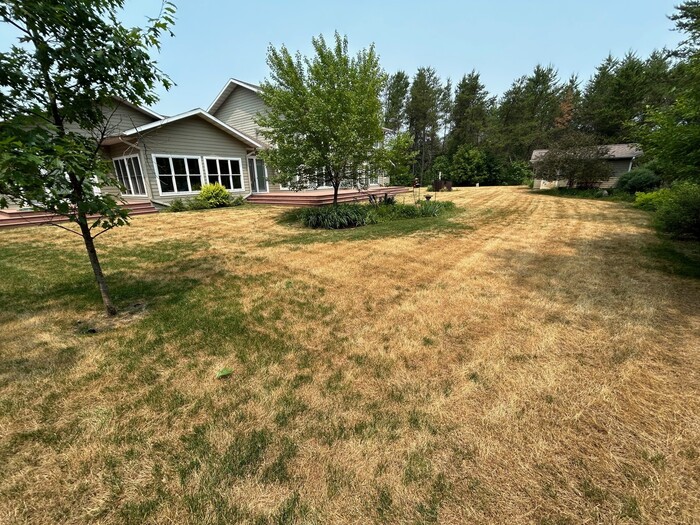
Fungal damage shows up as patches, rings, or spots with defined edges, often with visible lesions on individual blades if you kneel down and look. Drought stress is different: it covers whole exposed areas, follows sun and slope, and greens back up after watering.
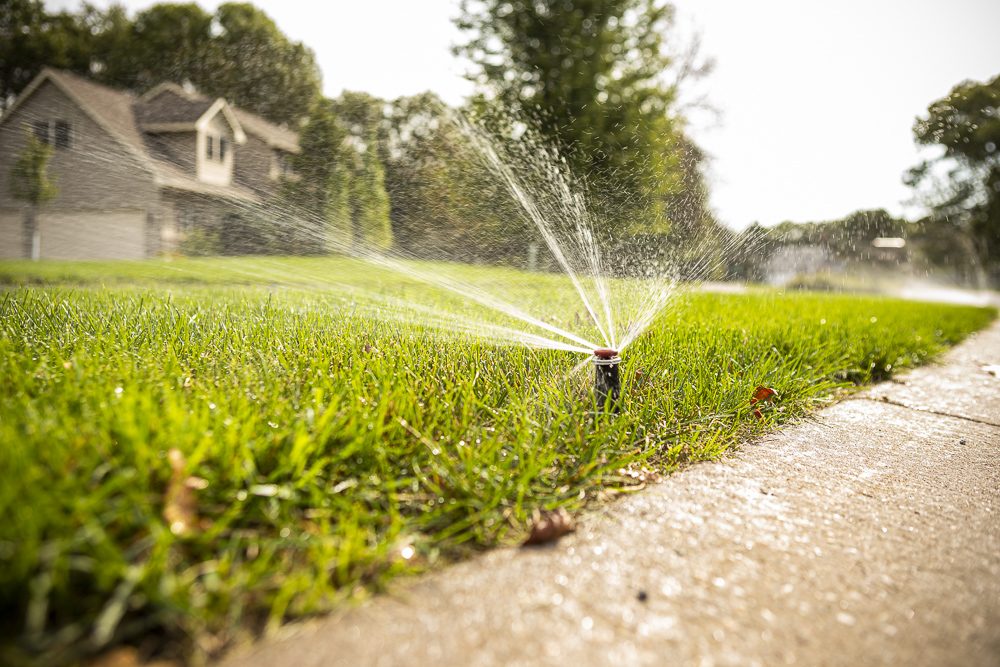
That distinction matters because the instinct with any brown patch is to water it, and water is the one thing you should not add. Extra water keeps the canopy wet, which is the condition the pathogen needs, and irrigation can move spores into parts of the lawn that were not affected. If a brown area appears in a lawn that is already getting plenty of water, suspect disease before drought.
The diseases we see in Upper Midwest lawns
Brown patch
Large, irregular patches that appear in humid summer weather, especially when nighttime temperatures stay warm and the canopy never dries. Patches can develop within a day or two and run from a few inches to several feet across. Lawns pushed with nitrogen heading into summer heat are the most susceptible.
Dollar spot
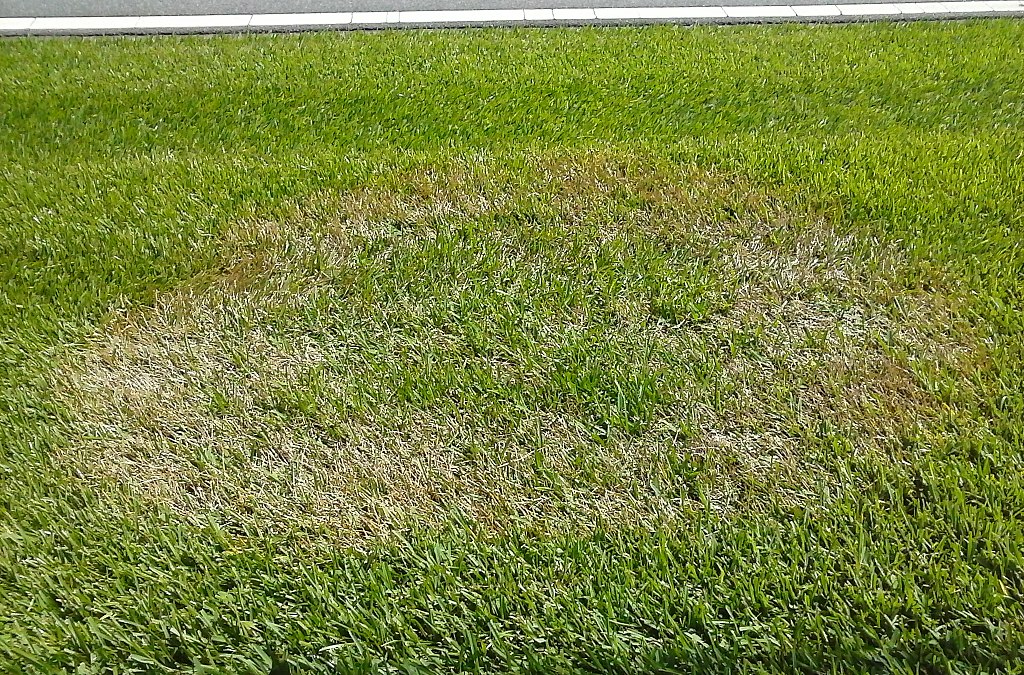
Small, bleached, roughly circular patches that start about the size of a silver dollar and can expand past a foot and run together. Look for a reddish-brown border and a slightly sunken appearance. It favors heavy dew, warm days with cool nights, and lawns that are short on nitrogen.
Red thread
Pink or reddish threadlike strands on the leaf tips, with tan or pinkish patches from a few inches to a couple of feet across. This is a cool, wet-weather disease, so expect it in spring and fall rather than midsummer. It is strongly associated with low nitrogen, and it rarely kills the plant; adequate fertility usually grows it out.
Necrotic ring spot
One of the more serious diseases in Kentucky bluegrass. It forms circular patches of dead grass, often with surviving green grass in the middle, which gives the frog-eye look. It starts as light green or straw-colored areas that die back, and it recurs in the same places year after year if the underlying conditions are not corrected.
Rust
Orange to rust-colored powder on the blades that comes off on shoes and mower tires. Spores move easily on wind and equipment. It is cosmetic and usually signals slow growth, most often late summer on a lawn that has run out of nitrogen.
Leaf blight
A group of leaf diseases that discolor blades and kill them from the tip down, leaving straw-colored patches. Common in Eau Claire lawns and generally tied to extended leaf wetness.
Snow mold
Circular gray or tan matted patches, a few inches to a foot or more across, revealed as snow melts in spring. It develops when snow covers unfrozen ground for an extended period, and it is worst where plow and shovel piles sit the longest.
Getting rid of it
Many of these clear on their own when the weather shifts out of the pathogen's range, though that can take several weeks. Cultural correction is the first line of treatment and often the only one needed:
- Fix the watering. Deep, infrequent cycles finished by sunrise so the canopy dries during the day. No evening watering.
- Raise the mowing height to three to four inches and keep the blade sharp. Torn leaf tissue is an entry point for infection.
- Correct the nutrition. Red thread, dollar spot, and rust are all associated with nitrogen shortage. Brown patch is the opposite, worsened by heavy nitrogen going into heat.
- Improve airflow. Prune low branches and thin crowded shrubs so dew burns off in the morning instead of sitting until noon.
- Relieve compaction. Core aerate annually and keep thatch under half an inch.
- Collect clippings in an actively diseased area while the disease is running, which reduces the amount of infected tissue being moved around. Note that returning clippings does not cause thatch; clippings are mostly water and break down quickly.
Fungicides are a tool, not a substitute. Think of them like a course of medication: one application is rarely enough, and repeat treatments add up in cost. They make the most sense preventively, on a lawn with a documented history of a specific disease, applied ahead of the high-risk window rather than after symptoms appear. Curative treatment works best caught early, while the affected area is small and still spreading. Once turf is dead, a fungicide protects what is left but will not bring back what is gone.
Keeping it from coming back
Where a stand thinned but survived, healthy grass usually fills back in. Where patches are fully dead, aerate and overseed in the late August to mid September window, and consider seed blends with better disease resistance for that site.
The step people skip is the diagnosis of the cause. If a sprinkler head soaks a shaded corner every evening, or a low spot holds runoff, or the mowing height was too short all summer, the same disease returns in the same place next year. Correct the condition first, then repair the turf. A lawn care program with regular visits catches those conditions, and an irrigation inspection catches the watering ones.
Bottom line
- Fungus needs leaf wetness, a favorable temperature range, and stressed grass. Remove any one and most problems stop.
- Do not water a suspected disease patch. Extra water sustains the pathogen and irrigation spreads spores.
- Identify the disease first. Red thread and snow mold are cool-weather problems; brown patch and dollar spot are warm-weather ones.
- Nitrogen cuts both ways: too little drives red thread, dollar spot, and rust, while too much going into heat drives brown patch.
- Fungicide works preventively, timed ahead of a known high-risk window, and repeat applications are usually required.
Frequently asked questions
Will lawn fungus kill my grass?
Usually not, if it is caught and the conditions are corrected. Most of these diseases damage leaf tissue and thin the stand, and the grass recovers. Necrotic ring spot is the exception worth taking seriously, since it kills in patches and recurs annually.
Should I water a brown patch more?
No. If the lawn is already well watered, more water makes a fungal problem worse and can carry spores into clean areas. Water deeply and infrequently and finish by sunrise instead.
Do grass clippings cause lawn disease or thatch?
Clippings do not cause thatch; they are mostly water and decompose quickly. During an active disease outbreak it is reasonable to collect clippings from the affected area to avoid spreading infected tissue, then go back to returning them.
Is one fungicide application enough?
Rarely. Fungicides work on a treatment interval, and a single application usually does not carry a lawn through a high-risk window. That is why correcting watering, mowing, and fertility comes first.
University of Wisconsin Division of Extension, Red Thread.
University of Wisconsin Division of Extension, Horticulture lawn and turf resources.


