


Grubs, Mosquitoes, and Ticks: Identifying & Treating Insects in Your Yard

Three yard pests account for most of the calls we get: grubs feeding on roots underground, mosquitoes making the patio unusable, and ticks waiting in the vegetation around the edge of the lawn. Each one needs a different approach, and for two of them the timing of treatment matters more than the product.
Grubs in your lawn
Grubs do the most damage of any lawn insect in this region, and they do it out of sight. They are the larvae of Japanese beetles, June beetles, masked chafers, and related beetles: white, C-shaped, soft-bodied, with three pairs of legs near the head. They live in the top few inches of soil and feed on grass roots and organic matter.
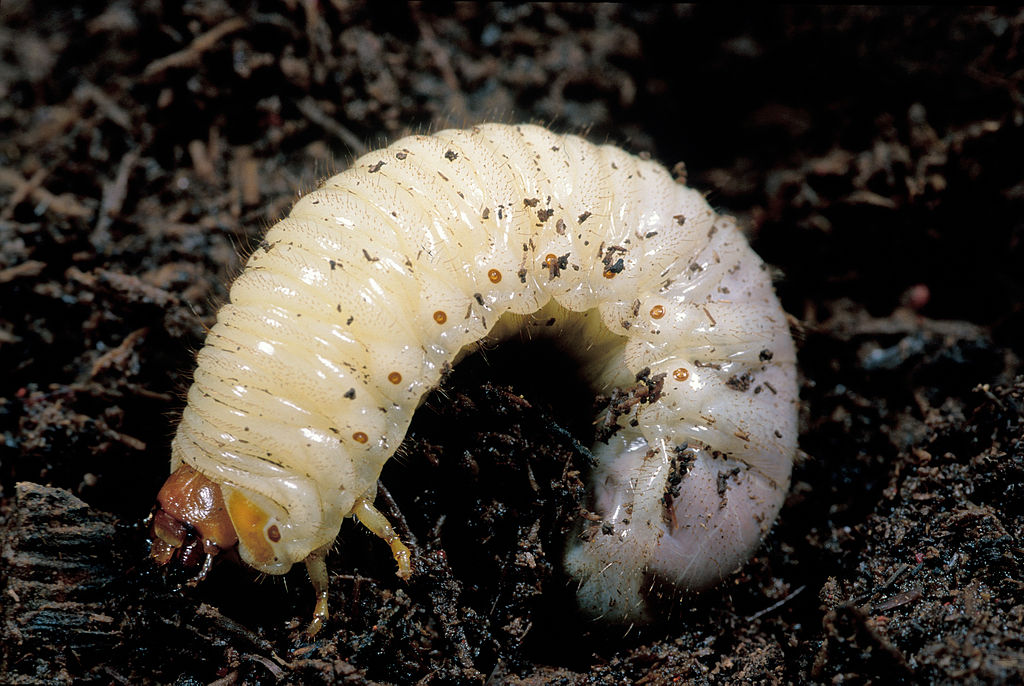

Because they sever roots rather than chew leaves, the damage appears suddenly. A lawn looks fine, then a week later there are irregular brown, wilted patches that do not respond to watering. The grass was already cut off from its water supply before anything showed on the surface.
How to confirm it is grubs
- Tug test. Grab a handful of the affected turf and pull. If it lifts and rolls back like loose carpet with no root resistance, grubs have eaten the roots.
- Spongy feel. Walking across a grub-damaged area feels soft and springy, because the sod is no longer anchored.
- Animal digging. Raccoons, skunks, and birds tearing up sections of lawn are usually after grubs, and the digging follows where the population is heaviest.
- Dig and count. The definitive check: cut a square foot of sod a few inches deep, fold it back, and count. Several per square foot in an otherwise healthy lawn is tolerable; a heavy population is what causes patch loss.
What to do about grubs
Prevention is the better play in Wisconsin and Minnesota, because it is cheaper and it protects the lawn before any roots are lost. At RainMaster we apply Grub Guard early, on the first spring visit, and the material stays active through the growing season, including the second wave of feeding in late summer and fall. Not every product lasts that long; some have weakened by the time fall feeding starts.
It is worth being accurate about the mechanism, because the usual shorthand is wrong. A preventive product does not kill eggs. It is placed in the soil and root zone ahead of the hatch and kills the young larvae soon after they emerge and begin feeding, while they are too small to cause visible damage. That is why application timing, not product strength, determines whether it works.
Grub Guard also uses a material chosen for lower risk to bees than the cheaper options many companies rely on, which matters because the same lawns host clover and other flowering plants pollinators visit.
If you missed the spring application
If you are reading this in late summer or fall with active grub damage, the approach changes. Late-season control calls for a curative product, which works on larger larvae already feeding. Curative materials generally cost more than preventive ones, and you should expect to repair the damaged turf as well, since those roots are gone. Overseed the dead areas, then schedule preventive Grub Guard the following spring so you are not repeating the cycle.
Mosquitoes in your yard
Mosquito control works best as a barrier treatment on the vegetation where adults rest during the day, rather than as a fog over open lawn. Adults spend the daylight hours on the undersides of leaves, in shrubs, in tall grass, under decks, and in other cool, shaded, humid spots. Treating those surfaces reduces the population that comes out in the evening.
You do not need elaborate equipment such as an automatic misting system. A properly applied barrier spray on a regular interval produces a noticeable reduction in activity.
Two honest notes. All-natural mosquito products generally do not perform as well as conventional ones and typically cost more, so we do not offer them. And conventional mosquito materials present very low risk once they have dried, which takes an hour or two.
Removing standing water is the other half of the job and it is free. Mosquitoes breed in small amounts of water: clogged gutters, tarps, wheelbarrows, pot saucers, toys, bird baths, and low spots that hold runoff. Emptying anything holding water weekly cuts down what hatches on your own property.
Yard treatment for ticks
Mosquito treatments help with ticks, because both pests favor the same habitat: damp, shaded, vegetated areas with cover. That means one service addresses both.
It also helps to know how ticks actually find a host, because the common story is wrong. Ticks do not jump, fly, or drop out of trees. They climb to the tip of low vegetation, usually within a couple of feet of the ground, hold on with their back legs, and extend their front legs to grab anything brushing past. This behavior is called questing. It is why exposure happens along tall grass, leaf litter, brush lines, and the transition between lawn and woods rather than in the middle of a mowed lawn.
That is also why treatment is targeted at the perimeter and the harborage rather than broadcast across the yard:
- Undersides of plant leaves and the interior of shrubs
- Shaded and consistently damp areas
- Under decks and porches
- Along tree lines and the edge where lawn meets brush
- Wood piles and leaf litter
Keeping the lawn mowed, clearing leaf litter, and maintaining a clean edge between turf and woods reduces tick habitat on its own and makes treatment more effective.
What RainMaster charges, and what it covers
A lot of companies bill mosquito control and tick control separately even though the same material goes down in the same places for both. We treat it as one service at one price.
Mosquito control starts at $579 for the season, depending on yard size, and includes six treatments spaced roughly every three weeks from spring through fall. Pricing for this and our other services, including lawn care and irrigation, is published on the site so you do not have to call to find out what something costs.
Bottom line
- Confirm grubs with the tug test and a square-foot dig before treating. Sudden brown patches that do not respond to water are the signal.
- Preventive grub control kills young larvae just after they hatch, not eggs, so it has to be applied before the hatch. RainMaster applies Grub Guard on the first spring visit.
- Missed the spring window? A curative product is needed, it costs more, and the dead turf still has to be overseeded.
- Ticks quest from low vegetation and cannot jump, fly, or fall from trees, so perimeter and harborage treatment is what works.
- One RainMaster treatment covers both mosquitoes and ticks, starting at $579 for the season with six visits about three weeks apart.
Frequently asked questions
How do I know if I have grubs or just drought stress?
Drought stress covers broad exposed areas and greens up after watering. Grub damage is patchy, does not respond to water, and the sod pulls up like loose carpet because the roots are gone. Cut back a square foot of turf and count the larvae to be sure.
When should grub control be applied in Wisconsin and Minnesota?
Preventively, in spring to early summer, ahead of the egg hatch, so the material is in the root zone when the young larvae start feeding. After damage appears in late summer or fall, you need a curative product instead.
Does mosquito spraying also kill ticks?
It helps with both, because mosquitoes and ticks use the same damp, shaded, vegetated habitat and the treatment goes to those same areas. RainMaster covers both under one service rather than charging separately.
Can ticks fall on me from a tree?
No. Ticks cannot jump, fly, or drop from above. They climb low vegetation, typically under a few feet high, and wait with their front legs extended to grab a host walking past. Exposure happens along tall grass, brush, and leaf litter.
University of Minnesota Extension, Ticks.
University of Wisconsin Extension, Japanese Beetle.


