


How to Choose The Best Lawn Service for Your Needs: Tips for Eau Claire Homeowners

Lawn care companies in Eau Claire look nearly identical on a quote sheet, and the things that actually separate them are not on it. What matters is who shows up, what they put down, whether the program prevents problems or covers them up, and whether you can get a straight answer when you call. Here is what to ask.
Who is actually going to be on your lawn?
Start with the people, because every other difference flows from them. Does the company employ technicians year round or hire seasonally? Do any of them hold horticulture degrees or state applicator certifications? Is the experience measured in years or in weeks of training before the season starts?
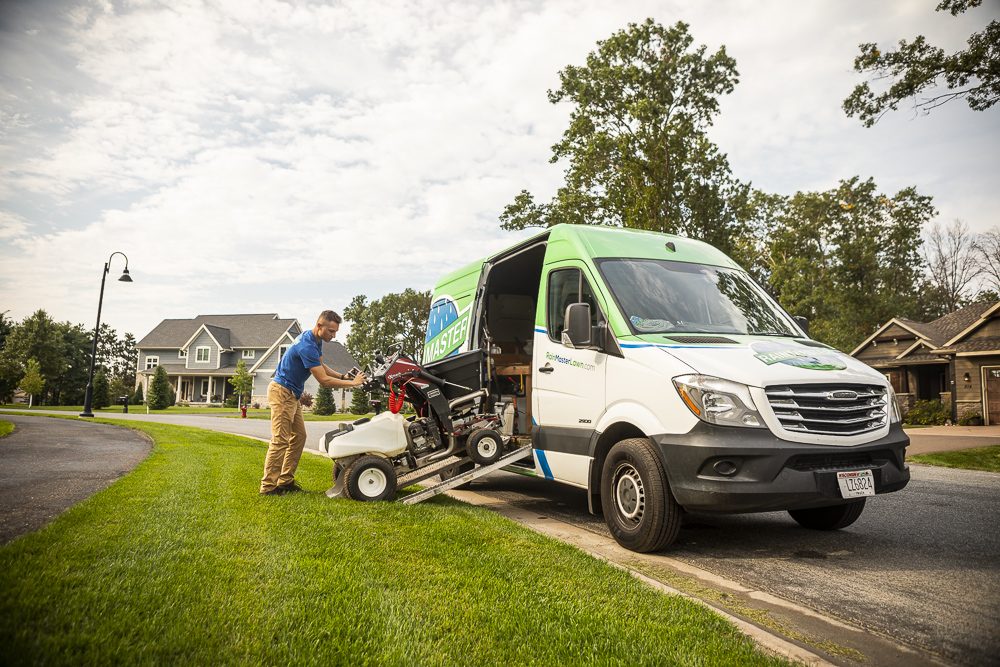
A company confident in its team will answer this without hesitating. At RainMaster, lawn care specialists work year round and spend the off-season on training: coursework, certifications, and webinars with turf professionals elsewhere in the country. That shows up in the field as faster, more accurate diagnosis, because disease, insect, and nutrient problems look similar at a glance and get treated very differently.
This level of staffing costs more, and the price reflects it. That is a reasonable trade when the alternative is a seasonal hire applying product to a problem nobody identified.
Is the program proactive or reactive?
Some programs are built to respond to what is visible. Better programs are built to prevent it. The difference is worth asking about directly: what do you do to keep problems from starting, not just to treat them once they show?
Soil is the usual example. You can apply plenty of fertilizer to a lawn and see very little result if soil pH is outside the range where cool-season turf can take up nutrients, roughly 6.0 to 7.0. Without a soil test, nobody knows. A proactive program tests, corrects what the test shows, and feeds on a schedule; a reactive one keeps selling applications.
Ask what triggers a recommendation for aeration, for overseeding, for a pH correction, or for grub protection. If the answer is the same for every lawn on the route, it is not a plan for your lawn.
Will you get real recommendations?
Anyone can run a spreader. What you want is a technician who notices that the north side of the house holds dew until noon, that one strip stays compacted from the garbage cans, that the thin area under the maple is a light problem rather than a fertility problem, and who tells you so.
Ask what kinds of recommendations they typically make and how you receive them. A note on an invoice is fine. Nothing at all means nobody is really looking.
Can you reach your actual specialist?
Not a call center. The person who services your lawn. Questions come up between visits: a spot that appeared after a storm, whether to water before or after an application, why the same weed keeps returning in the same place. Being able to ask the person who was standing on the lawn is worth more than a ticket number.
What products does the program actually use?
Liquid weed control, granular fertilizer
Combination weed and feed products are convenient and imprecise. They rely on granules landing on and sticking to weed foliage, which means coverage is hit or miss, and one herbicide does not control every broadleaf weed in a Wisconsin lawn. Liquid weed control is applied to the weeds that are actually there, and the mix can be matched to what is growing.
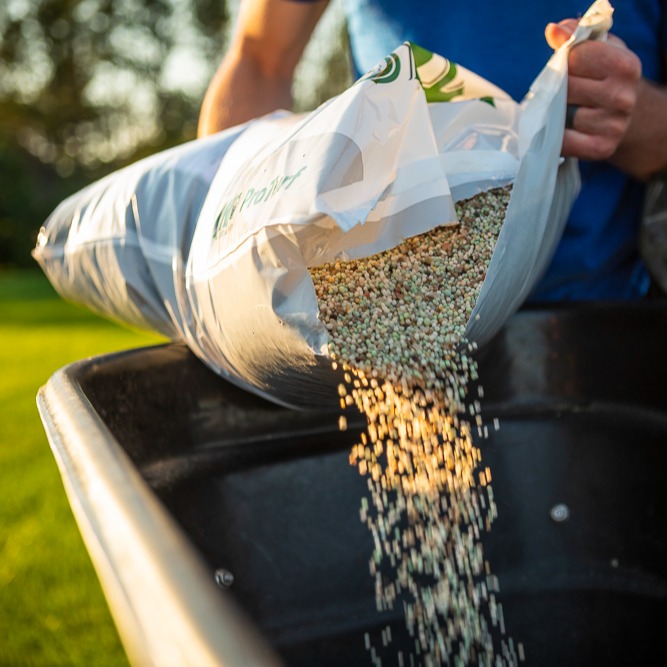
For fertilizer, granular products cost more than liquid but release nutrients gradually over weeks, which gives steadier growth and color than a quick flush followed by a lull. Steady feeding is also easier on the plant going into summer heat than a surge of soluble nitrogen.
Grub control and pollinators
Ask specifically what grub product is used and what its pollinator profile is. Cheaper grub materials carry higher risk to bees and other pollinators, and lawns are not sterile: clover, dandelion, and nearby plantings bring pollinators onto the turf. The lower-risk products cost noticeably more, so a company advertising very cheap grub control is usually using the cheap material. How a company answers this question tells you something about how it answers the questions you will not think to ask.
Seed grade
Most homeowners never ask about seed, and it is one of the highest-leverage questions. Bargain seed carries more inert matter, more off-type species, and sometimes weed seed, all of it disclosed on the tag if anyone reads it. Premium seed costs more per pound, germinates at a higher rate, and uses cultivars bred for better disease resistance and drought tolerance. A company that buys good seed will say so and will show you the tag.
Do not shop on number of visits
More visits is the easiest thing to compare and one of the least meaningful. Two programs with the same visit count can differ enormously in what goes down each time, who applies it, and whether anything is diagnosed along the way. Compare what happens per visit and what is included across the season, not the count.
Communication is the part people complain about most
The most common complaint about lawn companies is not results. It is not knowing when someone is coming, and not getting calls returned. Advance notice matters practically: you need to move toys, put the dog inside, and leave the gate unlocked.
RainMaster sends email and text notifications before service, and technicians call after they finish to say what was done and flag anything they saw. It is a small thing that is rare in this industry.
How to run the comparison
Put the same questions to every company and write down the answers: who services the lawn and their training, what the program prevents rather than treats, what products are used and why, what the grub material is, what seed grade they buy, what notification you get, and what the total annual cost is. The answers sort the companies quickly.
RainMaster has worked on lawns in Eau Claire and the Chippewa Valley since 1999. Our lawn care programs and pricing are published, so you can compare without a sales call. See locations for our service area.
Bottom line
- Ask who services the lawn, whether they are year-round staff, and what training and certifications they hold.
- Ask what the program prevents, not just what it treats. A soil test and a correction plan are the tell.
- Liquid weed control targets the weeds present; granular fertilizer releases over weeks instead of flushing.
- Ask specifically about the grub product's risk to pollinators and about seed grade, and ask to see the seed tag.
- Ignore visit counts. Compare what happens per visit, what notification you get, and the total annual price.
Frequently asked questions
What questions should I ask a lawn care company in Eau Claire?
Who services the lawn and what training they have, whether the program is preventive or reactive, whether they soil test, what weed control and fertilizer types they use, what grub product and its pollinator risk, what seed grade they buy, what advance notice you get, and the full annual cost.
Is liquid weed control better than weed and feed?
It is more precise. Weed and feed depends on granules sticking to weed leaves, so coverage is uneven, and a single herbicide will not control every broadleaf weed in a northern lawn. Liquid control is applied to the weeds actually present and can be mixed for them.
Why does premium grass seed matter?
Cheap seed carries more inert matter, off-type grasses, and sometimes weed seed, and it germinates at a lower rate. Premium seed uses cultivars bred for disease resistance and drought tolerance. The seed tag discloses all of it, so ask to see it.
Does more visits mean better lawn care?
No. Visit count is easy to compare and nearly meaningless on its own. What goes down on each visit, who applies it, and whether anything is actually diagnosed matter far more than how many times a truck pulls up.
University of Wisconsin Extension, Lawn Fertilization.
University of Minnesota Extension, Fertilizing Lawns.


