


Altoona, WI Lawn Care & Irrigation Case Study
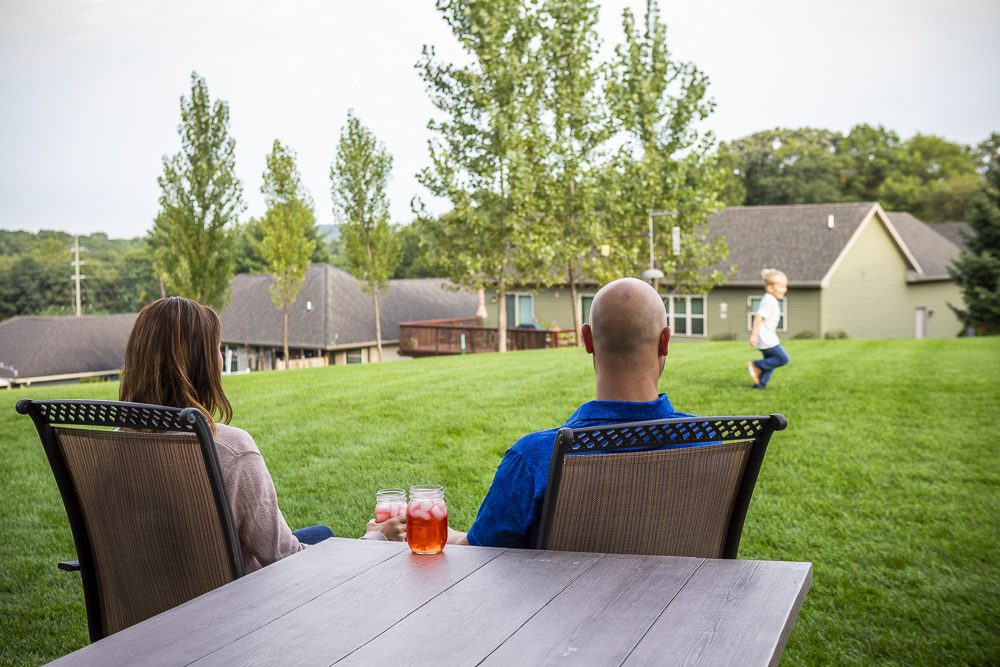
When the Benedicts moved into their new home in Altoona, they already knew what they wanted from their yard, and they already knew who they wanted handling it. What followed is a straightforward example of what a lawn looks like when the lawn care and the irrigation are run by the same company on the same schedule.
The Healthy Habitat lawn care program
The Benedicts started on Healthy Habitat, our basic lawn care program. It covers the essentials a lawn in the Chippewa Valley needs to be genuinely healthy rather than just green for a few weeks:
- Organic-based granular fertilizer
- Crabgrass prevention plus a booster application
- Weed shield
- A pH test
The pH test is the part homeowners tend to skip on their own, and it is the one that explains a lot. Soil chemistry determines how much of the fertilizer you apply the grass can actually take up. Testing first means the nutrition plan is built on what the soil is doing rather than on a guess.
Irrigation service in Altoona: the Efficient Essentials
On the irrigation side they went with Efficient Essentials, which covers spring activation and fall winterization. Both visits are more than a switch being flipped.
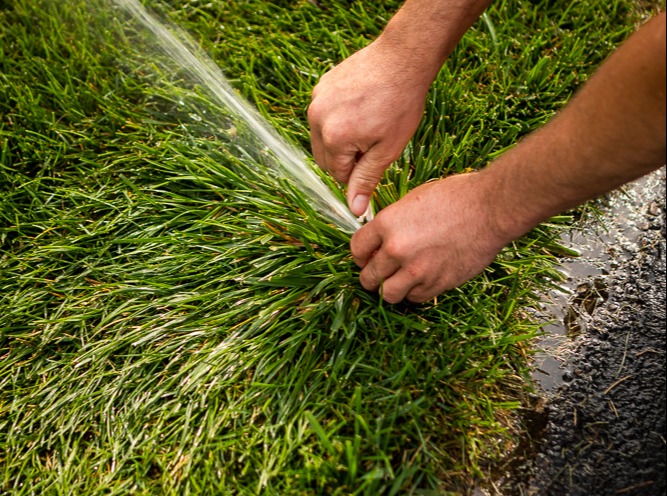
At activation, technicians charge the system, test the backflow assembly, walk every zone, check each head for arc, rotation, and clogging, and look for winter damage. At shutdown, they clear the water out of the pipes, valves, and heads before the ground freezes. In a climate where a missed blowout turns into a spring repair bill, those two visits are what keeps a system from degrading year over year.
A smart irrigation controller
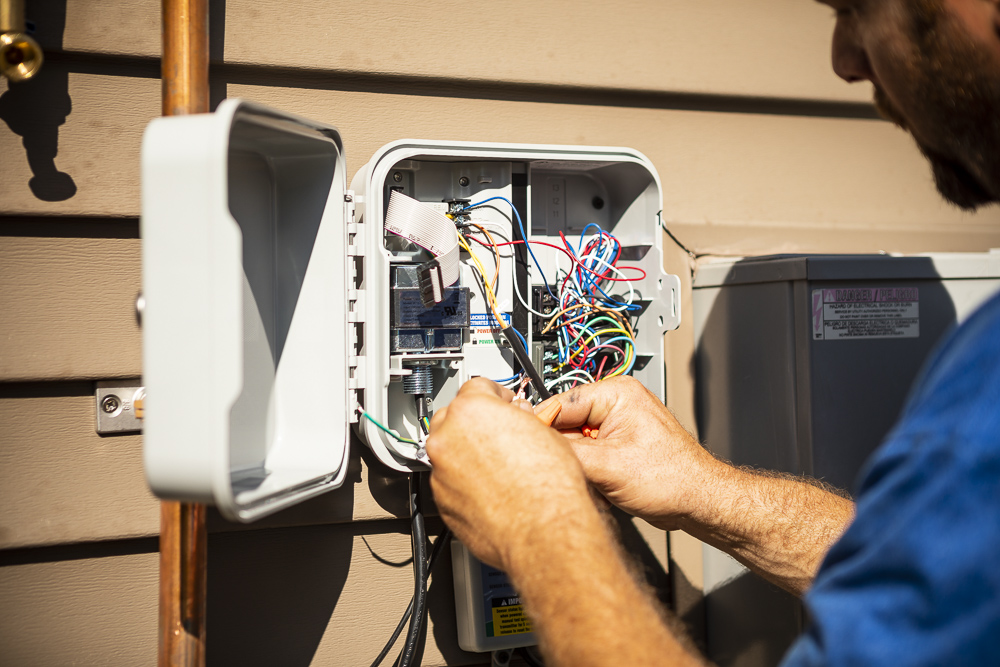
One of the first recommendations we made was upgrading to a smart irrigation controller. Instead of running a fixed schedule whether the lawn needs it or not, the controller waters when the lawn actually needs water and in the amount it needs. It skips a cycle if rain is in the forecast, if it is too windy for the spray pattern to land where it should, or if it is too cold for watering to do any good.
Benedict took to it immediately. "It even shows us our water usage and water savings," he says. "And I can control it right from my phone."
That is the practical payoff. A controller that adjusts itself removes the one maintenance task homeowners almost never keep up with, which is reprogramming the schedule every time the season changes. The result was less hassle, a lower water bill, and less water used.
Lawn aeration every fall
The Benedicts also have their lawn core aerated every fall. Aeration pulls plugs of soil out of the lawn, which relieves compaction and lets air, water, and nutrients reach the root zone instead of running off the surface.
Closing the season with aeration is deliberate. Cool-season grasses in this region put most of their root growth on in fall, so opening the soil right before that happens is the best use of the machine. Healthier roots build a thicker stand, and a thick stand is what resists pests and disease the following summer. It is also the most effective fix for thin areas, better than throwing seed at bare patches in spring.
They follow the recommendations
Part of why this yard works is that when our technicians make a recommendation, the Benedicts act on it. Keeping the mower blade sharp is a good example of a small thing with outsized effect.
A dull blade rips the top off the grass plant and leaves a jagged, torn edge. That torn tissue heals slowly and is an open door for pests and disease. A sharp blade makes a clean cut, which heals faster and keeps more healthy leaf surface doing photosynthesis, which is what actually makes a lawn green.
The other half of mowing correctly is height. No more than a third of the grass blade should come off in a single mowing. Cutting too low with a dull blade at once starves the plant and invites exactly the problems a lawn care program is trying to prevent.
Healthy lawn, happy customers
"RainMaster's customer service is top notch," Benedict says. "They always show up. They're very professional. They let me know exactly what they did when they were here. They let me know of any recommendations they have.
"When I needed a sprinkler head replaced because I hit it with the lawn mower, they were prompt in getting it taken care of," he says. "They get us scheduled for irrigation start-up in the spring and shut-down in the fall. They schedule all our services. I don't even have to worry about it."
The convenience is the point for a household with this much going on. "My brother and I own a business together, so that's a lot of work," he says. "I have a young family. It's really nice to have this taken care of. I do the mowing, and that's about it."
The yard earns its keep with an active family of three, including the Benedicts' 6-year-old son. "We play sports in the yard," Benedict says. "Our son rides around in the grass on his little lawn tractor. The neighbor kids come over to have water fights. You can walk barefoot without worrying about stepping on some dry, crunchy weed."
Next up is a new red lab puppy joining the family. Benedict trained their last dog to use one spot away from the main lawn for potty breaks, which is the simplest way to avoid dog urine damage on a lawn you actually use. The new pooch has some training ahead.
"We've never had a bad experience with RainMaster," Benedict says. "They always take great care of us."
Bottom line
- The Benedicts run Healthy Habitat for lawn care: organic-based granular fertilizer, crabgrass prevention plus booster, weed shield, and a pH test.
- Efficient Essentials covers spring activation and fall winterization, both with a full system check rather than just on and off.
- A smart controller skips watering for rain, wind, and cold, reports usage and savings, and runs from a phone.
- Fall core aeration every year builds the root system heading into the season when cool-season grass roots most.
- Sharp mower blades and removing no more than a third of the blade do as much for turf health as any product.
Frequently asked questions
Why run lawn care and irrigation through the same company?
Because the two decide each other's results. The watering schedule determines whether fertilizer and weed control work, and lawn health determines how much water the yard actually needs. One company means one schedule and no finger pointing when something looks wrong.
Is a smart controller worth upgrading to?
For most properties here, yes. The savings come from the cycles it skips during rain, wind, and cold, and from not running a spring schedule in August. It also removes the seasonal reprogramming most homeowners never get around to.
Why aerate in fall instead of spring?
Cool-season grasses put most of their root growth on in fall, so opening the soil right before that happens gets the most out of it. Fall aeration also pairs naturally with overseeding thin areas.
What does a pH test change?
Soil pH controls how much of the applied fertilizer the grass can take up. Testing before building a nutrition plan means you are correcting what the soil is actually short on instead of adding more of something the plant cannot use.
University of Wisconsin Division of Extension, Lawn Aeration.
EPA WaterSense, Watering Tips.


