


Should I Aerate in Spring or Fall? Lawn Care Tips for MN & WI Homeowners
Aeration can be done in either spring or fall, but in Minnesota and Wisconsin fall is clearly the better choice, and the reasons have more to do with weed seed and crabgrass control than with the grass itself. Here is how aeration works and why the calendar matters.
How aeration actually works
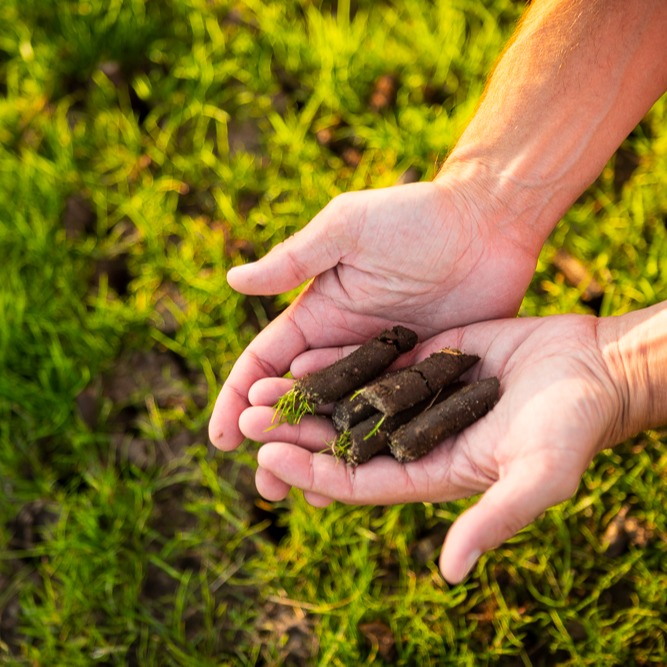
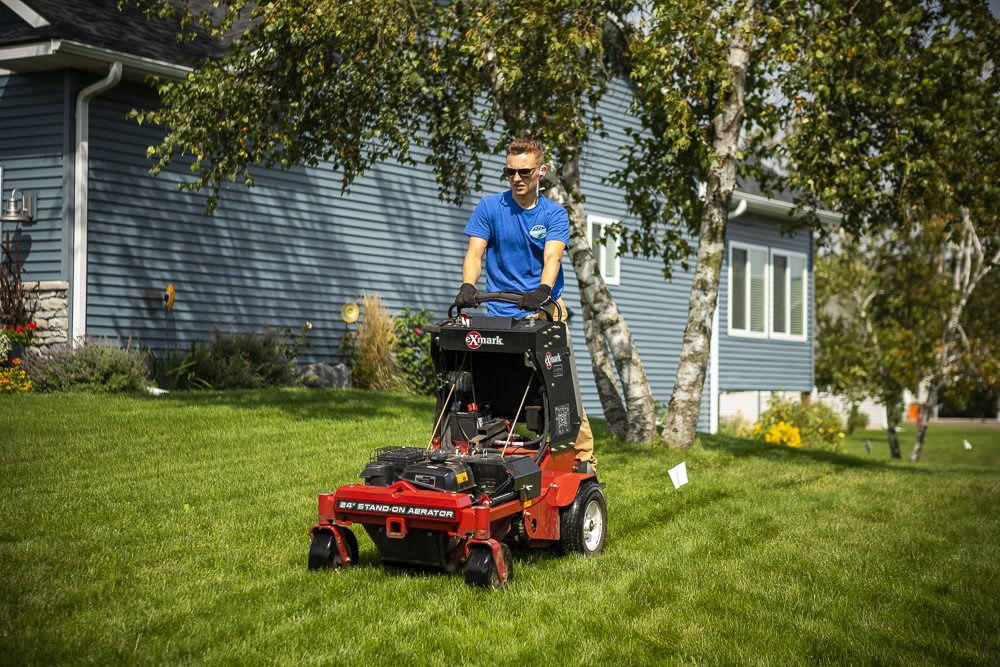
Core aeration uses a machine to pull plugs of soil out of the lawn, leaving open channels a few inches deep. Those channels let air, water, and nutrients reach the root zone directly instead of having to work down through a compacted surface. Roots respond by growing deeper and denser, and a deeper-rooted lawn resists heat, drought, disease, and insect pressure better than a shallow one.

Compaction is the main problem it solves. When soil compacts, pore space collapses, so roots cannot take up water or nutrients efficiently. The turf weakens, thins, and opens the door to weeds and disease. Clay soils compact most readily because the fine particles pack tightly together, and much of this region sits on heavy soil.
Aeration also helps with thatch. Thatch is the layer of dead stems, crowns, and roots that builds up between the green canopy and the soil surface. Pulling cores through it mixes soil microorganisms into the layer and speeds decomposition, so water, air, and nutrients reach the roots. Worth clearing up a persistent myth here: grass clippings do not cause thatch. Clippings are mostly water and break down quickly. Thatch comes from the tougher, slower-decomposing stem and root tissue, which is why mulching your clippings back into the lawn is fine and even useful.
Aerating in spring: usually not the right call
Spring seems logical because that is when everything else in the yard gets done. In practice it creates two problems.
Open holes are ideal weed seedbeds. Spring air is full of weed seed, and crabgrass and other annual weeds are the first things to germinate as soil warms. Aerating in spring opens hundreds of perfect little germination sites right when the most weed seed is available to fill them.
Pre-emergent and seeding conflict. Spring is when crabgrass pre-emergent has to go down, timed to soil temperature. Pre-emergent prevents seeds from establishing, and it does not distinguish between crabgrass seed and the lawn seed you just spread. To be precise about it: pre-emergent does not kill established grass, it blocks new seed from getting going. Either way you cannot seed and prevent crabgrass in the same area in the same window with consumer products. The one exception is a professional product labeled for new seedings, which is why a lawn care program can apply weed control on the same day it seeds.
There is a third issue with spring seeding generally. Grass seeded in May is still a seedling when July arrives, which means it tries to establish through heat, drought, frequent mowing, and the foot traffic of an active summer yard. That is a hard start.
Why fall aeration is better here
- Cool air, warm soil. September soil is still warm enough for fast germination while air temperatures have dropped, which is the ideal combination for cool-season grass.
- No frost risk in the usual window. Early fall seedings generally have weeks of growing weather ahead, unlike a late-spring seeding that can get caught by a cold snap.
- No pre-emergent conflict. Seeding in fall sidesteps the spring crabgrass control window entirely.
- More reliable rainfall. Fall rain does a meaningful share of the watering for you.
- Much less weed seed in the air. Fewer weed seeds are available to settle into the aeration holes.
- Time to store reserves. New grass has several weeks to root and build carbohydrate reserves before winter dormancy.
- Less traffic and mowing. Lawn use drops off in fall, which gives seedlings a quieter start.
Do you have to seed when you aerate?
No. Aeration on its own is worthwhile, which is why it is included in our top two lawn care program tiers. The compaction relief, improved water infiltration, and thatch breakdown all happen with or without seed.
That said, overseeding at aeration has real advantages:
- If the lawn has thin areas, or has had disease pressure, fresh seed is the direct fix.
- Introducing new seed periodically brings in improved varieties. Turf breeding keeps producing cultivars with better drought tolerance, disease resistance, and density than what was available when your lawn was planted.
- The holes are the best seedbed you will ever get. Seed falls into soil contact rather than sitting on thatch, which is the single biggest factor in germination rate.
Cost is the reason some homeowners choose aeration alone. Aeration for an average 12,000 square foot yard runs $208. Adding overseeding with high-quality seed can run about three times that, because premium seed prices have climbed significantly. Companies that keep overseeding cheap usually do it by switching to lower-grade seed or spreading less of it per thousand square feet, and neither produces the result you are paying for. We would rather quote the real number than cut the seed.
How often, and what to expect after
Most lawns in this region benefit from aeration once a year. Heavy clay, high-traffic yards, and newer construction where topsoil was stripped and backfilled may want it annually without question; a lighter sandy soil with little traffic can sometimes go every other year.
Leave the cores on the surface. They break down within a couple of weeks with rain and mowing and return soil and microorganisms to the thatch layer. If you seed at the same time, water lightly and frequently for the first four to six weeks, then shift to deeper, less frequent watering. If you have an irrigation system, the controller needs to be reset for that establishment schedule and then set back afterward.
Bottom line
- Core aeration pulls soil plugs to relieve compaction, improve water and air movement, and speed thatch breakdown.
- Fall is the better window in Minnesota and Wisconsin: warm soil, cool air, reliable rain, little weed seed, and no conflict with crabgrass pre-emergent.
- Spring aeration opens ideal seedbeds for crabgrass and other annual weeds at exactly the time their seed is most available.
- Grass clippings do not cause thatch. Thatch is slower-decomposing stem and root tissue, and mulching clippings back is fine.
- Aeration alone is valuable. Aeration runs $208 for an average 12,000 square foot yard; adding quality overseeding can run about three times that.
Frequently asked questions
Should I aerate my lawn in spring or fall?
Fall, in Minnesota and Wisconsin. Soil is still warm, air has cooled, rain is more dependable, there is far less weed seed in the air, and you avoid the conflict with spring crabgrass pre-emergent.
Can I aerate and apply crabgrass preventer at the same time?
You can aerate, but you cannot seed those holes if pre-emergent is going down, because pre-emergent blocks grass seed from establishing along with crabgrass seed. Professional products labeled for new seedings are the exception.
Do I have to overseed when I aerate?
No. Aeration by itself relieves compaction and improves water and nutrient movement. Overseeding is worth adding when the lawn is thin, when disease has taken areas out, or when you want to bring improved grass varieties into the stand.
How much does lawn aeration cost?
Aeration for an average 12,000 square foot yard is $208. Adding overseeding with high-quality seed can run roughly three times that amount, which reflects the current price of premium seed.
University of Wisconsin Extension, Lawn Aeration and Topdressing.
University of Minnesota Extension, Seeding and Sodding Home Lawns.


