


9 Common Lawn Diseases that Affect Upper Midwest Lawns
Lawn diseases here are fungal, and each one is tied to a specific set of conditions rather than bad luck. That is useful, because identifying the disease tells you what to correct. Correcting the condition is what keeps it from returning in the same spot next year.
What lawn disease actually is
Lawn diseases are caused by fungi that live in soil and thatch year round and do nothing until conditions favor them. Three things have to line up: moisture sitting on the leaf, temperatures in the range a given pathogen prefers, and grass already stressed by compaction, drought, scalping, or a nutrient shortage.
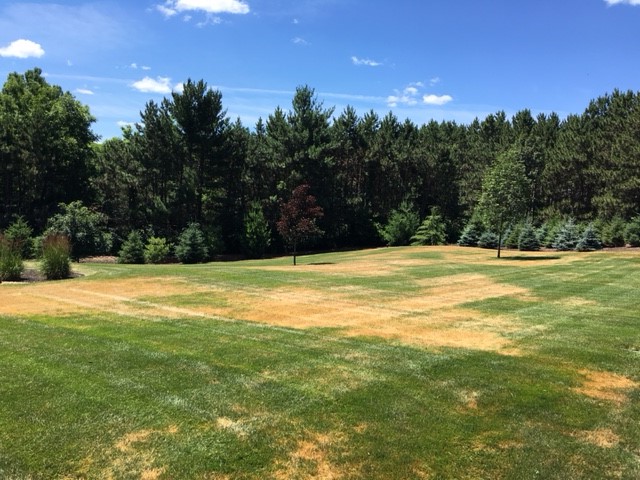
One common misconception worth clearing up: not all of these are summer diseases. Several of the most frequent problems in this region, including red thread and snow mold, are cool-weather diseases.
1. Red thread
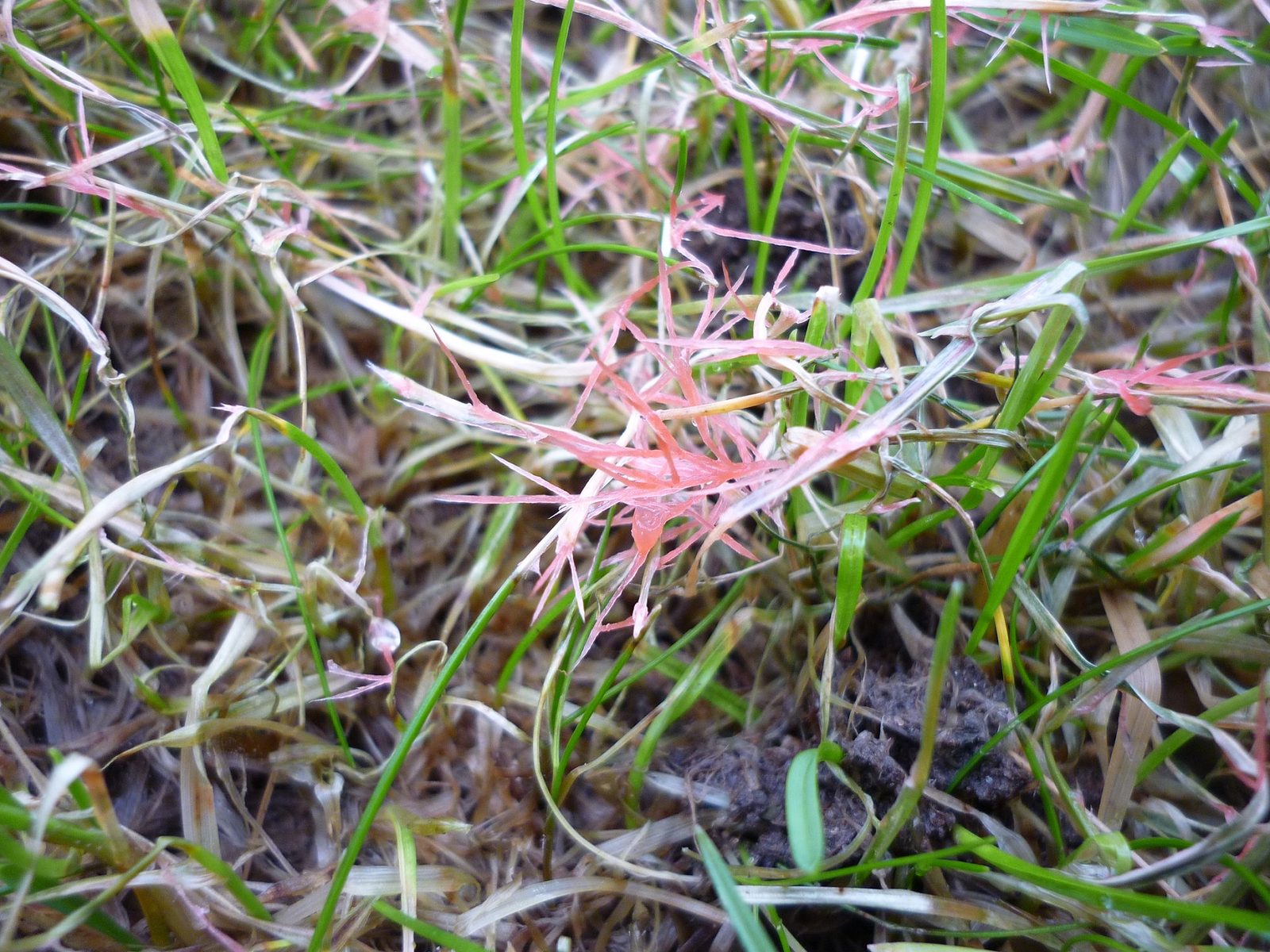
Red thread, caused by Laetisaria fuciformis, produces circular patches from a few inches to about two feet across in tan, pink, or red, with distinctive red or pink threadlike strands protruding from infected leaf blades.
It is a cool, wet weather disease, not a hot humid one. It develops at roughly 40 to 70 degrees during extended periods of leaf wetness, which in this region means spring and fall. It is strongly associated with low nitrogen, so an underfed lawn is the typical host.
Red thread does not infect roots or crowns, so the lawn recovers, and correcting nitrogen often clears it without fungicide.
2. Dollar spot
Small bleached, straw-colored patches roughly two inches to a foot across that can merge into larger blighted areas. It favors heavy dew, warm days with cool nights, and lawns short on nitrogen, which puts the active windows in late spring and early fall here.
Applying nitrogen helps the lawn grow through it, and watering early in the morning removes the extended leaf wetness it needs.
3. Necrotic ring spot
A root and crown disease that produces circular straw-colored patches, usually under 12 inches across, sometimes with green grass in the center. It is triggered by cool wet conditions followed by heat and drought stress, and it is worst on compacted soil. It is most common in sodded lawns but appears in seeded lawns too.
Because it attacks roots, the fix is cultural rather than chemical: core aerate to relieve compaction, improve drainage, and keep fertility steady.
4. Ascochyta leaf blight
Large irregular patches that turn straw-brown very quickly, sometimes appearing overnight after a swing from wet to hot and dry.
It does not affect crowns or roots, so the turf generally recovers in two to three weeks as growth resumes. Reduce thatch with annual core aeration for better water penetration, keep mowing height at three to three and a half inches, and avoid mowing wet grass, which spreads spores.
5. Brown patch
A genuine hot-weather disease, showing up in Minnesota and Wisconsin in mid to late summer when days are hot and nights stay warm and humid. It appears as irregular circular patches, brownish-yellow, from six inches to several feet across.
Risk factors are specific: too much water, too much nitrogen heading into summer heat, poor drainage, compacted soil, and heavy thatch. Avoid it by not overfertilizing in summer, watering early in the day so the canopy dries fully, and aerating annually.
6. Summer patch
The most destructive of this group, because it kills roots rather than just leaf tissue. It starts as small patches of wilted, thinning turf that expand into irregular yellow to bronze areas up to three feet across.
It favors compacted, poorly drained soil in hot wet weather, and it attacks closely mown turf preferentially, which is one more reason not to cut short.
To distinguish it from dollar spot or necrotic ring spot, pull up a tuft and look at the roots. Summer patch roots are dark brown or black and short. Healthy roots are lighter and longer. Where roots are destroyed, the area needs reseeding, since there is nothing left to recover.
7. Fairy ring
Rings or arcs of grass that differ in color or texture from the surrounding lawn, typically three feet to as much as 20 feet across. The ring may be darker green and faster growing, or browner and drier, and during wet weather mushrooms can appear along the edge.
Fairy ring is caused by soil fungi decomposing buried organic matter such as old roots or construction debris, and the growth difference comes from nitrogen released by that decomposition. Masking the ring with balanced fall and spring fertilization is the usual practical approach, since eradication generally means excavating the affected soil.
8. Rust
Orange or rusty powder on leaf blades that comes off on shoes and mower tires. It appears from midsummer through late fall once growth has slowed, favors warm humid weather and extended leaf wetness, and often starts in shaded areas. It most commonly affects Kentucky bluegrass and perennial ryegrass, the two dominant turf types here.
Rust is largely cosmetic, and fertilizing to restore growth is usually all that is needed.
9. Snow mold
Gray or pink matted patches revealed when snow melts off in spring. It develops under snow cover, particularly when heavy snow falls before the ground freezes, and it is worst where snow piles linger longest.
Once the lawn has dried, rake the matted areas lightly to lift and separate the grass so air reaches the crowns, and apply fertilizer to push new growth.
Treating lawn disease
Fungicide is expensive, commonly several hundred dollars per application, and typically needs more than one round. Several diseases above clear on their own as conditions change.
Where a lawn has the same disease every year, preventive fungicide timed ahead of the high-risk window makes sense. Otherwise we treat when it appears and is actively spreading, which takes several applications over a month or more. Where roots are destroyed, recovery means aeration, overseeding, and pH correction rather than a spray.
Preventing disease in the first place
- Fertilize on a balanced schedule, spring and fall included. Both extremes cause disease: excess nitrogen in summer heat feeds brown patch, while low nitrogen invites red thread, dollar spot, and rust.
- Core aerate annually to reduce compaction and thatch and improve drainage.
- Water deeply and infrequently, about an inch per week including rainfall.
- Finish watering by early morning so the canopy dries during the day. Evening watering leaves the leaf wet overnight, which is the condition most of these pathogens need.
- Mow at three to four inches with a sharp blade, and avoid mowing wet grass. Scalping is the single most reliable way to invite disease.
- Improve air movement by pruning low branches and thinning shrubs at the lawn edge so dew dries in the morning.
A regular irrigation maintenance program keeps the watering half honest, since one misaimed head soaking the same shaded corner nightly will keep producing disease.
Bottom line
- Red thread is a cool, wet weather disease tied to low nitrogen, not a hot humid one, and it does not kill roots.
- Summer patch and necrotic ring spot attack roots, so those areas need reseeding rather than just fungicide.
- Ascochyta leaf blight, rust, and snow mold are largely cosmetic and usually recover with fertility and time.
- Brown patch is the genuine hot-weather disease, driven by heat, humidity, overwatering, and summer nitrogen.
- Water early in the day, mow at three to four inches with a sharp blade, and aerate annually.
Frequently asked questions
Is red thread a summer disease?
No. Red thread develops in cool, wet weather, roughly 40 to 70 degrees with extended leaf wetness, which in this region means spring and fall. It is strongly associated with low nitrogen, so fertilizing often resolves it without fungicide.
How do I tell disease from drought stress?
Drought stress covers whole exposed areas and greens back up after watering. Disease forms defined patches, rings, or spots, often with visible lesions on individual blades, and watering more usually makes it worse.
Will my lawn recover from lawn disease on its own?
Often yes, for the diseases that only affect leaf tissue, including red thread, rust, ascochyta leaf blight, and snow mold. Diseases that destroy roots and crowns, such as summer patch and necrotic ring spot, leave dead areas that need reseeding.
Should I water less if my lawn has a fungus?
Change the timing before you change the amount. Finish watering by early morning so the canopy dries during the day, and water deeply and less often rather than briefly every day. Overnight leaf wetness is what most of these pathogens require.
University of Wisconsin Division of Extension, Red thread.
University of Wisconsin Division of Extension, Fairy ring.


