


5 Signs Your Lawn Needs Professional Irrigation System Repair
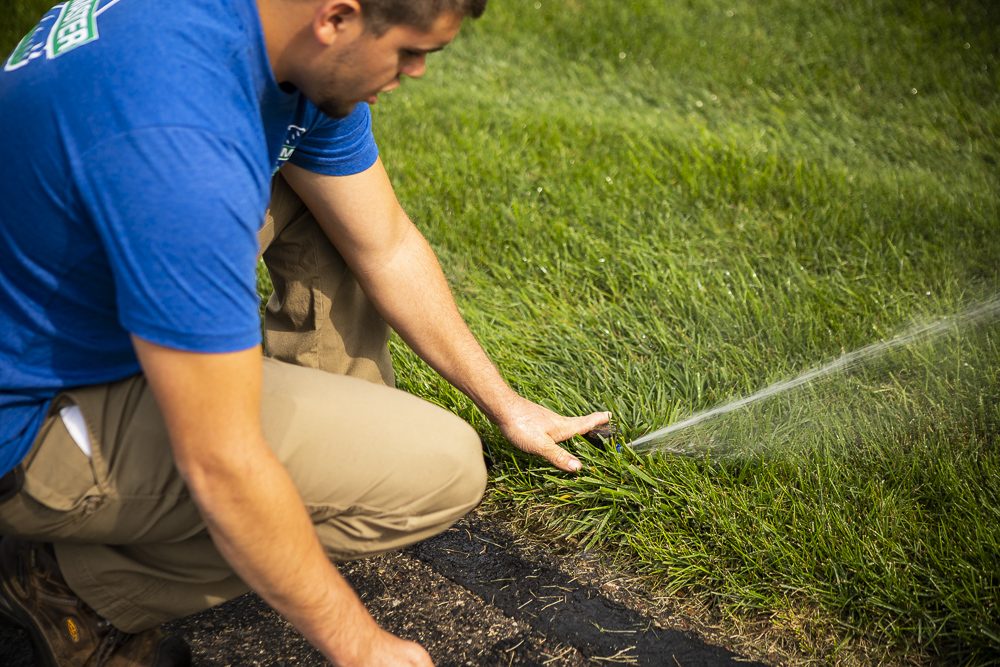
Most irrigation failures announce themselves well before the lawn dies. Uneven coverage, a water bill that jumps without a change in habits, weak spray, zones that will not start or will not stop, and visible leaks are the five signs that a system needs a technician rather than another week of guessing.
The cost of ignoring irrigation problems
A malfunctioning irrigation system does more than stress the lawn. It wastes thousands of gallons of water and drives up the utility bill every cycle it runs, and the turf damage it causes takes months to grow back. Catching a problem in June costs a service call. Catching it in August costs a service call plus seeding.
Two local factors make this worse. First, freeze damage from the previous winter often does not reveal itself until the system is under pressure in spring, so a cracked fitting can sit and weep for weeks. Second, soils vary widely across our service area, from sandy ground around the Chippewa Valley that drains fast to heavy clay in parts of the Twin Cities metro that holds water at the surface. The same coverage error produces a dry spot in one yard and a soggy one in the other.
Sign 1: Uneven water coverage
Walk the property during a watering cycle and watch the system run. If some areas are soggy while others stay dry, there is a coverage problem: broken heads, incorrect spray patterns, or a zone that is not activating. Look for:
- Brown or yellow patches in areas that should be getting water
- Muddy spots or standing water in certain zones
- Sprinkler heads that spin in place without distributing water
- Visible gaps in spray coverage between heads
- Spray landing on the driveway, sidewalk, or street rather than turf
Heads drift out of adjustment on their own over a season. Mower wheels and foot traffic tilt them, mulch and soil settle around them, and plants that were small in May grow up and block the pattern by July.
Sign 2: A sudden increase in the water bill
A spike in a water bill without a change in usage is a reliable red flag. Underground leaks, valves stuck partly open, and zones running longer than programmed all waste water quietly. Even a small leak can waste 6,000 gallons in a month, and because the loss is underground there is often nothing visible on the surface to explain it.
A quick check: with every zone off and no water running in the house, watch the water meter. If it is still moving, something downstream is passing water.
Sign 3: Low water pressure
If heads barely pop up or spray patterns look weak and short, the system has a pressure problem. Common causes are a failing valve, clogged nozzles, a mainline leak, or a pressure regulator that has gone out of spec. Mineral buildup from hard water narrows nozzle openings gradually, so the decline is easy to miss until coverage gaps appear.
Pressure problems are worth diagnosing rather than compensating for. Adding run time to a low-pressure zone wastes water on the area closest to the head while the far edge still gets nothing.
Sign 4: The system will not turn on, or will not turn off
Controllers that malfunction and zones that will not activate point to electrical or solenoid problems: a failed solenoid, a damaged wire splice, a nicked wire from landscape work, or a controller that lost its program. A valve that stays open is the more urgent version of this failure, since it wastes enormous amounts of water and can flood a yard or a basement window well overnight.
If a zone will not shut off, close the main irrigation shutoff by hand and call. Do not wait for the next scheduled cycle.
Sign 5: Visible leaks or geysers
Never ignore water shooting up out of the lawn. That indicates a broken lateral line or a snapped head, and it needs immediate repair to stop the water loss and prevent the washout and settling that follow. Broken heads are common along driveway and sidewalk edges, where plows and snow loads catch them over the winter.
What a repair visit involves
A technician runs every zone and watches it operate before touching anything, because most problems are visible in the first pass. From there the work is straightforward: locate and repair the break, replace failed heads and nozzles, reset arcs and radii for even coverage, test the valves and solenoids, check the backflow device, and reprogram the controller for current conditions rather than whatever it was set to in May.
If you are seeing any of the five signs above, our irrigation crews service systems across the Eau Claire area and the Twin Cities. Call 888-839-8484 or request a quote.
Bottom line
- Watch the system run; soggy and dry areas in the same cycle mean a coverage failure, not a schedule problem.
- An unexplained water bill spike usually means an underground leak or a valve passing water; check the meter with everything off.
- Weak spray points to valves, clogged nozzles, a mainline leak, or a failed pressure regulator, and adding run time does not fix it.
- A zone that will not shut off should be shut off at the main valve immediately.
- Visible geysers mean a broken lateral or head and need same-day attention.
Frequently asked questions
Why is part of my lawn brown when the sprinklers run every day?
Almost always coverage, not duration. A tilted head, a clogged nozzle, or a plant blocking the pattern leaves a dry wedge that more run time cannot reach. Watch the zone operate and look for the gap.
How can I tell if my irrigation system has a leak?
Shut off every zone and all water inside the house, then watch the water meter. Movement with nothing running means water is passing somewhere downstream.
Can I repair a broken sprinkler head myself?
Replacing a head is within reach for many homeowners. Matching nozzle sizes and setting arcs correctly across a zone is where it usually goes wrong, and a mismatched replacement head creates a dry area that is hard to diagnose later.
Should I wait until spring to fix an irrigation problem?
No. A leak or a stuck valve keeps costing money every cycle, and turf damage done in July takes until the following season to fill back in.
EPA WaterSense, Watering Tips.
Irrigation Association, Irrigation resources and standards.


